• Fri frakt över 249 kr
  • •
  • Snabba leveranser
  • •
  • Billiga böcker
Kundservice

Du är på sajten för privatpersoner.

Företag, bibliotek eller offentlig verksamhet?

Du handlar på classic.bokus.com, där alla dina funktioner finns intakta.
Till classic.bokus.com
Bokus logotyp. Gå till startsidan.
  • Erbjudanden
  • Nyheter
  • Student
  • Topplistor
  • Barn & ungdom
  • Bokus Play
  • E-böcker
  • Pocketböcker
  • Spel & pussel

10% rabatt på allt med kod: NYSTART10 →

Sidfot

Mina sidor

    Hjälp

    • Kundservice
    • Vanliga frågor och svar
    • Frakt och leverans
    • Retur vid ångerrätt
    • Reklamera vara
    • Betalning
    • Köpvillkor
    • Allmänna villkor
    • Information om webbplatsens tillgänglighet

    Om Bokus

    • Om oss
    • Pressrum
    • För studenter
    • För företag
    • För bibliotek och offentlig verksamhet
    • För leverantörer
    • Hållbarhet

    Populärt

    • Aktuella erbjudanden
    • Presentkort
    • Studentlitteratur
    • Nya böcker
    • Topplistor
    • Signerade böcker
    • Engelska böcker

    Inspiration

    • Boktips
    • BookTok
    • Populära bokserier
    • Barnbokskaraktärer
    • Populära författare
    Logotyp för Bokus
    Följ oss på Facebook (extern länk)Följ oss på Instagram (extern länk)Följ oss på YouTube (extern länk)Följ oss på TikTok (extern länk)
    bokus @ CookiesAnpassa cookiesIntegritetspolicyKöpvillkor
    Till Citymail hemsida (extern länk)Till Budbee hemsida (extern länk)Till Postnord hemsida (extern länk)Till Schenker hemsida (extern länk)Till Early Bird hemsida (extern länk)Till Walleys hemsida (extern länk)
    1. Samhälle och politik
    2. Samhälle och kultur
    3. Kultur och medier
    4. Referensverk och tvärvetenskap

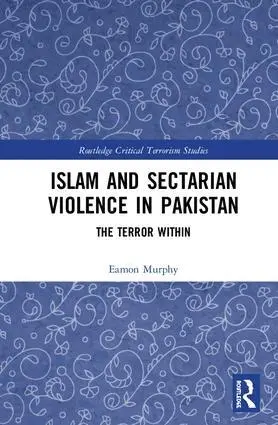
    Islam and Sectarian Violence in Pakistan

    The Terror Within

    AvEamon Murphy

    Inbunden, Engelska, 2018

    Del i serien Routledge Critical Terrorism Studies

    2 421 kr

    Beställningsvara. Skickas inom 10-15 vardagar. Fri frakt över 249 kr.

    Fler format och utgåvor

    Häftad

    667 kr

    E-bok

    812 kr

    E-bok

    812 kr

    Beskrivning

    This book analyses the growth of sectarian-based terrorist violence in Pakistan, one of the Muslim majority states most affected by sectarian violence, ever since it was established in 1947.Sectarian violence among Muslims has emerged as a major global security problem in recent years. The author argues that the upsurge in sectarian violence in Pakistan, particularly since the late 1970s, has had less to do with theological differences between the various sects of Islam, but is a consequence of the specific political, social, economic, demographic and cultural changes that have taken place in Pakistan since it was established as an independent state. A major theme of the book is the increasing violence, extent and expressions of sectarian conflict which have emerged as new forms of sectarian terrorism. The volume provides an in-depth empirical case study which addresses some major theoretical questions raised by Critical Terrorism Studies researchers in respect of the links between religion and sectarian terrorism in Pakistan and more widely.This book will be of much interest to students of critical terrorism studies, Asian politics and history, religious studies and International Relations in general.

    Produktinformation

    • Utgivningsdatum:2018-10-23
    • Mått:156 x 234 x 19 mm
    • Vikt:440 g
    • Format:Inbunden
    • Språk:Engelska
    • Serie:Routledge Critical Terrorism Studies
    • Antal sidor:226
    • Förlag:Taylor & Francis Ltd
    • ISBN:9781138749955

    Utforska kategorier

    • Referensverk och tvärvetenskap inom Samhälle och politik
    • Islam inom Filosofi och religion
    • Politisk aktivism inom Samhälle och politik

    Mer om författaren

    Eamon Murphy is Adjunct Professor in the School of Media, Creative Arts and Social Inquiry at Curtin University in Western Australia. His publications include The Making of Terrorism in Pakistan (Routledge, 2013) and Contemporary State Terrorism (co-edited with Richard Jackson and Scott Poynting, Routledge, 2010).

    Recensioner i media

    'Unlike some other works on this topic, Murphy’s presentation is highly readable and includes a helpful glossary for nonspecialists and other interested readers who might feel overwhelmed when approaching the terminology for the first time. This makes his book an excellent introductory work for undergraduates in various fields, journalists covering terrorist incidents as they unfold, and security analysts who probably are not steeped in jargon or otherwise already familiar with sectarian Islam and Pakistani politics. Eamon Murphy successfully resists the temptation to write a meaningful academic work that can only be read by academics. Without oversimplifying, he explains what actual religious rivalries in Pakistan are hinged upon by making plain how sectarianism became politicised.'--Adil Hussain Khan, Critical Studies on Terrorism'With evident mastery of social sciences and religious studies, Eamon Murphy has given us a masterful narrative that explains Pakistan’s history like few others I have read. ... Having read this volume, I sincerely hope it receives a wide readership that it so richly deserves.'--Dipak Gupta, Terrorism and Political Violence vol. 31, No. 4'Murphy’s book is a master tome well worth the read. It belongs in the library of any serious student of geopolitics in South Asia.'-- Mark J. Roberts, Journal of Strategic Security, Vol. 12, No. 1

    Innehållsförteckning

    • ForewordPrefaceIntroduction 1 Islamic sects in contemporary Pakistan2 Islam and sectarianism in the Indian sub-continent: an historical overview3. Sectarianism, politics and the making of Pakistan, 1937-474. Sectarian conflict in the new state of Pakistan, 1947 – 19635. The Islamisation of Pakistan and sectarian conflict, 1963-19886. Sectarianism, proxy wars and global jihad: the Afghan-Soviet War, 1979-19897. Regional and local dimensions of sectarian conflicts in Pakistan 8. Contemporary sectarian violence in Pakistan: Islam in crisis 9. The future of sectarian conflict and prospects for peaceConclusion