• Fri frakt över 249 kr
  • •
  • Snabba leveranser
  • •
  • Billiga böcker
Kundservice

Du är på sajten för privatpersoner.

Företag, bibliotek eller offentlig verksamhet?

Du handlar på classic.bokus.com, där alla dina funktioner finns intakta.
Till classic.bokus.com
Bokus logotyp. Gå till startsidan.
  • Erbjudanden
  • Student
  • Topplistor
  • Barn & ungdom
  • Bokus Play
  • E-böcker
  • Ljudböcker
  • Pocketböcker
  • Spel och pussel

Pocketfynda! Hundratals böcker för 49 kr/st →

Sidfot

Mina sidor

    Hjälp

    • Kundservice
    • Vanliga frågor och svar
    • Frakt och leverans
    • Retur vid ångerrätt
    • Reklamera vara
    • Betalning
    • Köpvillkor
    • Allmänna villkor
    • Information om webbplatsens tillgänglighet

    Om Bokus

    • Om oss
    • Pressrum
    • För studenter
    • För företag
    • För bibliotek och offentlig verksamhet
    • För leverantörer
    • Hållbarhet

    Populärt

    • Aktuella erbjudanden
    • Presentkort
    • Studentlitteratur
    • Nya böcker
    • Topplistor
    • Signerade böcker
    • Engelska böcker

    Inspiration

    • Boktips
    • BookTok
    • Barnbokskaraktärer
    • Populära författare
    Logotyp för Bokus
    Följ oss på Facebook (extern länk)Följ oss på Instagram (extern länk)Följ oss på YouTube (extern länk)Följ oss på TikTok (extern länk)
    bokus @ CookiesAnpassa cookiesIntegritetspolicyKöpvillkor
    Till Citymail hemsida (extern länk)Till Budbee hemsida (extern länk)Till Postnord hemsida (extern länk)Till Schenker hemsida (extern länk)Till Early Bird hemsida (extern länk)Till Walleys hemsida (extern länk)
    1. Juridik
    2. Internationell rätt
    3. Folkrätt

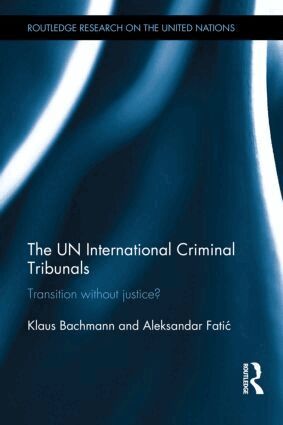
    UN International Criminal Tribunals

    Transition without Justice?

    AvKlaus Bachmann,Aleksandar Fatić

    Inbunden, Engelska, 2015

    Del i serien Routledge Research on the United Nations UN

    2 410 kr

    Beställningsvara. Skickas inom 10-15 vardagar. Fri frakt över 249 kr.

    Fler format och utgåvor

    Häftad

    701 kr

    Beskrivning

    Both the International Criminal Tribunal for the former Yugoslavia (ICTY) and the International Criminal Tribunal for Rwanda (ICTR) are now about to close. Bachmann and Fatic look back at the achievements and shortcomings of both tribunals from an interdisciplinary perspective informed by sociology, political science, history, and philosophy of law and based upon on two key notions: the concepts of legitimacy and efficiency. The first asks to what extent the input (creation) of, the ICTY and the ICTR can be regarded as legitimate in light of the legal and public debate in the early 1990s. The second confronts the output (the procedures and decisions) of the ICTY and the ICTR with the tasks both tribunals were assigned by the UN Security Council, the General Assembly, and by key organs (the president and the chief prosecutors). The authors investigate to what extent the ICTY and the ICTR have delivered the expected results, whether they have been able to contribute to 'the maintenance of peace', 'stabilization' of the conflict regions, or even managed to provide 'reconciliation' to Rwanda. Furthermore, the book is concerned with how many criminals, over whom the ICTY and the ICTR wield jurisdiction, have actually been prosecuted and at what cost. Offering the first balanced and in depth analysis of the International Criminal Tribunals, the volume provides an important insight into what lessons have been learned, and how a deeper understanding of the successes and failures can benefit the international legal community in the future.

    Produktinformation

    • Utgivningsdatum:2015-03-27
    • Mått:156 x 234 x 21 mm
    • Vikt:566 g
    • Format:Inbunden
    • Språk:Engelska
    • Serie:Routledge Research on the United Nations UN
    • Antal sidor:306
    • Förlag:Taylor & Francis Ltd
    • ISBN:9781138797864

    Utforska kategorier

    • Folkrätt inom Juridik
    • Internationella relationer inom Samhälle och politik
    • Referensverk och tvärvetenskap inom Samhälle och politik

    Mer om författaren

    Klaus Bachmann is Chair of International Politics at the University of Social Sciences and Humanities in Warsaw, Poland.Aleksandar Fatić is Professor of Philosophy at the Institute for Philosophy and Social Theory, University of Belgrade

    Recensioner i media

    Writing crisply and making periodic comparisons with the antecedent criminal courts of the 1940s in Germany and Japan, they cover much ground. The outcome is a new and revisionist view of these two courts, giving them credit for some positive developments --D. P. Forsythe, emeritus, University of Nebraska, CHOICE

    Innehållsförteckning

    • Foreword: The starting points: The Nuremberg and the Tokyo Tribunal 1. The Creation of the Tribunals 2. How the Tribunals Work 3. Efficiency: The ICTs and Their Tasks 4. Tribunals as Actors of Domestic Change 5. The Legacy of the ICTY and the ICTR