• Fri frakt över 249 kr
  • •
  • Snabba leveranser
  • •
  • Billiga böcker
Kundservice

Du är på sajten för privatpersoner.

Företag, bibliotek eller offentlig verksamhet?

Du handlar på classic.bokus.com, där alla dina funktioner finns intakta.
Till classic.bokus.com
Bokus logotyp. Gå till startsidan.
  • Erbjudanden
  • Nyheter
  • Student
  • Topplistor
  • Barn & ungdom
  • Bokus Play
  • E-böcker
  • Pocketböcker
  • Spel & pussel

10% rabatt på allt med kod: NYSTART10 →

Sidfot

Mina sidor

    Hjälp

    • Kundservice
    • Vanliga frågor och svar
    • Frakt och leverans
    • Retur vid ångerrätt
    • Reklamera vara
    • Betalning
    • Köpvillkor
    • Allmänna villkor
    • Information om webbplatsens tillgänglighet

    Om Bokus

    • Om oss
    • Pressrum
    • För studenter
    • För företag
    • För bibliotek och offentlig verksamhet
    • För leverantörer
    • Hållbarhet

    Populärt

    • Aktuella erbjudanden
    • Presentkort
    • Studentlitteratur
    • Nya böcker
    • Topplistor
    • Signerade böcker
    • Engelska böcker

    Inspiration

    • Boktips
    • BookTok
    • Populära bokserier
    • Barnbokskaraktärer
    • Populära författare
    Logotyp för Bokus
    Följ oss på Facebook (extern länk)Följ oss på Instagram (extern länk)Följ oss på YouTube (extern länk)Följ oss på TikTok (extern länk)
    bokus @ CookiesAnpassa cookiesIntegritetspolicyKöpvillkor
    Till Citymail hemsida (extern länk)Till Budbee hemsida (extern länk)Till Postnord hemsida (extern länk)Till Schenker hemsida (extern länk)Till Early Bird hemsida (extern länk)Till Walleys hemsida (extern länk)
    1. Samhälle och politik
    2. Samhälle och kultur
    3. Kultur och medier
    4. Medievetenskap

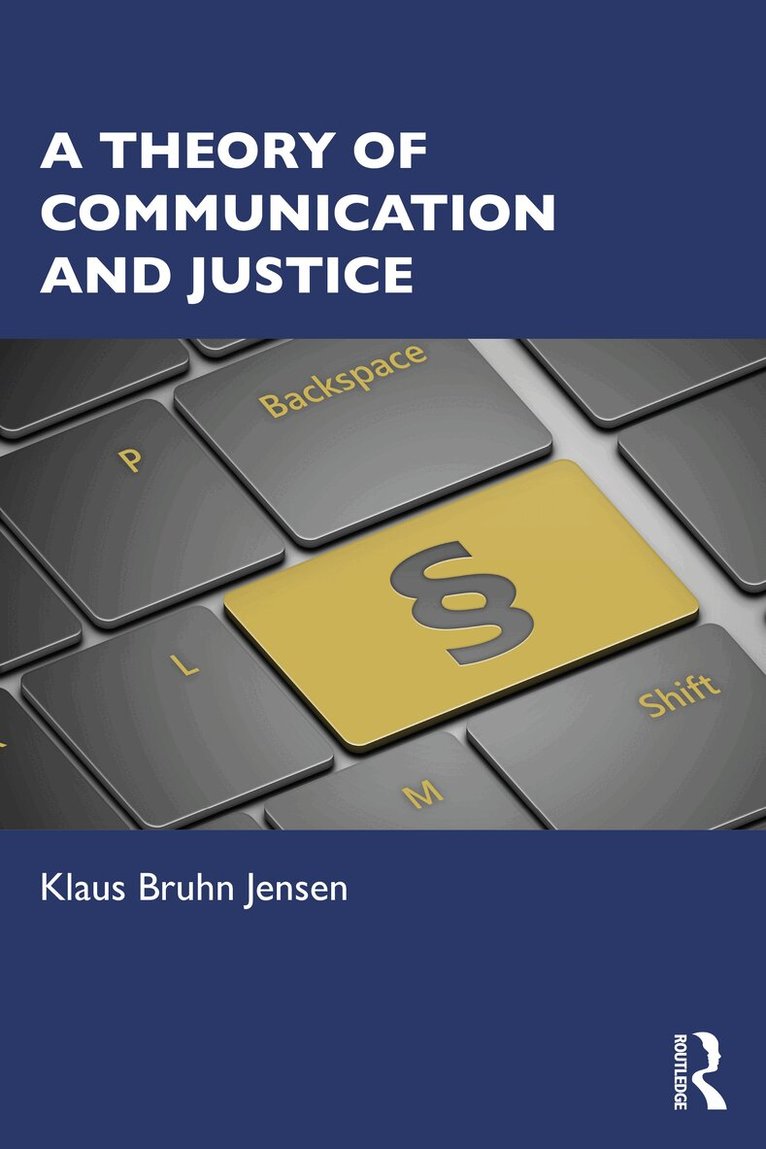
    Theory of Communication and Justice

    AvKlaus Bruhn Jensen

    Häftad, Engelska, 2020

    562 kr

    Beställningsvara. Skickas inom 10-15 vardagar. Fri frakt över 249 kr.

    Fler format och utgåvor

    Inbunden

    1 694 kr

    E-bok

    721 kr

    E-bok

    723 kr

    Beskrivning

    This book outlines a theory of communication and justice for the digital age, updating classic positions in political philosophy and ethics, and engaging thinkers from Aristotle through Immanuel Kant and the American pragmatists to John Rawls, Jürgen Habermas, and Amartya Sen.In communication seeking to define justice and call out injustice, there is such a thing as the last word. The chapters in this book trace the historical emergence of communication as a human right; specify the technological resources and institutional frameworks necessary for exercising that right; and address some of the challenges following from digitalization that currently confront citizens, national regulators, and international agencies. Among the issues covered are public access to information archives past and present; local and global networks of communication as sources of personal identities and imagined communities; the ongoing reconfiguration of the press as a fourth branch of governance; and privacy as a precondition for individuals and collectives to live their lives according to plans, and to make their own histories.The book will be of interest to students and researchers in media and communication studies, cultural studies, political philosophy and ethics, and interdisciplinary fields examining the ethical and political implications of new information and communication infrastructures.

    Produktinformation

    • Utgivningsdatum:2020-12-30
    • Mått:156 x 234 x 20 mm
    • Vikt:453 g
    • Format:Häftad
    • Språk:Engelska
    • Antal sidor:318
    • Förlag:Taylor & Francis Ltd
    • ISBN:9781138807266

    Utforska kategorier

    • Medievetenskap inom Samhälle och politik
    • Referensverk och tvärvetenskap inom Samhälle och politik
    • Juridik: metod och teori inom Juridik

    Mer om författaren

    Klaus Bruhn Jensen is Professor, Department of Communication, University of Copenhagen, Denmark. His research centers on communication theories and research methodologies regarding digital media. Previous publications include Media Convergence: The Three Degrees of Network, Mass, and Interpersonal Communication (2010), International Encyclopedia of Communication Theory and Philosophy (2016, coedited with Robert T. Craig), and A Handbook of Media and Communication Research: Qualitative and Quantitative Methodologies, 3rd ed. (2021). He is Life Member for Service of the Association of Internet Researchers and a Fellow of the International Communicology Institute.

    Recensioner i media

    A timely and scholarly work that focuses attention on the imperative to deepen the normative turn in communication studies and the communicative turn in philosophy, with focus on the articulation and practice of the contested concept of justice. Drawing on a diverse range of philosophical traditions and thinkers through a communications lens, Jensen succeeds in bringing together philosophy and communications research to propose a seminal theory of justice that speaks to our contemporary global dilemmas.Anjali Monteiro, Tata Institute of Social Sciences, MumbaiIn a world seemingly dominated by polarization and disinformation, Klaus Bruhn Jensen’s impressive mastery of both classic philosophy and modern communication science gives his readers a new perspective on how human communication and social justice are fundamentally intertwined.W. Russell Neuman, New York UniversityHow can communication research and theory advance the cause of justice in the world? Klaus Bruhn Jensen’s theory of communication and justice illuminates many possibilities in the spaces between what is, what ought to be, and what could be.Robert T. Craig, University of Colorado BoulderGrounded in a compelling narrative arc from Charles Sanders Peirce to John Rawls, Klaus Bruhn Jensen provides us with a fresh pragmatist philosophy that recognizes communication and its accompanying goods not only as human rights but as engines of civilizational growth.John Durham Peters, Yale UniversityIn an era marked by disturbing shifts towards populism, nativism, identity politics and cancel culture, justice must be done and seen to be done. Communication on and of justice are therefore key. Drawing deeply on philosophical theories and the core foundations of the discipline of communication, Klaus Bruhn Jensen provides us with a reflective and provocative exposition of how justice and communication are deeply intertwined.Sun Sun Lim, Singapore University of Technology and DesignKlaus Bruhn Jensen presents a timely deliberation on communication and justice that links philosophy and communication studies to explore theories and practices pertaining to this crucially important matter. Drawing on ethics and pragmatist inquiry, Jensen considers communication as action and suggests a communicative turn that may help us to better understand various forms of justice, including essential environmental concerns. This insightful book should to be taken very seriously by academics, policy-makers and the public. Janet Wasko, University of OregonJensen offers us a normative theory of communication informed by an historically informed analysis of philosophy and communication theory. His goal is to understand how human communication can better contribute to fairness and justice. Treating communication both as a condition of being and becoming and as deliberative action, its potentials and limitations are critically weighed to assess how communication might make a practical difference. An inspiring and provocative foundation is provided for assessing entitlements to reflection and deliberation in a way that also will spark novel empirical research agendas.Robin Mansell, London School of Economics and Political ScienceIn this timely volume Klaus Bruhn Jensen proposes nothing less than a theory of communication and justice. The volume travels through the history of ideas to explore the meeting points and different avenues of communication research and classic philosophy, as they relate to justice. In a theory-rich, yet practice-oriented, manner, Klaus Bruhn Jensen convincingly argues that the study of communication can and should engage with debates about justice.Rikke Frank Jørgensen, The Danish Institute for Human Rights

    Innehållsförteckning

    • Preface ; 1. The end of communication ; 2. A brief history of justice ; 3. The structural transformation of Jürgen Habermas ; 4. John Rawls behind the veil of communication ; 5. The long legacy of pragmatism ; 6. Media of justice ; 7. The communicative position ; 8. Justice – measure for measure ; 9. The future of justice