• Fri frakt över 249 kr
  • •
  • Snabba leveranser
  • •
  • Billiga böcker
Kundservice

Du är på sajten för privatpersoner.

Företag, bibliotek eller offentlig verksamhet?

Du handlar på classic.bokus.com, där alla dina funktioner finns intakta.
Till classic.bokus.com
Bokus logotyp. Gå till startsidan.
  • Erbjudanden
  • Nyheter
  • Student
  • Topplistor
  • Barn & ungdom
  • Bokus Play
  • E-böcker
  • Pocketböcker
  • Spel & pussel

10% rabatt på allt med kod: NYSTART10 →

Sidfot

Mina sidor

    Hjälp

    • Kundservice
    • Vanliga frågor och svar
    • Frakt och leverans
    • Retur vid ångerrätt
    • Reklamera vara
    • Betalning
    • Köpvillkor
    • Allmänna villkor
    • Information om webbplatsens tillgänglighet

    Om Bokus

    • Om oss
    • Pressrum
    • För studenter
    • För företag
    • För bibliotek och offentlig verksamhet
    • För leverantörer
    • Hållbarhet

    Populärt

    • Aktuella erbjudanden
    • Presentkort
    • Studentlitteratur
    • Nya böcker
    • Topplistor
    • Signerade böcker
    • Engelska böcker

    Inspiration

    • Boktips
    • BookTok
    • Populära bokserier
    • Barnbokskaraktärer
    • Populära författare
    Logotyp för Bokus
    Följ oss på Facebook (extern länk)Följ oss på Instagram (extern länk)Följ oss på YouTube (extern länk)Följ oss på TikTok (extern länk)
    bokus @ CookiesAnpassa cookiesIntegritetspolicyKöpvillkor
    Till Citymail hemsida (extern länk)Till Budbee hemsida (extern länk)Till Postnord hemsida (extern länk)Till Schenker hemsida (extern länk)Till Early Bird hemsida (extern länk)Till Walleys hemsida (extern länk)
    1. Samhälle och politik
    2. Sociologi och antropologi
    3. Antropologi

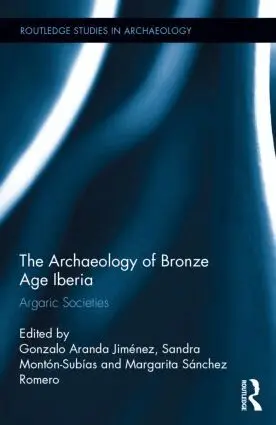
    Archaeology of Bronze Age Iberia

    Argaric Societies

    AvGonzalo Jimenez,Sandra Subías

    Inbunden, Engelska, 2014

    Del i serien Routledge Studies in Archaeology

    2 724 kr

    Beställningsvara. Skickas inom 10-15 vardagar. Fri frakt över 249 kr.

    Fler format och utgåvor

    Häftad

    701 kr

    Beskrivning

    After more than a century of research, an enormous body of scientific literature in the field of El Argar studies has been generated, comprising some 700 bibliographic items. No fully-updated synthesis of the literature is available at the moment; recent works deal only with specific characteristics of Argaric societies or some of the regions where their influence spread. The Archaeology of Bronze Age Iberia offers a much-needed, comprehensive overview of Argaric Bronze Age societies, based on state-of-the-art research. In addition to expounding on recent insights in such areas as Argaric origin and expansion, social practices, and socio-politics, the book offers reflections on current issues in the field, from questions concerning the genealogy of discourses on the subject, to matters related to professional practices. The book discusses the values and interests guiding the evolution of El Argar studies, while critically reexamining its history. Scholars and researchers in the fields of Prehistory and Archaeology will find this volume highly useful.

    Produktinformation

    • Utgivningsdatum:2014-12-10
    • Mått:152 x 229 x 14 mm
    • Vikt:430 g
    • Format:Inbunden
    • Språk:Engelska
    • Serie:Routledge Studies in Archaeology
    • Antal sidor:190
    • Förlag:Taylor & Francis Ltd
    • ISBN:9781138821330

    Utforska kategorier

    • Antropologi inom Samhälle och politik
    • Arkeologiska perioder och områden inom Historia och arkeologi

    Mer om författaren

    Gonzalo Aranda Jiménez is Senior Lecturer in the Department of Prehistory and Archaeology at the University of Granada, Spain. He has conducted archaeological fieldwork in different Copper and Bronze Age settlements, and has published in major scientific journals like Antiquity, Oxford Journal of Archaeology, Journal of Social Archaeology and Trabajos de Prehistoria, as well as book chapters in peer-reviewed volumes.Sandra Montón Subías is ICREA Research Professor at Pompeu Fabra University, Spain. She is currently co-chairing the EAA working party "Archaeology and Gender in Europe." She has recently published "European Gender Archaeologies in Historical Perspective" in the European Journal of Archaeology and the co-edited volume Guess Who’s Coming to Dinner: Feasting Rituals in the Prehistoric Societies of Europe and the Near East (2011). Margarita Sánchez Romero is a Senior Lecturer in the Department of Prehistory and Archaeology at the University of Granada, Spain. She has worked as a visiting researcher and lecturer at the universities of Bergen (Norway), Helsinki (Finland), Cambridge and Hull (UK), Havana (Cuba), Comahue and Lujan (Argentina) and Los Lagos (Chile).

    Recensioner i media

    "El Argar is a paradigmatic archaeological case study of people’s life and death, power struggle and resistance, abandonment of traditions and adaptation to the environment. This book is a lively archaeological approach to history making during the 2nd millennia BC." - Maria Berrocal, Higher Council for Scientific Research, Spain"This team of archaeologists, who got the idea of consolidating information from a variety of sources spread over more than a century, has done a good job of synthesizing that information into a usable text. The authors make clear that their goal is to pull together all of the evidence, not just that which has, at one time or another, fit someone's theory. They also aimed to examine the role that slow or no publication has had on the development of the understanding of Bronze Age Iberia. The authors do a very good job of integrating all the different archaeological methodologies to offer an interesting reinterpretation of Argaric material culture and society. [Summing Up: Highly recommended. Upper-division undergraduates and above.]" - D. A. Slane, University of Maryland University College, CHOICE Review

    Innehållsförteckning

    • 1. From the 19th to the 21st Centuries: A Reappraisal of Argaric Research 2. Time and Space in Argaric Society 3. Argaric Landscapes: Settlements Gain Significance 4. Production, Distribution and Consumption as Social Practices 5. New Ways of Displaying Death: Funerary Rituals 6. Interpretations of Argaric Sociopolitical Strategies