• Fri frakt över 249 kr
  • •
  • Snabba leveranser
  • •
  • Billiga böcker
Kundservice

Du är på sajten för privatpersoner.

Företag, bibliotek eller offentlig verksamhet?

Du handlar på classic.bokus.com, där alla dina funktioner finns intakta.
Till classic.bokus.com
Bokus logotyp. Gå till startsidan.
  • Erbjudanden
  • Nyheter
  • Student
  • Topplistor
  • Barn & ungdom
  • Bokus Play
  • E-böcker
  • Pocketböcker
  • Spel & pussel

10% rabatt på allt med kod NYSTART10 →

Sidfot

Mina sidor

    Hjälp

    • Kundservice
    • Vanliga frågor och svar
    • Frakt och leverans
    • Retur vid ångerrätt
    • Reklamera vara
    • Betalning
    • Köpvillkor
    • Allmänna villkor
    • Information om webbplatsens tillgänglighet

    Om Bokus

    • Om oss
    • Pressrum
    • För studenter
    • För företag
    • För bibliotek och offentlig verksamhet
    • För leverantörer
    • Hållbarhet

    Populärt

    • Aktuella erbjudanden
    • Presentkort
    • Studentlitteratur
    • Nya böcker
    • Topplistor
    • Signerade böcker
    • Engelska böcker

    Inspiration

    • Boktips
    • BookTok
    • Populära bokserier
    • Barnbokskaraktärer
    • Populära författare
    Logotyp för Bokus
    Följ oss på Facebook (extern länk)Följ oss på Instagram (extern länk)Följ oss på YouTube (extern länk)Följ oss på TikTok (extern länk)
    bokus @ CookiesAnpassa cookiesIntegritetspolicyKöpvillkor
    Till Citymail hemsida (extern länk)Till Budbee hemsida (extern länk)Till Postnord hemsida (extern länk)Till Schenker hemsida (extern länk)Till Early Bird hemsida (extern länk)Till Walleys hemsida (extern länk)
    1. Samhälle och politik
    2. Sociologi och antropologi
    3. Antropologi

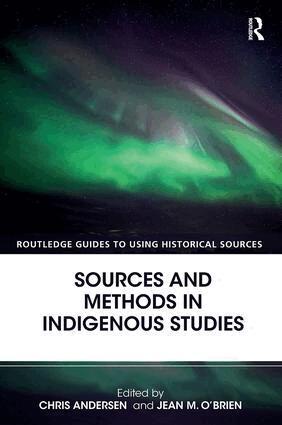
    Sources and Methods in Indigenous Studies

    AvChris Andersen,Jean M. O'Brien

    Häftad, Engelska, 2016

    Del i serien Routledge Guides to Using Historical Sources

    672 kr

    Beställningsvara. Skickas inom 10-15 vardagar. Fri frakt över 249 kr.

    Beskrivning

    Sources and Methods in Indigenous Studies is a synthesis of changes and innovations in methodologies in Indigenous Studies, focusing on sources over a broad chronological and geographical range. Written by a group of highly respected Indigenous Studies scholars from across an array of disciplines, this collection offers insight into the methodological approaches contributors take to research, and how these methods have developed in recent years. The book has a two-part structure that looks, firstly, at the theoretical and disciplinary movement of Indigenous Studies within history, literature, anthropology, and the social sciences. Chapters in this section reveal that, while engaging with other disciplines, Indigenous Studies has forged its own intellectual path by borrowing and innovating from other fields. In part two, the book examines the many different areas with which sources for indigenous history have been engaged, including the importance of family, gender, feminism, and sexuality, as well as various elements of expressive culture such as material culture, literature, and museums. Together, the chapters offer readers an overview of the dynamic state of the field in Indigenous Studies. This book shines a spotlight on the ways in which scholarship is transforming Indigenous Studies in methodologically innovative and exciting ways, and will be essential reading for students and scholars in the field.

    Produktinformation

    • Utgivningsdatum:2016-12-09
    • Mått:156 x 234 x 21 mm
    • Vikt:610 g
    • Format:Häftad
    • Språk:Engelska
    • Serie:Routledge Guides to Using Historical Sources
    • Antal sidor:314
    • Förlag:Taylor & Francis Ltd
    • ISBN:9781138823617

    Utforska kategorier

    • Antropologi inom Samhälle och politik
    • Historia: teori och metod inom Historia och arkeologi
    • Allmän historia och världshistoria inom Historia och arkeologi

    Mer om författaren

    Chris Andersen (Michif) is Professor and Interim Dean of the Faculty of Native Studies at the University of Alberta. He is the author of "Métis": Race, Recognition and the Struggle for Indigenous Peoplehood (2014).Jean O’Brien (White Earth Ojibwe) is Distinguished McKnight University Professor of History at the University of Minnesota. She has authored five books, including Firsting and Lasting: Writing Indians Out of Existence in New England (2010).

    Recensioner i media

    "This book is a valuable collection of essays for anyone teaching or researching any aspect of Indigenous studies. It is an especially useful tool for young scholars who intend to work with indigenous communities, no matter what discipline they represent."Dawn Marsh, Purdue University, USA

    Innehållsförteckning

    • Notes on ContributorsIntroductionChris Andersen and Jean M. O’BrienPART ONE: EMERGING FROM THE PAST Chapter One: Historical Sources and Methods in Indigenous Studies: Touching on the Past, Looking to the FutureJean M. O’BrienChapter Two: Literary Reflections on Indigenous Literary Nationalism: On Home Grounds, Singing Hogs, and Cranky CriticsDaniel Heath JusticeChapter Three: History, Anthropology, Indigenous Studies Pauline Turner StrongChapter Four: Reclaiming the Statistical "Native": Quantitative Historical Research Beyond the PaleChris Andersen and Tahu KukutaiPART TWO: ALTERNATIVE SOURCES AND METHODOLOGICAL REORIENTATIONSI. Reframing Indigenous StudiesChapter Five: Recovering, Restorying, and Returning Nahua Writing in MexicoKelly McDonoughChapter Six: Mind, Heart, Hands: Thinking, Feeling, and Doing in Indigenous History MethodologyK. Tsianina LomawaimaChapter Seven: Relationality: A Key Presupposition of an Indigenous Social Research ParadigmAileen Moreton-RobinsonChapter Eight: Standing With and Speaking as Faith: A Feminist-Indigenous Approach to InquiryKim TallBearChapter Nine: Stepping In It: How to Smell the Fullness of Indigenous HistoriesVicente DiazChapter Ten: Intellectual History and Indigenous MethodologyRobert WarriorChapter Eleven: A Genealogy of Critical Hawaiian Studies, Late 20th to 21st CenturyNoenoe K. SilvaChapter Twelve: Placing the City: Crafting Urban Indigenous HistoriesColl ThrushII. All in the FamilyChapter Thirteen: "I do still have a letter:" Our Sea of Archives"Alice Te Punga SomervilleChapter Fourteen: History with Nana: Family, Life, and the Spoken SourceAroha HarrisChapter Fifteen: Elder Brother as Theoretical FrameworkRobert InnesChapter Sixteen: Histories with Communities: Struggles, Collaborations, TransformationsAmy E. Den Ouden Chapter Seventeen: Places and Peoples: Sámi Feminist Technoscience and Supradisciplinary Research Methods May-Britt Ohman, Uppsala UniversityChapter Eighteen: Oral HistoryWilliam Bauer, Jr.III. Feminism, Gender, and SexualityChapter Nineteen: Status, Sustainability, and American Indian Women in the Twentieth CenturyJacki Thompson RandChapter Twenty: Representations of Violence: (Re)Telling Indigenous Women’s Stories and the Politics of Knowledge Production Shannon SpeedChapter Twenty-One: Feminism and History, Sources and Methods in Indigenous HistoryMishuana GoemanChapter Twenty-Two: History and MasculinityBrendan HokowhituChapter Twenty-Three: Indigenous is to Queer as . . . : Queer questions for Indigenous StudiesMark RifkinIV. Indigenous Literature and Expressive Culture Chapter Twenty-Four: State Violence, History, and Maya Literature in GuatemalaEmilio de valle EscalanteChapter Twenty-Five: Pieces Left Along the Trail: Material Culture Histories and Indigenous StudiesSherry Farrell Racette, in conversation with Alan Corbiere and Crystal MigwansChapter Twenty-Six: Authoring Indigenous Studies in Three Dimensions: An Approach to Museum CurationGabrielle TayacChapter Twenty-Seven: Future Tense: Indigenous Film, Pedagogy, PromiseMichelle RahejaV. Indigenous Peoples In and Beyond the StateChapter Twenty-Eight: Stories as Law: A Method to Live byHeidi Kiiwetinepinesiik Stark Chapter Twenty-Nine: Metis in the Borderlands of the Northern Plains in the Nineteenth CenturyBrenda Macdougall and Nicole St-Onge Chapter Thirty: Plotting Colonization and Recentering Indigenous Actors: Approaches to and Sources for Studying the History of Indigenous EducationMargaret D. JacobsChapter Thirty-One: Laws, Codes, and Informal Practices: Building Ethical Procedures for Historical Research with Indigenous Medical RecordsMary Jane Logan McCallum Chapter Thirty-Two: Toward a Post-Quincentennial Approach to the Study of GenocideJeffrey Ostler Chapter Thirty-Three: Revealing, Reporting, and Reflecting: Indigenous Studies Research as Praxis in Reconciliation ProjectsSheryl Lightfoot