• Fri frakt över 249 kr
  • •
  • Snabba leveranser
  • •
  • Billiga böcker
Kundservice

Du är på sajten för privatpersoner.

Företag, bibliotek eller offentlig verksamhet?

Du handlar på classic.bokus.com, där alla dina funktioner finns intakta.
Till classic.bokus.com
Bokus logotyp. Gå till startsidan.
  • Erbjudanden
  • Nyheter
  • Student
  • Topplistor
  • Barn & ungdom
  • Bokus Play
  • E-böcker
  • Pocketböcker
  • Spel & pussel

10% rabatt på allt med kod NYSTART10 →

Sidfot

Mina sidor

    Hjälp

    • Kundservice
    • Vanliga frågor och svar
    • Frakt och leverans
    • Retur vid ångerrätt
    • Reklamera vara
    • Betalning
    • Köpvillkor
    • Allmänna villkor
    • Information om webbplatsens tillgänglighet

    Om Bokus

    • Om oss
    • Pressrum
    • För studenter
    • För företag
    • För bibliotek och offentlig verksamhet
    • För leverantörer
    • Hållbarhet

    Populärt

    • Aktuella erbjudanden
    • Presentkort
    • Studentlitteratur
    • Nya böcker
    • Topplistor
    • Signerade böcker
    • Engelska böcker

    Inspiration

    • Boktips
    • BookTok
    • Populära bokserier
    • Barnbokskaraktärer
    • Populära författare
    Logotyp för Bokus
    Följ oss på Facebook (extern länk)Följ oss på Instagram (extern länk)Följ oss på YouTube (extern länk)Följ oss på TikTok (extern länk)
    bokus @ CookiesAnpassa cookiesIntegritetspolicyKöpvillkor
    Till Citymail hemsida (extern länk)Till Budbee hemsida (extern länk)Till Postnord hemsida (extern länk)Till Schenker hemsida (extern länk)Till Early Bird hemsida (extern länk)Till Walleys hemsida (extern länk)
    1. Ekonomi och Ledarskap
    2. Nationalekonomi
    3. Miljöekonomi

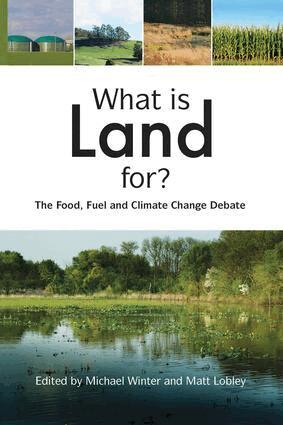
    What is Land For?

    The Food, Fuel and Climate Change Debate

    AvMatt Lobley,Michael Winter

    Häftad, Engelska, 2015

    723 kr

    Beställningsvara. Skickas inom 10-15 vardagar. Fri frakt över 249 kr.

    Beskrivning

    In recent decades agricultural commodity surpluses in the developed world have contributed to a mantra of 'land surplus' in which set-aside, extensification, alternative land uses and 'wilding' have been key terms in debates over land. Quite suddenly all this has changed as a consequence of rapidly shifting commodity markets. Prices for cereals, oil seeds and other globally traded commodities have risen sharply. A contributor to this has been the shift to bioenergy cropping, fuelled by concerns over post-peak oil and climate change. Agricultural supply chain interests have embraced the 'new environmentalism' of climate change with enthusiasm, proudly proclaiming the readiness of the industry to produce both food and energy crops, and to do so with a neo-liberal confidence in markets to determine the balance between food and non-food crops in land use. But policy and politics have not necessarily caught up with these market and industry-led changes and some environmentalists are beginning to challenge the assumptions of the new 'productivism'. Is it necessarily the case, they ask, that agriculture's best contribution to tackling climate change is to grow bioenergy crops or invest in anaerobic-digesters or make land over for windfarms? Might not there be an equally important role in maximising the carbon sequestration or water-holding properties of biodiverse land? What is Land For? tackles these key cutting-edge issues of this new debate by setting out a baseline of evidence and ideas.

    Produktinformation

    • Utgivningsdatum:2015-05-22
    • Mått:156 x 234 x 30 mm
    • Vikt:670 g
    • Format:Häftad
    • Språk:Engelska
    • Antal sidor:360
    • Förlag:Taylor & Francis Ltd
    • ISBN:9781138881228

    Utforska kategorier

    • Miljöekonomi inom Ekonomi och Ledarskap
    • Lantbruksteknik inom Naturvetenskap och teknik

    Mer om författaren

    Michael Winter OBE is Professor of Rural Policy and Director of the Centre for Rural Policy Research, Department of Politics, at the University of Exeter. Matt Lobley is Senior Research Fellow and Assistant Director of the Centre for Rural Policy Research.

    Recensioner i media

    'Sustainable land use is the first 'tipping point' to be faced over the whole globe...This volume helpfully sets the scene for a new sustainable land revolution.' Tim O'Riordan, Emeritus Professor of Environmental Studies, University of East Anglia, UK'If you want informed reflection on today's crucial debates, policy-making and planning about land use, this book is well worth a read.' Country Way Magazine'This is the type of book that makes you revise your lecture notes. Although I continue to rehearse arguments about post-productivism and countrysides of consumption, I am aware that I sound increasingly unconvincing. Whilst not yet able entirely to consign these concepts to history, it is instructive to read a book that says, basically, society faces a range of real and urgent problems, the answer to which lies in the soil.' Journal of Environmental Policy and Planning

    Innehållsförteckning

    • Acknowledgements Contributors1. Introduction: Knowing the Land Part I: New Uses of Land: Technologies, Policies, Tools and Capacities2. Strategic Land Use for Ecosystem Services 3. Perennial Energy Crops: Implications and Potential4. Soaking up the Carbon 5. Anaerobic Digestion and its Implications for Land Use6. Watery Land: The Management of Lowland Floodplains in England 7. Ecosystems Services in Dynamic and Contested Landscapes: The Case of UK UplandsPart II: Emerging Issues and New Perspectives8. Adaptation of Biodiversity to Climate Change: An Ecological Perspective9. Public Engagement in New Productivism10. A Story of Becoming: Landscape Creation through an Art/Science Dynamic11. Agricultural Stewardship, Climate Change and Public Goods Debate12. Regulating Land Use Technologies: How Does Government Juggle the Risks?13. The Land Debate - 'Doing the Right Thing' Ethical Approaches to Land -use Decision Making14. ConclusionsIndex