• Fri frakt över 249 kr
  • •
  • Snabba leveranser
  • •
  • Billiga böcker
Kundservice

Du är på sajten för privatpersoner.

Företag, bibliotek eller offentlig verksamhet?

Du handlar på classic.bokus.com, där alla dina funktioner finns intakta.
Till classic.bokus.com
Bokus logotyp. Gå till startsidan.
  • Erbjudanden
  • Nyheter
  • Student
  • Topplistor
  • Barn & ungdom
  • Bokus Play
  • E-böcker
  • Pocketböcker
  • Spel & pussel

10% rabatt på allt med kod NYSTART10 →

Sidfot

Mina sidor

    Hjälp

    • Kundservice
    • Vanliga frågor och svar
    • Frakt och leverans
    • Retur vid ångerrätt
    • Reklamera vara
    • Betalning
    • Köpvillkor
    • Allmänna villkor
    • Information om webbplatsens tillgänglighet

    Om Bokus

    • Om oss
    • Pressrum
    • För studenter
    • För företag
    • För bibliotek och offentlig verksamhet
    • För leverantörer
    • Hållbarhet

    Populärt

    • Aktuella erbjudanden
    • Presentkort
    • Studentlitteratur
    • Nya böcker
    • Topplistor
    • Signerade böcker
    • Engelska böcker

    Inspiration

    • Boktips
    • BookTok
    • Populära bokserier
    • Barnbokskaraktärer
    • Populära författare
    Logotyp för Bokus
    Följ oss på Facebook (extern länk)Följ oss på Instagram (extern länk)Följ oss på YouTube (extern länk)Följ oss på TikTok (extern länk)
    bokus @ CookiesAnpassa cookiesIntegritetspolicyKöpvillkor
    Till Citymail hemsida (extern länk)Till Budbee hemsida (extern länk)Till Postnord hemsida (extern länk)Till Schenker hemsida (extern länk)Till Early Bird hemsida (extern länk)Till Walleys hemsida (extern länk)
    1. Psykologi och pedagogik
    2. Psykologi
    3. Psykologiska teorier och skolor
    4. Freudiansk psykologi

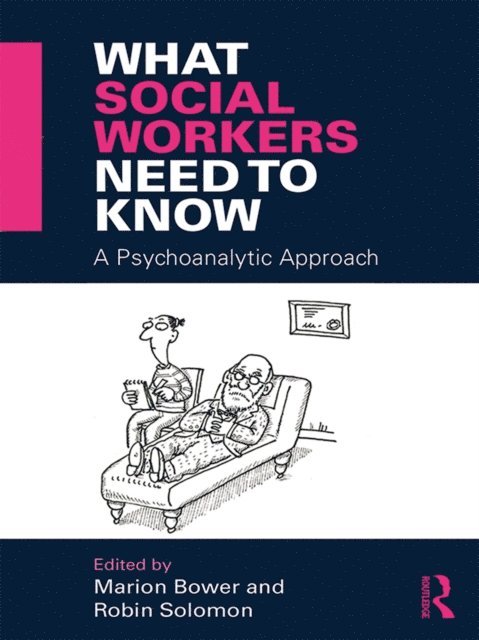
    What Social Workers Need to Know

    A Psychoanalytic Approach

    AvMarion Bower,Robin Solomon

    Häftad, Engelska, 2017

    594 kr

    Beställningsvara. Skickas inom 10-15 vardagar. Fri frakt över 249 kr.

    Beskrivning

    Social work deals with the heavy end of human difficulties such as cruelty, self-destructiveness, and severe and enduring mental health problems. How do social workers make sense of the emotional difficulties which come with the realities of practice? Understanding our clients is the best way of dealing with complex situations and avoiding burnout and stress. The contributors to this book argue that psychoanalysis provides a theory of development and behaviour capable of formulating a realistic model for understanding emotional difficulties and disturbances in both clients and ourselves.The chapters demonstrate a way of thinking for the practitioner that can be used in all situations. The book examines in detail some of the difficult and disturbing conversations that social workers have with clients of all ages. It provides a psychoanalytic framework for understanding circumstances which may be puzzling, stressful or frightening, and a theory whose value for many social work problems is well underpinned by research evidence.Written by senior practitioners who are all still working in the front line, this book puts complex real life experiences into words, to help the social worker become a more effective practitioner.

    Produktinformation

    • Utgivningsdatum:2017-08-25
    • Mått:156 x 234 x 13 mm
    • Vikt:376 g
    • Format:Häftad
    • Språk:Engelska
    • Antal sidor:226
    • Förlag:Taylor & Francis Ltd
    • ISBN:9781138905665

    Utforska kategorier

    • Freudiansk psykologi inom Psykologi och pedagogik
    • Socialt arbete och välfärd inom Samhälle och politik

    Mer om författaren

    Marion Bower is a freelance social worker and adult psychotherapist. She has worked in child and family mental health services for 34 years including 14 years at the Tavistock Clinic. She co-edited The Emotional Needs of Young Children and Their Families and edited Psychoanalytic Theory for Social Work Practice, both published by Routledge, and Addictive States of Mind. Robin Solomon worked as a consultant social worker at the Tavistock Clinic where she held senior roles in both clinical work and teaching. She is a senior fellow of the Higher Education Acadamy and is a trustee of the Centre for Social Work Practice. Robin is currently working as an independent consultant and visiting lecturer.

    Recensioner i media

    "The book has areas of interest and learning for social workers and alternatively qualified professionals from all disciplines of relational social work but, in my opinion, is an invaluable resource for leaders, managers and practice educators. I have certainly taken a wealth of ideas to inform the practice development and workforce support in my own organisation."Amana Gordon, Journal of Social Work Practice

    Innehållsförteckning

    • Acknowledgements, List of Figures, Chapter 1: Introduction – What Social Workers Need to know (Marion Bower and Robin Solomon) , Chapter 2: Context – Navigating Contested Professional Identities in Difficult Times (James Blewett), Part I: Practice Near Research, Chapter 3: Difficult Conversations on the Front Long – Observations of Home Visits to Talk About Neglect (Fiona Henderson), Chapter 4: Written on the Body (Charlotte Noyes), Chapter 5: Reflective Supervision for Child Protection Practice – Researching Beneath the Surface (Anna Harvey and Fiona Henderson), Chapter 6: Identifying ‘Blind Spots’ When Moving Children from Foster Care into Adoption (Lynne Cudmore and Sophie Bowell), Part II: The Value of Theory for Practice, Chapter 7: The Use of Self in Social Work Practice (Andrew Cooper), Chapter 8: Crisis, What Crisis – and Whose Crisis Is It Anyway? A Psychoanalytically Informed Account of How to Keep Thinking in the Face of the Day to Day Work of Managing Rising Anxiety (Gill Rusbridger) , Chapter 9: Exploring Racist States of Mind (Narendra Keval), Chapter 10: No Shit! – A Psycho-Educational Group for Foster Carers (Robin Solomon), Chapter 11: Cruel Protectors – Understanding Sexual Exploitation (Marion Bower and Robin Solomon), Chapter 12: Getting the Balance Right – Helping Young People with Learning Disability Achieve Independence (Susan Chantrell), Chapter 13: Working with Traumatised Refugees (Joanne Stubley), Part III: Teaching, Chapter 14: Observation as a Way of Learning (Marion Bower), Chapter 15: Psychanalysis and the Psychotherapies – Institutional Cleansing (Narendra Keval), Useful Texts, Index