• Fri frakt över 249 kr
  • •
  • Snabba leveranser
  • •
  • Billiga böcker
Kundservice

Du är på sajten för privatpersoner.

Företag, bibliotek eller offentlig verksamhet?

Du handlar på classic.bokus.com, där alla dina funktioner finns intakta.
Till classic.bokus.com
Bokus logotyp. Gå till startsidan.
  • Erbjudanden
  • Nyheter
  • Student
  • Topplistor
  • Barn & ungdom
  • Bokus Play
  • E-böcker
  • Pocketböcker
  • Spel & pussel

10% rabatt på allt med kod: NYSTART10 →

Sidfot

Mina sidor

    Hjälp

    • Kundservice
    • Vanliga frågor och svar
    • Frakt och leverans
    • Retur vid ångerrätt
    • Reklamera vara
    • Betalning
    • Köpvillkor
    • Allmänna villkor
    • Information om webbplatsens tillgänglighet

    Om Bokus

    • Om oss
    • Pressrum
    • För studenter
    • För företag
    • För bibliotek och offentlig verksamhet
    • För leverantörer
    • Hållbarhet

    Populärt

    • Aktuella erbjudanden
    • Presentkort
    • Studentlitteratur
    • Nya böcker
    • Topplistor
    • Signerade böcker
    • Engelska böcker

    Inspiration

    • Boktips
    • BookTok
    • Populära bokserier
    • Barnbokskaraktärer
    • Populära författare
    Logotyp för Bokus
    Följ oss på Facebook (extern länk)Följ oss på Instagram (extern länk)Följ oss på YouTube (extern länk)Följ oss på TikTok (extern länk)
    bokus @ CookiesAnpassa cookiesIntegritetspolicyKöpvillkor
    Till Citymail hemsida (extern länk)Till Budbee hemsida (extern länk)Till Postnord hemsida (extern länk)Till Schenker hemsida (extern länk)Till Early Bird hemsida (extern länk)Till Walleys hemsida (extern länk)
    1. Språk och ordböcker
    2. Språkundervisning och språkinlärning

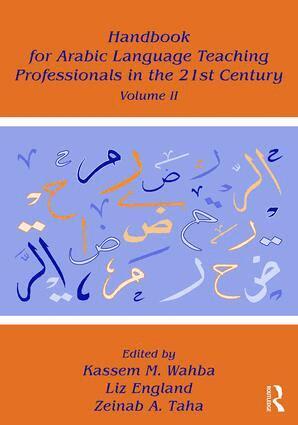
    Handbook for Arabic Language Teaching Professionals in the 21st Century, Volume II

    AvKassem M. Wahba,Liz England

    Häftad, Engelska, 2017

    1 507 kr

    Beställningsvara. Skickas inom 10-15 vardagar. Fri frakt över 249 kr.

    Beskrivning

    Drawing on the collective expertise of language scholars and educators in a variety of subdisciplines, the Handbook for Arabic Language Teaching Professionals in the 21st Century, Volume II, provides a comprehensive treatment of teaching and research in Arabic as a second and foreign language worldwide. Keeping a balance among theory, research and practice, the content is organized around 12 themes: Trends and Recent Issues in Teaching and Learning Arabic Social, Political and Educational Contexts of Arabic Language Teaching and Learning Identifying Core Issues in Practice Language Variation, Communicative Competence and Using Frames in Arabic Language Teaching and Learning Arabic Programs: Goals, Design and Curriculum Teaching and Learning Approaches: Content-Based Instruction and Curriculum Arabic Teaching and Learning: Classroom Language Materials and Language Corpora Assessment, Testing and Evaluation Methodology of Teaching Arabic: Skills and Components Teacher Education and Professional Development Technology-Mediated Teaching and Learning Future DirectionsThe field faces new challenges since the publication of Volume I, including increasing and diverse demands, motives and needs for learning Arabic across various contexts of use; a need for accountability and academic research given the growing recognition of the complexity and diverse contexts of teaching Arabic; and an increasing shortage of and need for quality of instruction. Volume II addresses these challenges. It is designed to generate a dialogue—continued from Volume I—among professionals in the field leading to improved practice, and to facilitate interactions, not only among individuals but also among educational institutions within a single country and across different countries.

    Produktinformation

    • Utgivningsdatum:2017-07-27
    • Mått:178 x 254 x 28 mm
    • Vikt:816 g
    • Format:Häftad
    • Språk:Engelska
    • Antal sidor:434
    • Förlag:Taylor & Francis Ltd
    • ISBN:9781138934771

    Utforska kategorier

    • Språkundervisning och språkinlärning inom Språk och ordböcker
    • Språkvetenskap och lingvistik inom Språk och ordböcker
    • Undervisning i specifika ämnen inom Psykologi och pedagogik

    Mer om författaren

    Kassem M. Wahba is Professor in the Department of Near Eastern Studies, Cornell University, USA.Liz England is Principal at Liz England and Associates, LLC, USA. Zeinab A. Taha is Associate Professor in the Department of Applied Linguistics, The American University in Cairo, Egypt.

    Innehållsförteckning

    • Part I. Overview: Trends and Recent Issues in Teaching and Learning Arabic Part II. Social, Political and Educational contexts of Arabic Language Teaching and Learninga) Arabic-speaking Worldb) Non-Arabic-speaking Worldc) Islamic countries: Indonesia/Malaysia Part III. Identifying Core issues in Practicea) Models of Second Language Acquisition:b) Sociolinguistic and the Variations of Arabic in Multiple Language Communities c) History of Teaching and Learning Arabic in Medieval Islam Part IV. Communicative Competence and Performance in Arabic Language Teachinga) What is Communicative Arabic?b) The Arabic language use and the educated language user c) Integrating Vernacular with FuSHa in the Arabic as a Foreign Language classroom d) Various Standards of Learning Arabic as a Foreign Language in the Arabic-speaking World versus everywhere : Relevance of ACTFL and CEFR e) Intercultural communication, curriculum development and assessment Part V. Arabic Programs: Goals, Design and Curriculum a) University-based Teaching and Learning: 1) University programs a. Arabic Program-Texas University)(16)b. Lebanon: Arabic language program at the American University in Bayrut2) Study abroad programs: a. Center of Arabic Study Abroad (CASA) (Postgraduate level learners) (18)3) Government Programs: ILI4) K-12 Programs5) Heritage learners and native learners Part VI. Teaching Approachesa) Content-based Instruction b) Arabic Literature and Literacy c) Arabic for Specific Purposes (ASP): Arabic for Businessd) Pragmatics in Arabic Language Teachinge) Arabic language materials f) Corpus linguistics for Arabic language teachers and learners g) Task-based Arabic Language InstructionPart VII. Arabic language teaching and learning: curriculum and classroom instruction a) Methodology, Classroom Management and Lesson Planning b) Oral Skills Teaching1) Listening 2) Speaking c) Literacy skills teaching3) Developing reading skills 4) Developing writing skills d) Teaching and Learning Arabic pronunciation e) Teaching Grammar f) Teaching beginner and intermediate level Vocabulary g) Motivation, Noticing and feedback in the Arabic classroom Part VIII . Assessment, Testing and Evaluationa) An Overview of Assessment and Evaluation: Purpose, Uses and Types of testsb) Issue in Arabic Language Assessment in the US a) Arabic Program Evaluation and Accreditation Part IX. Teacher Education and Professional Developmenta) Pre- and in service Education training: Observation, Teacher Evaluation and Certification. b) Teacher Research and Measuring Effectiveness of Instruction Part X. Technology-mediated Teaching and Learninga) Social media: Historical Perspective: Role and Researchb) Distance education and Online Arabic Programs