• Fri frakt över 249 kr
  • •
  • Snabba leveranser
  • •
  • Billiga böcker
Kundservice

Du är på sajten för privatpersoner.

Företag, bibliotek eller offentlig verksamhet?

Du handlar på classic.bokus.com, där alla dina funktioner finns intakta.
Till classic.bokus.com
Bokus logotyp. Gå till startsidan.
  • Erbjudanden
  • Nyheter
  • Student
  • Topplistor
  • Barn & ungdom
  • Bokus Play
  • E-böcker
  • Pocketböcker
  • Spel & pussel

10% rabatt på allt med kod NYSTART10 →

Sidfot

Mina sidor

    Hjälp

    • Kundservice
    • Vanliga frågor och svar
    • Frakt och leverans
    • Retur vid ångerrätt
    • Reklamera vara
    • Betalning
    • Köpvillkor
    • Allmänna villkor
    • Information om webbplatsens tillgänglighet

    Om Bokus

    • Om oss
    • Pressrum
    • För studenter
    • För företag
    • För bibliotek och offentlig verksamhet
    • För leverantörer
    • Hållbarhet

    Populärt

    • Aktuella erbjudanden
    • Presentkort
    • Studentlitteratur
    • Nya böcker
    • Topplistor
    • Signerade böcker
    • Engelska böcker

    Inspiration

    • Boktips
    • BookTok
    • Populära bokserier
    • Barnbokskaraktärer
    • Populära författare
    Logotyp för Bokus
    Följ oss på Facebook (extern länk)Följ oss på Instagram (extern länk)Följ oss på YouTube (extern länk)Följ oss på TikTok (extern länk)
    bokus @ CookiesAnpassa cookiesIntegritetspolicyKöpvillkor
    Till Citymail hemsida (extern länk)Till Budbee hemsida (extern länk)Till Postnord hemsida (extern länk)Till Schenker hemsida (extern länk)Till Early Bird hemsida (extern länk)Till Walleys hemsida (extern länk)
    1. Historia och arkeologi
    2. Arkeologi
    3. Arkeologiska perioder och områden

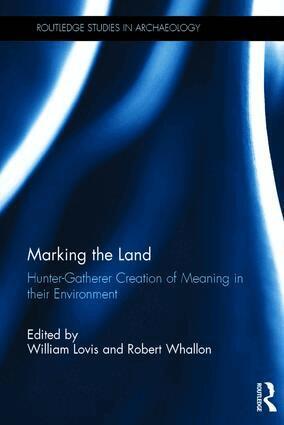
    Marking the Land

    Hunter-Gatherer Creation of Meaning in their Environment

    AvWilliam A Lovis,Robert Whallon

    Inbunden, Engelska, 2016

    Del i serien Routledge Studies in Archaeology

    2 726 kr

    Beställningsvara. Skickas inom 10-15 vardagar. Fri frakt över 249 kr.

    Beskrivning

    Marking the Land investigates how hunter-gatherers use physical landscape markers and environmental management to impose meaning on the spaces they occupy. The land is full of meaning for hunter-gatherers. Much of that meaning is inherent in natural phenomena, but some of it comes from modifications to the landscape that hunter-gatherers themselves make. Such alterations may be intentional or unintentional, temporary or permanent, and they can carry multiple layers of meaning, ranging from practical signs that provide guidance and information through to less direct indications of identity or abstract, highly symbolic signs of sacred or ceremonial significance. This volume investigates the conditions which determine the investment of time and effort in physical landscape marking by hunter-gatherers, and the factors which determine the extent to which these modifications are symbolically charged. Considering hunter-gatherer groups of varying sociocultural complexity and scale, Marking the Land provides a systematic consideration of this neglected aspect of hunter-gatherer adaptation and the varied environments within which they live.

    Produktinformation

    • Utgivningsdatum:2016-03-15
    • Mått:156 x 234 x 23 mm
    • Vikt:840 g
    • Format:Inbunden
    • Språk:Engelska
    • Serie:Routledge Studies in Archaeology
    • Antal sidor:304
    • Förlag:Taylor & Francis Ltd
    • ISBN:9781138950993

    Utforska kategorier

    • Arkeologiska perioder och områden inom Historia och arkeologi

    Mer om författaren

    William Lovis, Professor, Department of Anthropology and Curator of Anthropology, MSU Museum, Michigan State UniversityRobert Whallon, Professor, Department of Anthropology and Curator of Mediterranean Prehistory, Museum of Anthropological Archaeology, University of Michigan

    Recensioner i media

    ‘This indispensable theoretical and empirical companion to editors Brian Codding and Karen Kramer's Why Forage? (CH, Jan'17, 54-2326) focuses on understanding the multidimensional bases for hunter-gatherer perceptions and constructions of environmental value and meaning. Thirteen essays are appropriately divided among specialists in archaeology, ethnography/ethnology, ethnoarchaeology, and anthropological linguistics. They convincingly demonstrate that the creation, marking, and maintenance of sacred places help to "embed patterns of behavior and behavioral responses that articulate with environmental variability [both spatial and temporal] in an adaptive way." Excellent addition to the archaeological and ethnographic literature on hunting-gathering societies. Summing Up: Essential. Upper-division undergraduates and above.’ - B. Tavakolian, Denison University, in CHOICE"This volume should be in university libraries, and there are enough outstanding individual papers and enough topical variety and theoretical coherence overall to make this a useful addition to personal libraries." - Aubrey Cannon, McMaster University, Canada

    Innehållsförteckning

    • 1. Hunter-Gatherer Landscape Perception and Landscape “Marking”: The Multidimensional Construction of MeaningWilliam A. Lovis and Robert WhallonSection I: The Northern Latitudes2. Initializing the Landscape: Chipewyan Construction of Meaning in a Recently Occupied EnvironmentRobert Jarvenpa and Hetty Jo Brumbach3. Places on the Blackfoot Homeland: Markers of Cosmology, Social Relationships and HistoryGerald A. Oetelaar4. Markers in Space and Time: Reflections on the Nature of Place Names as Events in the Inuit Approach to the Territory Claudio Aporta5. Inuksuk, Sled Shoe, Placename: Past Inuit EthnogeographiesPeter J. Whitridge6. Network Maintenance in Big Rough Spaces with Few People: The Labrador Innu-Naskapi or MontagnaisWilliam A. LovisSection II: The Southern Latitudes7. Physical and Linguistic Marking of the Seri Landscape – Are They Connected?Carolyn K. O’Meara8. Bonescapes: Engaging People and Land with Animal Bones among South American Tropical ForagersGustavo G. Politis9. Unfolding Cultural Meanings: Wayfinding Practices Among the San of the Central Kalahari Akira Takada10. Continuity and Change in Warlpiri Practices of Marking the LandscapePetronella Vaarzon-Morel11. Signaling Presence: How Batek and Penan Hunter-Gatherers in Malaysia Mark the Landscape Lye Tuck PoSection III: Synthesis12. Marked Sacred Places of Hunter-Gatherer BandsRobert Whallon13. Hunter-Gatherer Landscape Perception and Landscape “Marking”: The Multidimensional Construction of MeaningRobert Whallon and William A. Lovis