Robert Whallon – författare
Visar alla böcker från författaren Robert Whallon. Handla med fri frakt och snabb leverans.
11 produkter
Marking the Land
Hunter-Gatherer Creation of Meaning in their Environment
Av William A Lovis, Robert Whallon
Häftad, 2019
728 kr
Lägg i varukorg
Marking the Land investigates how hunter-gatherers use physical landscape markers and environmental management to impose meaning on the spaces they occupy. The land is full of meaning for hunter-gatherers. Much of that meaning is inherent in natural phenomena, but some of it comes from …
Marking the Land
Hunter-Gatherer Creation of Meaning in their Environment
Av William A Lovis, Robert Whallon
Inbunden, 2016
2831 kr
Lägg i varukorg
Marking the Land investigates how hunter-gatherers use physical landscape markers and environmental management to impose meaning on the spaces they occupy. The land is full of meaning for hunter-gatherers. Much of that meaning is inherent in natural phenomena, but some of it comes from …
Marking the Land
Hunter-Gatherer Creation of Meaning in their Environment
Av Robert Whallon, William A Lovis
E-bok, 2016
838 kr
Lägg i varukorg
Marking the Land investigates how hunter-gatherers use physical landscape markers and environmental management to impose meaning on the spaces they occupy. The land is full of meaning for hunter-gatherers. Much of that meaning is inherent in natural phenomena, but some of it comes from …
Marking the Land
Hunter-Gatherer Creation of Meaning in their Environment
Av Robert Whallon, William A Lovis
E-bok, 2016
856 kr
Lägg i varukorg
Marking the Land investigates how hunter-gatherers use physical landscape markers and environmental management to impose meaning on the spaces they occupy. The land is full of meaning for hunter-gatherers. Much of that meaning is inherent in natural phenomena, but some of it comes from …
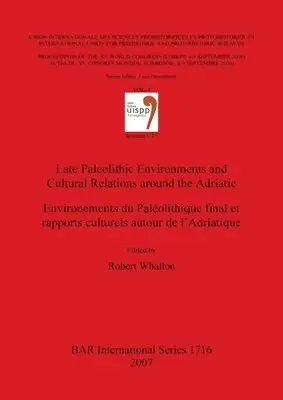
Late Paleolithic Environments and Cultural Relations around the Adriatic / Environements du Paléolithique final et rapports culturels autour de l'Adri
Session C17
Av Robert Whallon, Robert Whallon
Häftad, 2007
377 kr
Lägg i varukorg
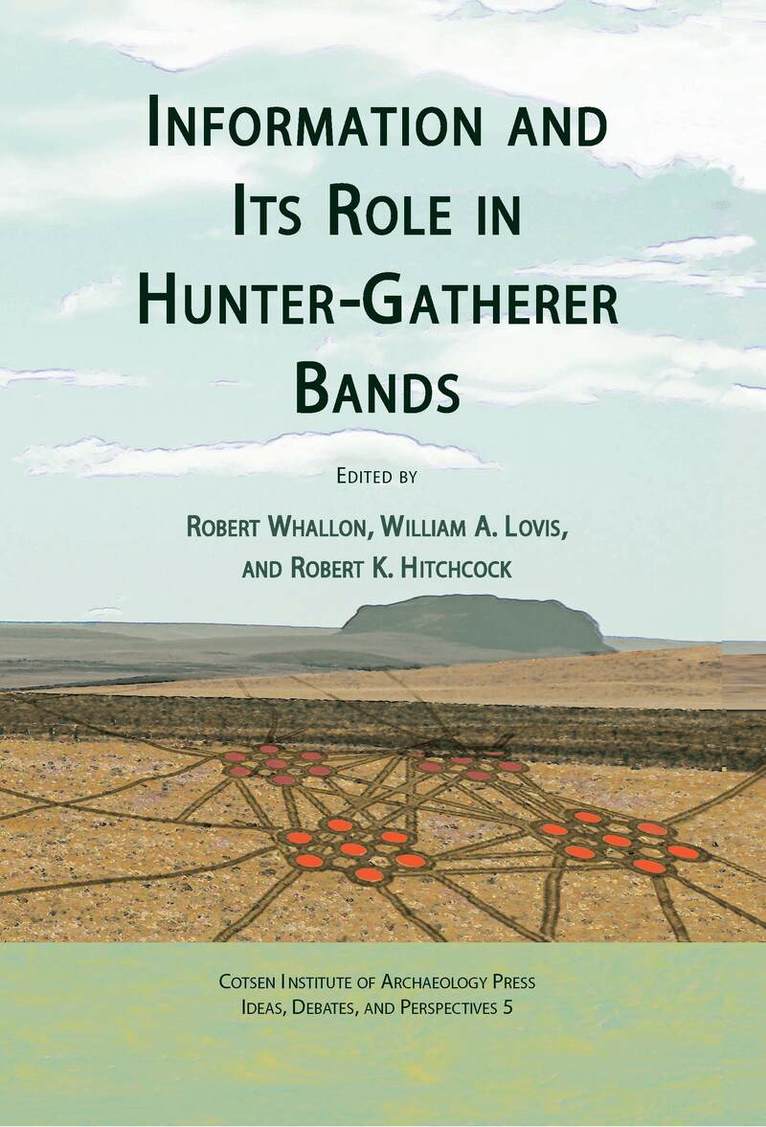
Information and Its Role in Hunter-Gatherer Bands
Av Robert K. Hitchcock, William A. Lovis m. fl.
Inbunden, 2011
669 kr
Lägg i varukorg
Information and its Role in Hunter-Gatherer Bands explores the question of how information, broadly conceived, is acquired, stored, circulated, and utilized in small-scale hunter-gatherer societies, or bands. Given the nature of this question, the volume brings together a group of scholars from …
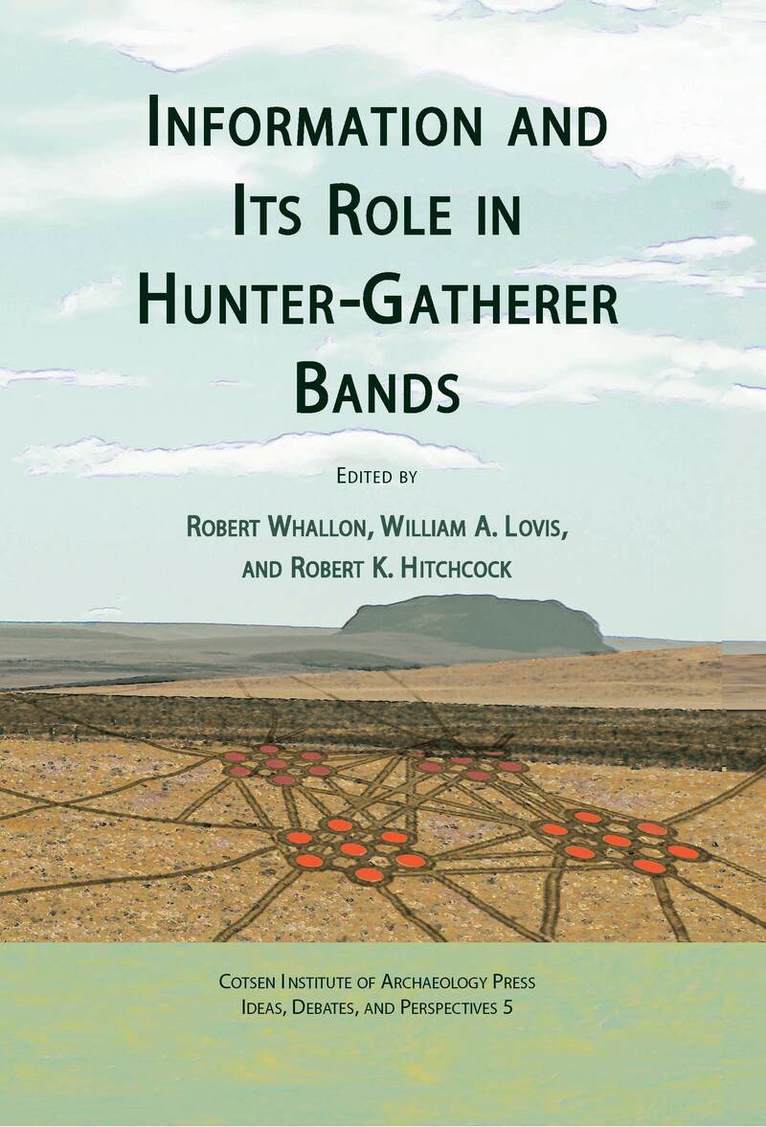
Information and Its Role in Hunter-Gatherer Bands
Av Robert K. Hitchcock, William A. Lovis m. fl.
Häftad, 2011
372 kr
Lägg i varukorg
Information and its Role in Hunter-Gatherer Bands explores the question of how information, broadly conceived, is acquired, stored, circulated, and utilized in small-scale hunter-gatherer societies, or bands. Given the nature of this question, the volume brings together a group of scholars from …
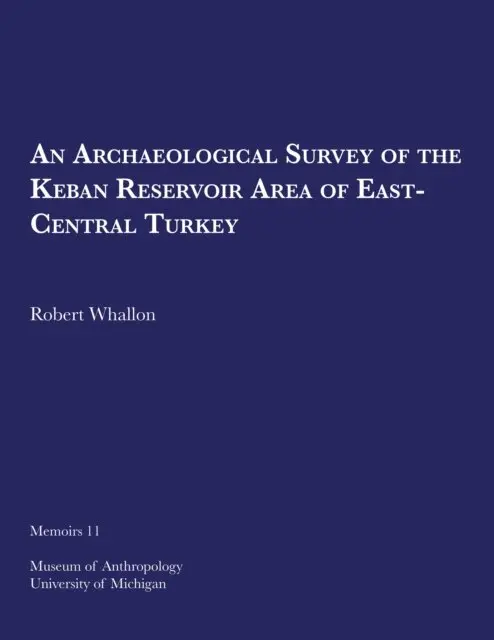
Archaeological Survey of the Keban Reservoir Area of East-Central Turkey
E-bok, 2020
391 kr
Lägg i varukorg
In this volume, author Robert Whallon reports on the results of an archaeological survey in east central Turkey. The crew found dozens of sites representing about 6,000 years of occupation, from the Early Chalcolithic (4500 BC) to the Ottoman period (roughly AD 1500).Included are drawings and …
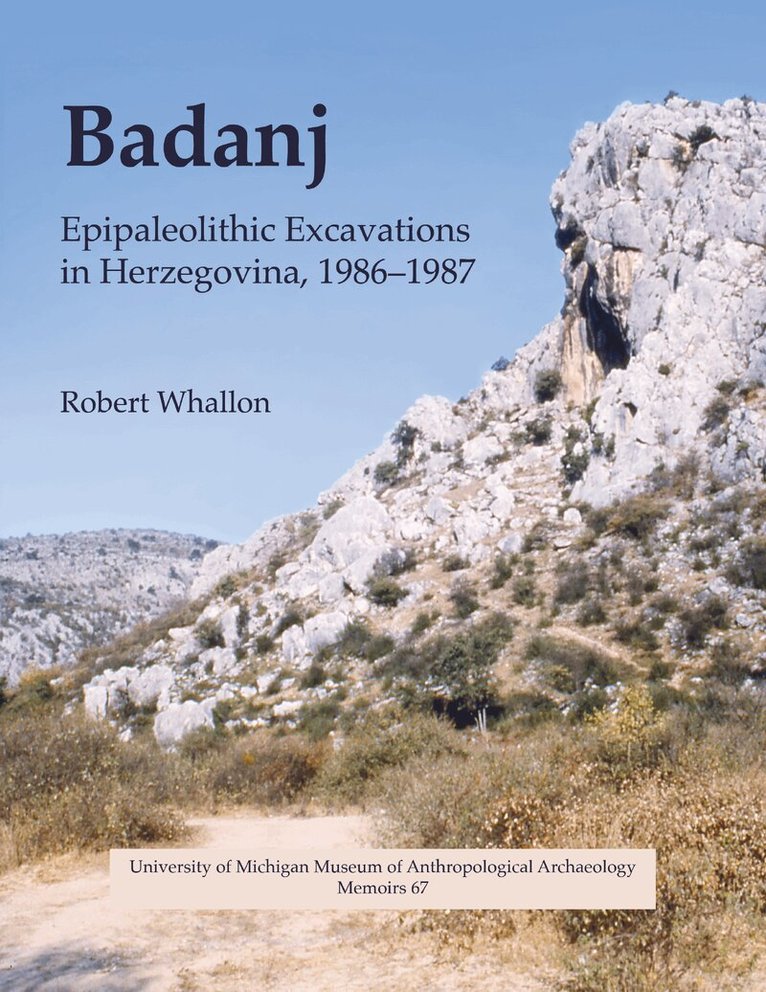
Badanj
Epipaleolithic Excavations in Herzegovina, 1986-1987
Häftad, 2025
1017 kr
Lägg i varukorg
This book presents the results of excavations made from 1986 to 1987 at the Epipaleolithic site of Badanj, which lies near the town of Stolac in southern Bosnia-Herzegovina. The site was already known from excavations made by Đuro Basler and from an engraved boulder uncovered by him that is …
Badanj
Epipaleolithic Excavations in Herzegovina, 1986-1987
E-bok, 2025
1512 kr
Lägg i varukorg
This book presents the results of excavations made from 1986 to 1987 at the Epipaleolithic site of Badanj, which lies near the town of Stolac in southern Bosnia-Herzegovina. The site was already known from excavations made by uro Basler and from an engraved boulder uncovered by him that is …
Archaeological Survey of the Keban Reservoir Area of East-Central Turkey
Häftad, 1979
271 kr
Tillfälligt slut
In this volume, author Robert Whallon reports on the results of an archaeological survey in east central Turkey. The crew found dozens of sites representing about 6,000 years of occupation, from the Early Chalcolithic (4500 BC) to the Ottoman period (roughly AD 1500). Included are drawings and …