• Fri frakt över 249 kr
  • •
  • Snabba leveranser
  • •
  • Billiga böcker
Kundservice

Du är på sajten för privatpersoner.

Företag, bibliotek eller offentlig verksamhet?

Du handlar på classic.bokus.com, där alla dina funktioner finns intakta.
Till classic.bokus.com
Bokus logotyp. Gå till startsidan.
  • Erbjudanden
  • Nyheter
  • Student
  • Topplistor
  • Barn & ungdom
  • Bokus Play
  • E-böcker
  • Pocketböcker
  • Spel & pussel

10% studentrabatt med kod TERM26

Sidfot

Mina sidor

    Hjälp

    • Kundservice
    • Vanliga frågor och svar
    • Frakt och leverans
    • Retur vid ångerrätt
    • Reklamera vara
    • Betalning
    • Köpvillkor
    • Allmänna villkor
    • Information om webbplatsens tillgänglighet

    Om Bokus

    • Om oss
    • Pressrum
    • För studenter
    • För företag
    • För bibliotek och offentlig verksamhet
    • För leverantörer
    • Hållbarhet

    Populärt

    • Aktuella erbjudanden
    • Presentkort
    • Studentlitteratur
    • Nya böcker
    • Topplistor
    • Signerade böcker
    • Engelska böcker

    Inspiration

    • Boktips
    • BookTok
    • Populära bokserier
    • Barnbokskaraktärer
    • Populära författare
    Logotyp för Bokus
    Följ oss på Facebook (extern länk)Följ oss på Instagram (extern länk)Följ oss på YouTube (extern länk)Följ oss på TikTok (extern länk)
    bokus @ CookiesAnpassa cookiesIntegritetspolicyKöpvillkor
    Till Citymail hemsida (extern länk)Till Budbee hemsida (extern länk)Till Postnord hemsida (extern länk)Till Schenker hemsida (extern länk)Till Early Bird hemsida (extern länk)Till Walleys hemsida (extern länk)
    1. Samhälle och politik
    2. Samhälle och kultur
    3. Kultur och medier
    4. Referensverk och tvärvetenskap

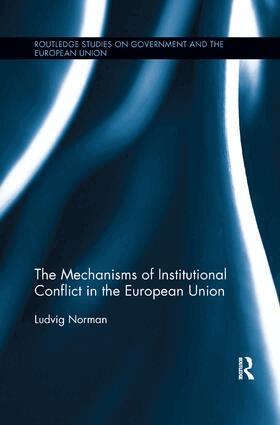
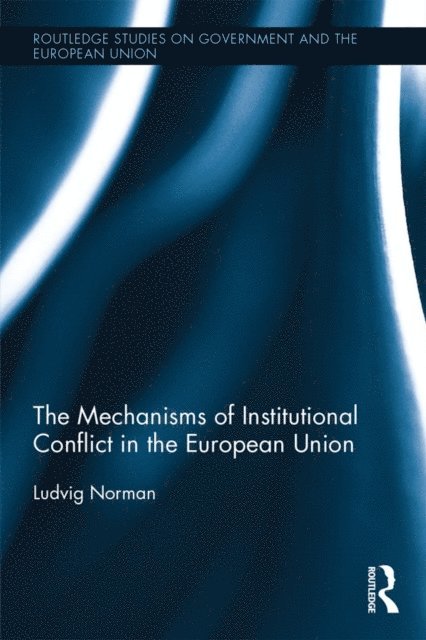
    Mechanisms of Institutional Conflict in the European Union

    AvLudvig Norman

    Inbunden, Engelska, 2016

    Del i serien Routledge Studies on Government and the European Union

    2 434 kr

    Beställningsvara. Skickas inom 10-15 vardagar. Fri frakt över 249 kr.

    Fler format och utgåvor

    Häftad

    727 kr

    E-bok

    855 kr

    E-bok

    855 kr

    Beskrivning

    How institutional conflicts arise in international political orders and the conditions shaping the outcomes of such conflicts has become the object of considerable contemporary focus. This book considers the dynamics of institutional conflict and institutional change in international organizations, specifically focusing on the European Union, the most highly integrated international political order on the globe. In a world where political decision making increasingly takes place above the nation state level, it theorises the social mechanisms that lead to the point at which these tensions become explicit and the customary functioning of international political orders tips into outright conflict between different organizational entities. Taking a constructivist approach, it examines two in-depth case studies - in the field of Justice and Home Affairs (JHA) and the EU’s Common Foreign and Security Policy (CFSP) - to explain the dynamics of the processes that lead up to institutional conflicts and provide some explanation for their final outcomes.This text will be of key interest to fields of and European Integration, EU Politics and more broadly International Relations.

    Produktinformation

    • Utgivningsdatum:2016-07-28
    • Mått:156 x 234 x 16 mm
    • Vikt:520 g
    • Format:Inbunden
    • Språk:Engelska
    • Serie:Routledge Studies on Government and the European Union
    • Antal sidor:184
    • Förlag:Taylor & Francis Ltd
    • ISBN:9781138963092

    Utforska kategorier

    • Referensverk och tvärvetenskap inom Samhälle och politik
    • Internationella relationer inom Samhälle och politik

    Mer om författaren

    Ludvig Norman is Senior Lecturer in the Department of Government, Uppsala University, Sweden.

    Recensioner i media

    "In an era when institutional conflict has seemingly become the norm in EU affairs, this book is a must read. Theoretically, instead of pulling existing work ‘off the shelf,’ Norman develops an innovative constructivist account of the social mechanisms shaping institutional change. Methodologically, he demonstrates how interpretive process tracing can be used to study such dynamics. The result is a book that not only tells us important things about the EU, but also contributes to central debates over theory and method." - Jeffrey T. Checkel, Simon Fraser University, Canada, and Peace Research Institute Oslo, Norway."Norman has produced an outstanding reflection on the dynamics of institutional conflict within the EU institutional framework. By linking new theoretical insights derived from international relations constructivism with empirical investigations in highly interesting case studies, the book makes a substantial contribution to our understanding of both the institutional dynamics and the political role of EU institutions. It is highly recommended for anyone interested in European security or European studies more generally." - Christian Kaunert, Professor of International Politics, Director of the European Institute for Security and Justice, University of Dundee, UK."This is a conceptually sophisticated, empirically rich, and theoretically meaningful contribution to the study of EU institutional dynamics. It can be read as an innovative constructivist approach at interpretive process tracing, an inductive account of the underexplored influence of EU-level legal services (Council, Commission, EP) in shaping integration discourse, and as a nuanced story of how JHA and CFSP have "communitarized" from humble intergovernmental origins. The impressive research design uses empirical triangulation and engages in alternative explanation testing in ways that few studies actually deliver on, and thus contributes to the growing interest at moving beyond either/or debates between rational institutionalists and constructivists." - Jeffrey Lewis, Cleveland State University, USA

    Innehållsförteckning

    • 1. Dynamics of Institutional Conflict in the European Union 2. Institutional Conflict and Change in International Political Orders 3. Explaining Institutional Change: The Role of Interpretive Process Tracing 4. Institutional Conflict in EU Criminal Law 5. Institutional Conflict in the EU’s External Action 6. Explaining institutional conflict: the Rupture Mechanism 7. The Environmental Crimes Case 8. The Small Arms Case 9. Conflict Dynamics: The Discursive Lock-in Mechanism 10. Concluding Remarks