• Fri frakt över 249 kr
  • •
  • Snabba leveranser
  • •
  • Billiga böcker
Kundservice

Du är på sajten för privatpersoner.

Företag, bibliotek eller offentlig verksamhet?

Du handlar på classic.bokus.com, där alla dina funktioner finns intakta.
Till classic.bokus.com
Bokus logotyp. Gå till startsidan.
  • Erbjudanden
  • Nyheter
  • Student
  • Topplistor
  • Barn & ungdom
  • Bokus Play
  • E-böcker
  • Pocketböcker
  • Spel & pussel

10% rabatt på allt med kod: NYSTART10 →

Sidfot

Mina sidor

    Hjälp

    • Kundservice
    • Vanliga frågor och svar
    • Frakt och leverans
    • Retur vid ångerrätt
    • Reklamera vara
    • Betalning
    • Köpvillkor
    • Allmänna villkor
    • Information om webbplatsens tillgänglighet

    Om Bokus

    • Om oss
    • Pressrum
    • För studenter
    • För företag
    • För bibliotek och offentlig verksamhet
    • För leverantörer
    • Hållbarhet

    Populärt

    • Aktuella erbjudanden
    • Presentkort
    • Studentlitteratur
    • Nya böcker
    • Topplistor
    • Signerade böcker
    • Engelska böcker

    Inspiration

    • Boktips
    • BookTok
    • Populära bokserier
    • Barnbokskaraktärer
    • Populära författare
    Logotyp för Bokus
    Följ oss på Facebook (extern länk)Följ oss på Instagram (extern länk)Följ oss på YouTube (extern länk)Följ oss på TikTok (extern länk)
    bokus @ CookiesAnpassa cookiesIntegritetspolicyKöpvillkor
    Till Citymail hemsida (extern länk)Till Budbee hemsida (extern länk)Till Postnord hemsida (extern länk)Till Schenker hemsida (extern länk)Till Early Bird hemsida (extern länk)Till Walleys hemsida (extern länk)
    1. Naturvetenskap och teknik
    2. Geovetenskap
    3. Miljövetenskap och miljöpolitik

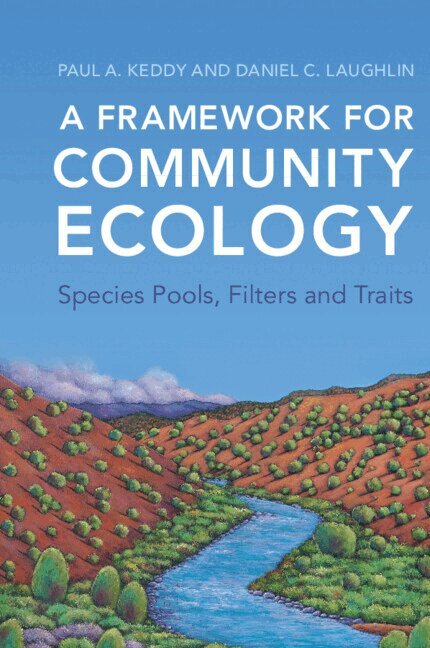
    A Framework for Community Ecology

    Species Pools, Filters and Traits

    AvPaul A. Keddy,Daniel C. Laughlin

    Inbunden, Engelska, 2021

    1 228 kr

    Beställningsvara. Skickas inom 10-15 vardagar. Fri frakt över 249 kr.

    Fler format och utgåvor

    Häftad

    520 kr

    Beskrivning

    This book addresses an important problem in ecology: how are communities assembled from species pools? This pressing question underlies a broad array of practical problems in ecology and environmental science, including restoration of damaged landscapes, management of protected areas, and protection of threatened species. This book presents a simple logical structure for ecological assembly and addresses key areas including species pools, traits, environmental filters, and functional groups. It demonstrates the use of two predictive models (CATS and Traitspace) and consists of many wide-ranging examples including plants in deserts, wetlands, and forests, and communities of fish, amphibians, birds, mammals, and fungi. Global in scope, this volume ranges from the arid lands of North Africa, to forests in the Himalayas, to Amazonian floodplains. There is a strong focus on applications, particularly the twin challenges of conserving biodiversity and understanding community responses to climate change.

    Produktinformation

    • Utgivningsdatum:2021-12-09
    • Mått:157 x 235 x 22 mm
    • Vikt:690 g
    • Format:Inbunden
    • Språk:Engelska
    • Antal sidor:368
    • Förlag:Cambridge University Press
    • ISBN:9781316512609

    Utforska kategorier

    • Miljövetenskap och miljöpolitik inom Naturvetenskap och teknik

    Mer om författaren

    Paul A. Keddy is an independent researcher who has taught community ecology for more than 30 years. Paul conducted award-winning research on environmental factors controlling plant communities and their manipulation to enhance native biodiversity. He delights in bringing science alive for his audience. Author of six books winning three scientific prizes, he also co-edited Ecological Assembly Rules: Perspectives, Advances and Retreats (Cambridge University Press, 1999). Daniel C. Laughlin is an Associate Professor of plant ecology and ecological modelling in the Department of Botany at the University of Wyoming. Daniel's research focuses on developing quantitative approaches to understand and predict how plant species and communities respond to global change. His lab develops trait-based models that translate ecological processes into statistical frameworks to predict how communities assemble along environmental gradients and how species interact at local scales.

    Recensioner i media

    '… this book opens many intriguing questions about the theoretical framework of community ecology … The rather idiosyncratic positions expressed by the authors may be stimulating for a broad audience of ecologists, even (perhaps especially) for those who disagree. It is exactly the unusual character of this book that makes it particularly interesting.' Simone Fattorini, Community Ecology

    Innehållsförteckning

    • Preface; 1. A general framework for community ecology; 2. Filters; 3. Species pools; 4. Traits; 5. Trait-environment interactions; 6. Functional groups; 7. Predictive models of community assembly; 8. Prospects and possibilities; References; Index.