Daniel C. Laughlin – Författare
Visar alla böcker från författaren Daniel C. Laughlin. Handla med fri frakt och snabb leverans.
4 produkter
4 produkter
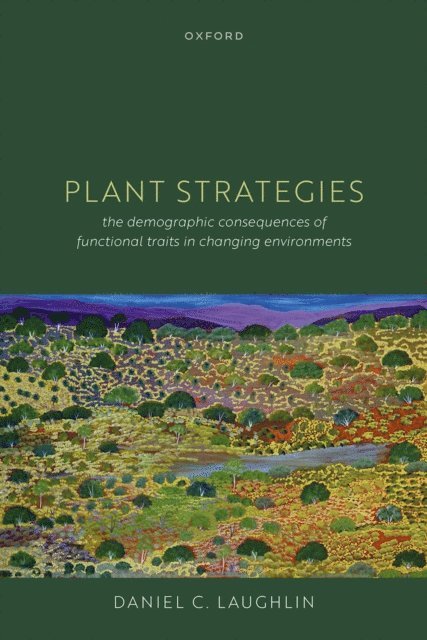
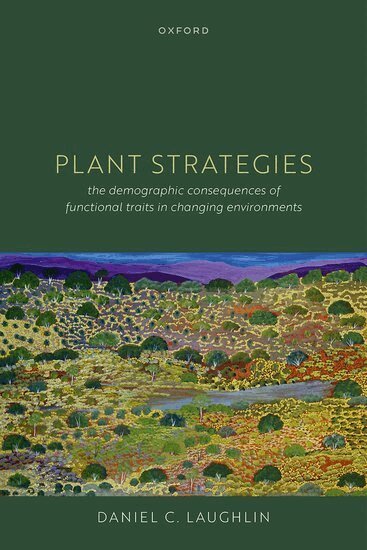
Plant Strategies
The Demographic Consequences of Functional Traits in Changing Environments
Inbunden, Engelska, 2023
1 633 kr
Skickas inom 5-8 vardagar
How do plants make a living? Some plants are gamblers, others are swindlers. Some plants are habitual spenders while others are strugglers and miserly savers. Plants have evolved a spectacular array of solutions to the existential problems of survival and reproduction in a world where resources are scarce, disturbances can be deadly, and competition is cut-throat. Few topics have both captured the imagination and furrowed the brows of plant ecologists, yet no topic is more important for understanding the assembly of plant communities, predicting plant responses to global change, and enhancing the restoration of our rapidly degrading biosphere. The vast array of plant strategy models that characterize the discipline now require synthesis. These models tend to emphasize either life history strategies based on demography, or functional strategies based on ecophysiology. Indeed, this disciplinary divide between demography and physiology runs deep and continues to this today. The goal of this accessible book is to articulate a coherent framework that unifies life history theory with comparative functional ecology to advance prediction in plant ecology. Armed with a deeper understanding of the dimensionality of life history and functional traits, we are now equipped to quantitively link phenotypes to population growth rates across gradients of resource availability and disturbance regimes. Predicting how species respond to global change is perhaps the most important challenge of our time. A robust framework for plant strategy theory will advance this research agenda by testing the generality of traits for predicting population dynamics.
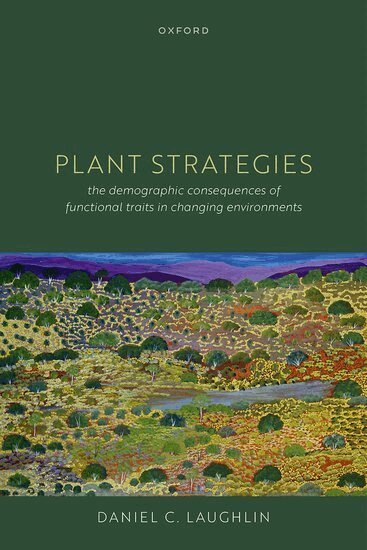
Plant Strategies
The Demographic Consequences of Functional Traits in Changing Environments
Häftad, Engelska, 2023
556 kr
Skickas inom 5-8 vardagar
How do plants make a living? Some plants are gamblers, others are swindlers. Some plants are habitual spenders while others are strugglers and miserly savers. Plants have evolved a spectacular array of solutions to the existential problems of survival and reproduction in a world where resources are scarce, disturbances can be deadly, and competition is cut-throat. Few topics have both captured the imagination and furrowed the brows of plant ecologists, yet no topic is more important for understanding the assembly of plant communities, predicting plant responses to global change, and enhancing the restoration of our rapidly degrading biosphere. The vast array of plant strategy models that characterize the discipline now require synthesis. These models tend to emphasize either life history strategies based on demography, or functional strategies based on ecophysiology. Indeed, this disciplinary divide between demography and physiology runs deep and continues to this today. The goal of this accessible book is to articulate a coherent framework that unifies life history theory with comparative functional ecology to advance prediction in plant ecology. Armed with a deeper understanding of the dimensionality of life history and functional traits, we are now equipped to quantitively link phenotypes to population growth rates across gradients of resource availability and disturbance regimes. Predicting how species respond to global change is perhaps the most important challenge of our time. A robust framework for plant strategy theory will advance this research agenda by testing the generality of traits for predicting population dynamics.
485 kr
Skickas inom 7-10 vardagar
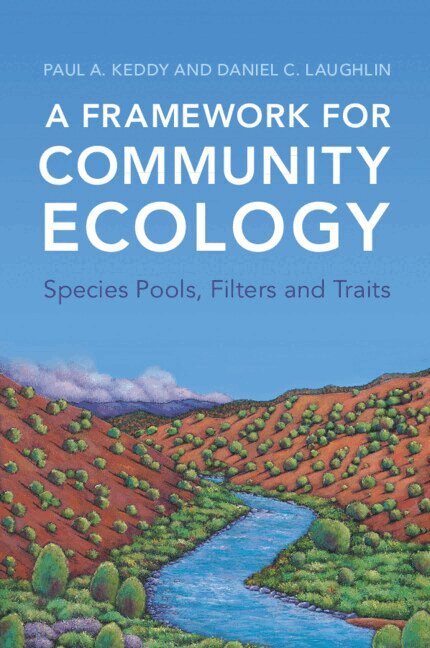
This book addresses an important problem in ecology: how are communities assembled from species pools? This pressing question underlies a broad array of practical problems in ecology and environmental science, including restoration of damaged landscapes, management of protected areas, and protection of threatened species. This book presents a simple logical structure for ecological assembly and addresses key areas including species pools, traits, environmental filters, and functional groups. It demonstrates the use of two predictive models (CATS and Traitspace) and consists of many wide-ranging examples including plants in deserts, wetlands, and forests, and communities of fish, amphibians, birds, mammals, and fungi. Global in scope, this volume ranges from the arid lands of North Africa, to forests in the Himalayas, to Amazonian floodplains. There is a strong focus on applications, particularly the twin challenges of conserving biodiversity and understanding community responses to climate change.
1 153 kr
Skickas inom 7-10 vardagar
This book addresses an important problem in ecology: how are communities assembled from species pools? This pressing question underlies a broad array of practical problems in ecology and environmental science, including restoration of damaged landscapes, management of protected areas, and protection of threatened species. This book presents a simple logical structure for ecological assembly and addresses key areas including species pools, traits, environmental filters, and functional groups. It demonstrates the use of two predictive models (CATS and Traitspace) and consists of many wide-ranging examples including plants in deserts, wetlands, and forests, and communities of fish, amphibians, birds, mammals, and fungi. Global in scope, this volume ranges from the arid lands of North Africa, to forests in the Himalayas, to Amazonian floodplains. There is a strong focus on applications, particularly the twin challenges of conserving biodiversity and understanding community responses to climate change.