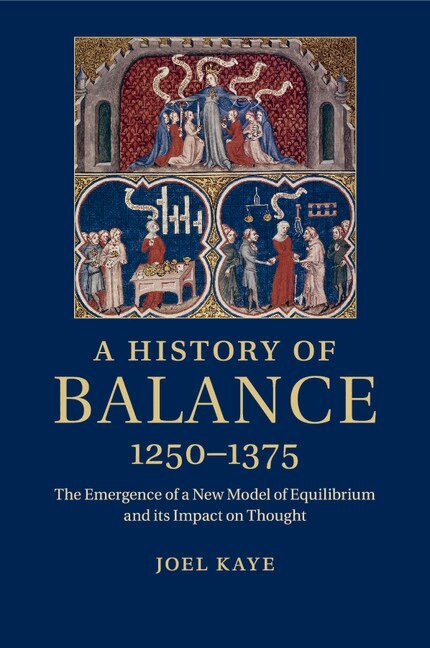
Häftad, Engelska, 2016
A History of Balance, 1250-1375
The Emergence of a New Model of Equilibrium and its Impact on Thought
Av Joel Kaye
586 kr
Beställningsvara. Skickas inom 5-8 vardagar. Fri frakt över 249 kr.
Beskrivning
Produktinformation
- Utgivningsdatum: 2016-06-23
- Mått: 153 x 230 x 28 mm
- Vikt: 770 g
- Format: Häftad
- Språk: Engelska
- Antal sidor: 530
- Förlag: Cambridge University Press
- ISBN: 9781316620281
Utforska kategorier
Mer om författaren
Joel Kaye is a Professor in the Department of History at Barnard College, Columbia University. His previous publications include Economy and Nature in the Fourteenth Century: Money, Market Exchange, and the Emergence of Scientific Thought (Cambridge, 1998).
Recensioner i media
'Simply stated, my enthusiasm for A History of Balance, 1250–1375 is boundless. Words such as 'transformative' and 'pathbreaking' do not adequately convey [Kaye's] accomplishment … [His] synthetic vision renders coherent vast bodies of medieval literatures that one might suspect are integral to one another, but that no one before him has demonstrated so thoroughly and powerfully. I feel confident in saying that in decades hence, scholars will still be citing and drawing upon the insights offered by [this book]. I guarantee that [it] will profoundly inform my own future research on the intellectual history of the Middle Ages.' Cary J. Nederman, Renaissance Quarterly
Betyg & recensioner
0 recensioner
Inga recensioner tillgängliga.