Joel Kaye - Böcker
Visar alla böcker från författaren Joel Kaye. Handla med fri frakt och snabb leverans.
6 produkter
6 produkter
109 kr
Skickas inom 5-8 vardagar
Del 35 - Cambridge Studies in Medieval Life and Thought: Fourth Series
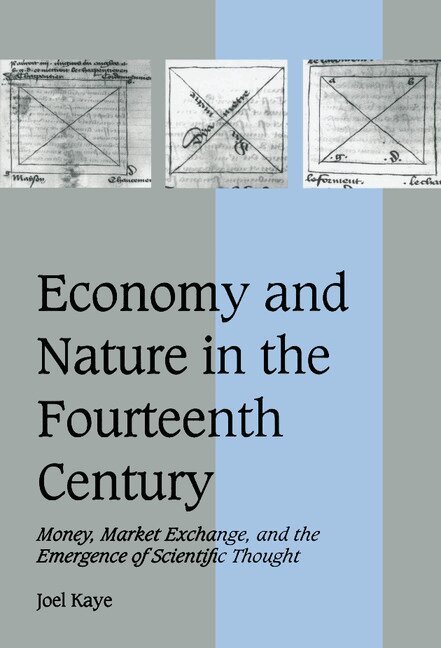
Economy and Nature in the Fourteenth Century
Money, Market Exchange, and the Emergence of Scientific Thought
Inbunden, Engelska, 1998
1 282 kr
Skickas inom 7-10 vardagar
This book provides perspectives on the ways in which scholastic natural philosophy anticipated and contributed to the emergence of scientific thought. Historians of medieval science have hesitated to step outside the sphere of intellectual culture in their search for factors influencing proto-scientific thought. This book searches for influences both within and beyond university culture, and argues that the transformation of the conceptual model of the natural world c.1260-1380 was strongly influenced by the contemporary rapid monetisation of European society. It analyses the impact of the monetised market place on the most characteristic concern of natural philosophy of the period: its preoccupation with measurement, gradation, and the quantification of qualities.
Del 35 - Cambridge Studies in Medieval Life and Thought: Fourth Series
Economy and Nature in the Fourteenth Century
Money, Market Exchange, and the Emergence of Scientific Thought
Häftad, Engelska, 2000
496 kr
Skickas inom 7-10 vardagar
This book provides perspectives on the ways in which scholastic natural philosophy anticipated and contributed to the emergence of scientific thought. Historians of medieval science have hesitated to step outside the sphere of intellectual culture in their search for factors influencing proto-scientific thought. This book searches for influences both within and beyond university culture, and argues that the transformation of the conceptual model of the natural world c.1260-1380 was strongly influenced by the contemporary rapid monetisation of European society. It analyses the impact of the monetised market place on the most characteristic concern of natural philosophy of the period: its preoccupation with measurement, gradation, and the quantification of qualities.
381 kr
Skickas inom 10-15 vardagar
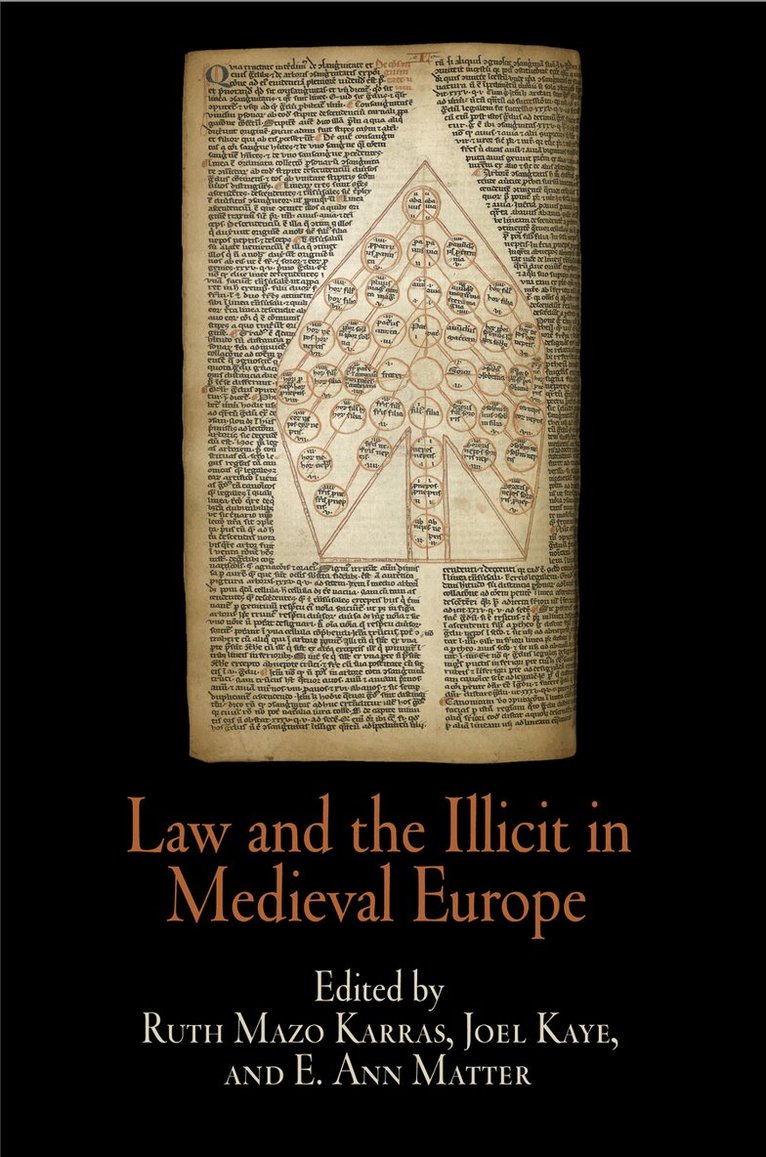
In the popular imagination, the Middle Ages are often associated with lawlessness. As historians have long recognized, however, medieval culture was characterized by an enormous respect for law, legal procedure, and the ideals of justice and equity. Many of our most important modern institutions and legal conceptions grew out of medieval law in its myriad forms (Roman, canon, common, customary, and feudal).Institutional structures represent only a small portion of the wider cultural field affected by-and affecting-law. In Law and the Illicit in Medieval Europe such distinguished scholars as Patrick Geary, William Chester Jordan, R. I. Moore, Edward M. Peters, and Susan Mosher Stuard make the case that the development of law is deeply implicated in the growth of medieval theology and Christian doctrine; the construction of discourses on sin, human nature, honor, and virtue; the multiplying forms governing chivalry, demeanor, and social interaction, including gender relations; and the evolution of scholasticism, from its institutional context within the university to its forms of presentation, argumentation, and proof.
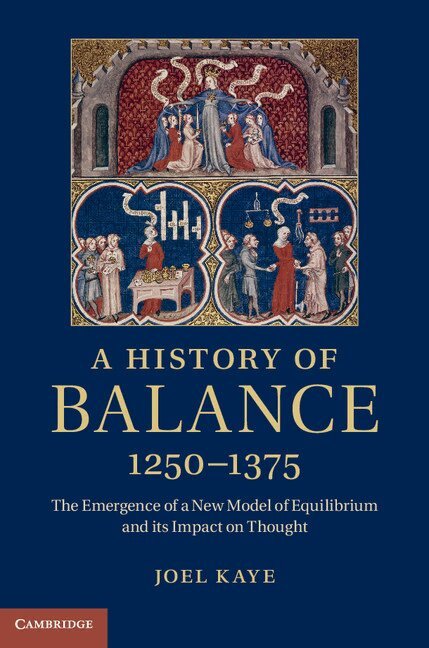
A History of Balance, 1250-1375
The Emergence of a New Model of Equilibrium and its Impact on Thought
Inbunden, Engelska, 2014
1 729 kr
Skickas inom 7-10 vardagar
The ideal of balance and its association with what is ordered, just, and healthful remained unchanged throughout the medieval period. The central place allotted to balance in the workings of nature and society also remained unchanged. What changed within the culture of scholasticism, between approximately 1280 and 1360, was the emergence of a greatly expanded sense of what balance is and can be. In this groundbreaking history of balance, Joel Kaye reveals that this new sense of balance and its potentialities became the basis of a new model of equilibrium, shaped and shared by the most acute and innovative thinkers of the period. Through a focus on four disciplines - scholastic economic thought, political thought, medical thought, and natural philosophy - Kaye's book reveals that this new model of equilibrium opened up striking new vistas of imaginative and speculative possibility, making possible a profound re-thinking of the world and its workings.
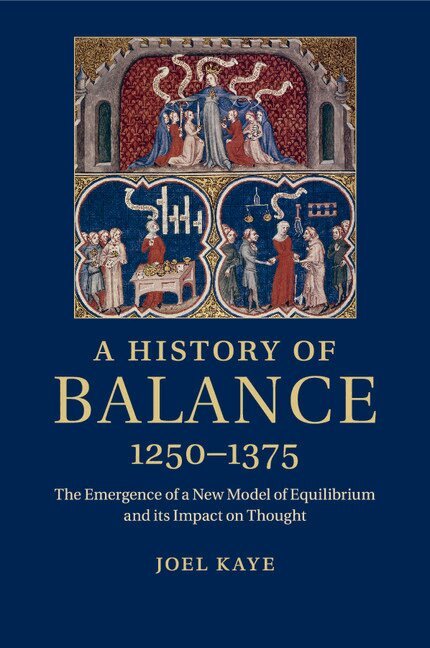
A History of Balance, 1250-1375
The Emergence of a New Model of Equilibrium and its Impact on Thought
Häftad, Engelska, 2016
441 kr
Skickas inom 7-10 vardagar
The ideal of balance and its association with what is ordered, just, and healthful remained unchanged throughout the medieval period. The central place allotted to balance in the workings of nature and society also remained unchanged. What changed within the culture of scholasticism, between approximately 1280 and 1360, was the emergence of a greatly expanded sense of what balance is and can be. In this groundbreaking history of balance, Joel Kaye reveals that this new sense of balance and its potentialities became the basis of a new model of equilibrium, shaped and shared by the most acute and innovative thinkers of the period. Through a focus on four disciplines - scholastic economic thought, political thought, medical thought, and natural philosophy - Kaye's book reveals that this new model of equilibrium opened up striking new vistas of imaginative and speculative possibility, making possible a profound re-thinking of the world and its workings.