• Fri frakt över 249 kr
  • •
  • Snabba leveranser
  • •
  • Billiga böcker
Kundservice

Du är på sajten för privatpersoner.

Företag, bibliotek eller offentlig verksamhet?

Du handlar på classic.bokus.com, där alla dina funktioner finns intakta.
Till classic.bokus.com
Bokus logotyp. Gå till startsidan.
  • Erbjudanden
  • Student
  • Topplistor
  • Barn & ungdom
  • Bokus Play
  • E-böcker
  • Ljudböcker
  • Pocketböcker
  • Spel och pussel

Skapa nya rutiner – hälsoböcker upp till 50% →

Sidfot

Mina sidor

    Hjälp

    • Kundservice
    • Vanliga frågor och svar
    • Frakt och leverans
    • Retur vid ångerrätt
    • Reklamera vara
    • Betalning
    • Köpvillkor
    • Allmänna villkor
    • Information om webbplatsens tillgänglighet

    Om Bokus

    • Om oss
    • Pressrum
    • För studenter
    • För företag
    • För bibliotek och offentlig verksamhet
    • För leverantörer
    • Hållbarhet

    Populärt

    • Aktuella erbjudanden
    • Presentkort
    • Studentlitteratur
    • Nya böcker
    • Topplistor
    • Signerade böcker
    • Engelska böcker

    Inspiration

    • Boktips
    • BookTok
    • Barnbokskaraktärer
    • Populära författare
    Logotyp för Bokus
    Följ oss på Facebook (extern länk)Följ oss på Instagram (extern länk)Följ oss på YouTube (extern länk)Följ oss på TikTok (extern länk)
    bokus @ CookiesAnpassa cookiesIntegritetspolicyKöpvillkor
    Till Citymail hemsida (extern länk)Till Budbee hemsida (extern länk)Till Postnord hemsida (extern länk)Till Schenker hemsida (extern länk)Till Early Bird hemsida (extern länk)Till Walleys hemsida (extern länk)
    1. Data och IT
    2. Systemvetenskap och AI

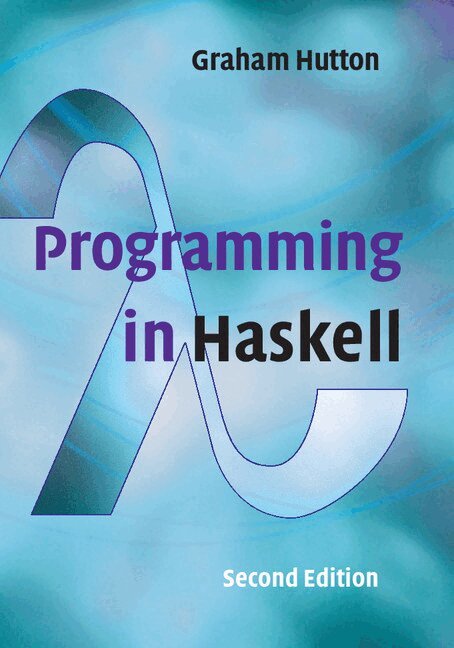
    Programming in Haskell

    AvGraham Hutton

    Häftad, Engelska, 2016

    469 kr

    . Fri frakt över 249 kr.

    Fler format och utgåvor

    E-bok

    602 kr

    E-bok

    603 kr

    Beskrivning

    Haskell is a purely functional language that allows programmers to rapidly develop clear, concise, and correct software. The language has grown in popularity in recent years, both in teaching and in industry. This book is based on the author's experience of teaching Haskell for more than twenty years. All concepts are explained from first principles and no programming experience is required, making this book accessible to a broad spectrum of readers. While Part I focuses on basic concepts, Part II introduces the reader to more advanced topics. This new edition has been extensively updated and expanded to include recent and more advanced features of Haskell, new examples and exercises, selected solutions, and freely downloadable lecture slides and example code. The presentation is clean and simple, while also being fully compliant with the latest version of the language, including recent changes concerning applicative, monadic, foldable, and traversable types.

    Produktinformation

    • Utgivningsdatum:2016-09-01
    • Mått:174 x 246 x 17 mm
    • Vikt:540 g
    • Format:Häftad
    • Språk:Engelska
    • Antal sidor:318
    • Upplaga:2
    • Förlag:Cambridge University Press
    • ISBN:9781316626221

    Utforska kategorier

    • Systemvetenskap och AI inom Data och IT
    • Beräkning och matematisk analys inom Naturvetenskap och teknik
    • Programspråk inom Data och IT

    Mer om författaren

    Graham Hutton is Professor of Computer Science at the University of Nottingham. He has taught Haskell to thousands of students and received numerous best lecturer awards. Hutton has served as an editor of the Journal of Functional Programming, Chair of the Haskell Symposium and the International Conference on Functional Programming, and Vice-Chair of the Association for Computing Machinery (ACM) Special Interest Group on Programming Languages, and is an ACM Distinguished Scientist.

    Recensioner i media

    'The skills you acquire by studying this book will make you a much better programmer no matter what language you use to actually program in.' Erik Meijer, Facebook, from the Foreword

    Innehållsförteckning

    • Foreword; Preface; Part I. Basic Concepts: 1. Introduction; 2. First steps; 3. Types and classes; 4. Defining functions; 5. List comprehensions; 6. Recursive functions; 7. Higher-order functions; 8. Declaring types and classes; 9. The countdown problem; Part II. Going Further: 10. Interactive programming; 11. Unbeatable tic-tac-toe; 12. Monads and more; 13. Monadic parsing; 14. Foldables and friends; 15. Lazy evaluation; 16. Reasoning about programs; 17. Calculating compilers; Appendix A. Selected solutions; Appendix B. Standard prelude; Bibliography; Index.