• Fri frakt över 249 kr
  • •
  • Snabba leveranser
  • •
  • Billiga böcker
Kundservice

Du är på sajten för privatpersoner.

Företag, bibliotek eller offentlig verksamhet?

Du handlar på classic.bokus.com, där alla dina funktioner finns intakta.
Till classic.bokus.com
Bokus logotyp. Gå till startsidan.
  • Erbjudanden
  • Nyheter
  • Student
  • Topplistor
  • Barn & ungdom
  • Bokus Play
  • E-böcker
  • Pocketböcker
  • Spel & pussel

10% rabatt på allt med kod NYSTART10 →

Sidfot

Mina sidor

    Hjälp

    • Kundservice
    • Vanliga frågor och svar
    • Frakt och leverans
    • Retur vid ångerrätt
    • Reklamera vara
    • Betalning
    • Köpvillkor
    • Allmänna villkor
    • Information om webbplatsens tillgänglighet

    Om Bokus

    • Om oss
    • Pressrum
    • För studenter
    • För företag
    • För bibliotek och offentlig verksamhet
    • För leverantörer
    • Hållbarhet

    Populärt

    • Aktuella erbjudanden
    • Presentkort
    • Studentlitteratur
    • Nya böcker
    • Topplistor
    • Signerade böcker
    • Engelska böcker

    Inspiration

    • Boktips
    • BookTok
    • Populära bokserier
    • Barnbokskaraktärer
    • Populära författare
    Logotyp för Bokus
    Följ oss på Facebook (extern länk)Följ oss på Instagram (extern länk)Följ oss på YouTube (extern länk)Följ oss på TikTok (extern länk)
    bokus @ CookiesAnpassa cookiesIntegritetspolicyKöpvillkor
    Till Citymail hemsida (extern länk)Till Budbee hemsida (extern länk)Till Postnord hemsida (extern länk)Till Schenker hemsida (extern länk)Till Early Bird hemsida (extern länk)Till Walleys hemsida (extern länk)
    1. Filosofi och religion
    2. Filosofi
    3. Filosofiska discipliner

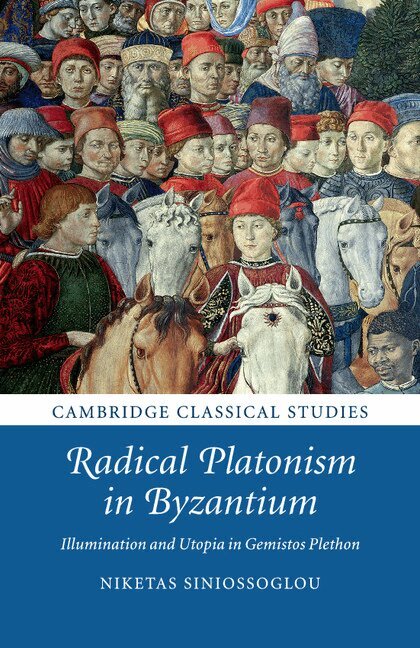
    Radical Platonism in Byzantium

    Illumination and Utopia in Gemistos Plethon

    AvNiketas Siniossoglou

    Häftad, Engelska, 2016

    Del i serien Cambridge Classical Studies

    463 kr

    Beställningsvara. Skickas inom 10-15 vardagar. Fri frakt över 249 kr.

    Fler format och utgåvor

    Inbunden

    1 764 kr

    Beskrivning

    Byzantium has recently attracted much attention, principally among cultural, social and economic historians. This book shifts the focus to philosophy and intellectual history, exploring the thought-world of visionary reformer Gemistos Plethon (c.1355-1452). It argues that Plethon brought to their fulfilment latent tendencies among Byzantine humanists towards a distinctive anti-Christian and pagan outlook. His magnum opus, the pagan Nomoi, was meant to provide an alternative to, and escape-route from, the disputes over the Orthodoxy of Gregory Palamas and Thomism. It was also a groundbreaking reaction to the bankruptcy of a pre-existing humanist agenda and to aborted attempts at the secularisation of the State, whose cause Plethon had himself championed in his two utopian Memoranda. Inspired by Plato, Plethon's secular utopianism and paganism emerge as the two sides of a single coin. On another level, the book challenges anti-essentialist scholarship that views paganism and Christianity as social and cultural constructions.

    Produktinformation

    • Utgivningsdatum:2016-09-22
    • Mått:140 x 216 x 26 mm
    • Vikt:570 g
    • Format:Häftad
    • Språk:Engelska
    • Serie:Cambridge Classical Studies
    • Antal sidor:472
    • Förlag:Cambridge University Press
    • ISBN:9781316629598

    Utforska kategorier

    • Filosofiska discipliner inom Filosofi och religion

    Mer om författaren

    Niketas Siniossoglou is a British Academy Postdoctoral Fellow and Junior Research Fellow of Wolfson College, Cambridge. He is the author of Plato and Theodoret: The Christian Appropriation of Platonic Philosophy and the Hellenic Intellectual Resistance (Cambridge, 2008).

    Recensioner i media

    "This stimulating book will offer much food for thought, even to those readers who, in the end, will not be prepared to accept all of Siniossoglou’s conclusions." --BMCR

    Innehållsförteckning

    • Introduction: Plethon and the notion of Paganism; Part I. Lost Rings of the Platonist Golden Chain: 1. Underground Platonism in Byzantium; 2. The rise of the Byzantine Illuminati; 3. The Plethon affair; Part II. The Elements of Pagan Platonism: 4. Epistemic optimism; 5. Pagan ontology; 6. Symbolic theology: the mythologising of Platonic ontology; Part III. Mistra versus Athos: 7. Intellectual and spiritual utopias; Part IV. The Path of Ulysses and the Path of Abraham: 8. Conclusion; Epilogue: 'Spinozism before Spinoza', or the pagan roots of modernity.