E-bok, Engelska, 2016
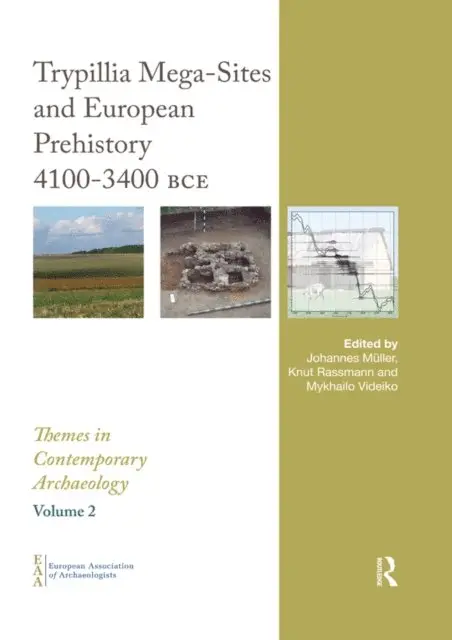
Trypillia Mega-Sites and European Prehistory
Av Mykhailo Videiko, Knut Rassmann, Johannes Muller
981 kr
Läs direkt i Bokus Reader – eller ladda ned till din enhet
Beskrivning
In European prehistory population agglomerations of more than 10,000 inhabitants per site are a seldom phenomenon. A big surprise to the archaeological community was the discovery of Trypillia mega-sites of more than 250 hectares and with remains of more than 2000 houses by a multidisciplinary approach of Soviet and Ukrainian archaeology, including aerial photography, geophysical prospection and excavations nearly 50 years ago. The extraordinary development took place at the border of the North Pontic Forest Steppe and Steppe zone ca. 4100–3400 BCE.
Since then many questions arose which are of main relevance: Why, how and under which environmental conditions did Trypillia mega-sites develop? How long did they last? Were social and/or ecological reasons responsible for this social experiment? Are Trypillia and the similar sized settlement of Uruk two different concepts of social behaviour?
Paradigm change in fieldwork and excavation strategies enabled research teams during the last decade to analyse the mega-sites in their spatial and social complexity. High precision geophysics, target excavations and a new design of systematic field strategies deliver empirical data representative for the large sites. Archaeological research contributed immensely to aspects of anthropogenic induced steppe development and subsistence concepts that did not reach the carrying capacities. Probabilistic models based on 14C-dates made the contemporaneity of the mega-site house structures most probable.
In consequence, Trypillia mega-sites are an independent European phenomenon that contrasts both concepts of urbanism and social stratification that is seen with similar demographic figures in Mesopotamia. The new Trypillia research can be read as the methodological progress in European archaeology.
Produktinformation
- Utgivningsdatum: 2016-01-22
- Språk: Engelska
- Filformat: EPUB
- Kopieringsskydd: LCP
- ISBN: 9781317247913
- Förlag: Taylor & Francis
Utforska kategorier
Betyg & recensioner
0 recensioner
Inga recensioner tillgängliga.