• Fri frakt över 249 kr
  • •
  • Snabba leveranser
  • •
  • Billiga böcker
Kundservice

Du är på sajten för privatpersoner.

Företag, bibliotek eller offentlig verksamhet?

Du handlar på classic.bokus.com, där alla dina funktioner finns intakta.
Till classic.bokus.com
Bokus logotyp. Gå till startsidan.
  • Erbjudanden
  • Nyheter
  • Student
  • Topplistor
  • Barn & ungdom
  • Bokus Play
  • E-böcker
  • Pocketböcker
  • Spel & pussel

10% rabatt på allt med kod NYSTART10 →

Sidfot

Mina sidor

    Hjälp

    • Kundservice
    • Vanliga frågor och svar
    • Frakt och leverans
    • Retur vid ångerrätt
    • Reklamera vara
    • Betalning
    • Köpvillkor
    • Allmänna villkor
    • Information om webbplatsens tillgänglighet

    Om Bokus

    • Om oss
    • Pressrum
    • För studenter
    • För företag
    • För bibliotek och offentlig verksamhet
    • För leverantörer
    • Hållbarhet

    Populärt

    • Aktuella erbjudanden
    • Presentkort
    • Studentlitteratur
    • Nya böcker
    • Topplistor
    • Signerade böcker
    • Engelska böcker

    Inspiration

    • Boktips
    • BookTok
    • Populära bokserier
    • Barnbokskaraktärer
    • Populära författare
    Logotyp för Bokus
    Följ oss på Facebook (extern länk)Följ oss på Instagram (extern länk)Följ oss på YouTube (extern länk)Följ oss på TikTok (extern länk)
    bokus @ CookiesAnpassa cookiesIntegritetspolicyKöpvillkor
    Till Citymail hemsida (extern länk)Till Budbee hemsida (extern länk)Till Postnord hemsida (extern länk)Till Schenker hemsida (extern länk)Till Early Bird hemsida (extern länk)Till Walleys hemsida (extern länk)
    1. Historia och arkeologi
    2. Historia
    3. Militärhistoria
    4. Första världskriget

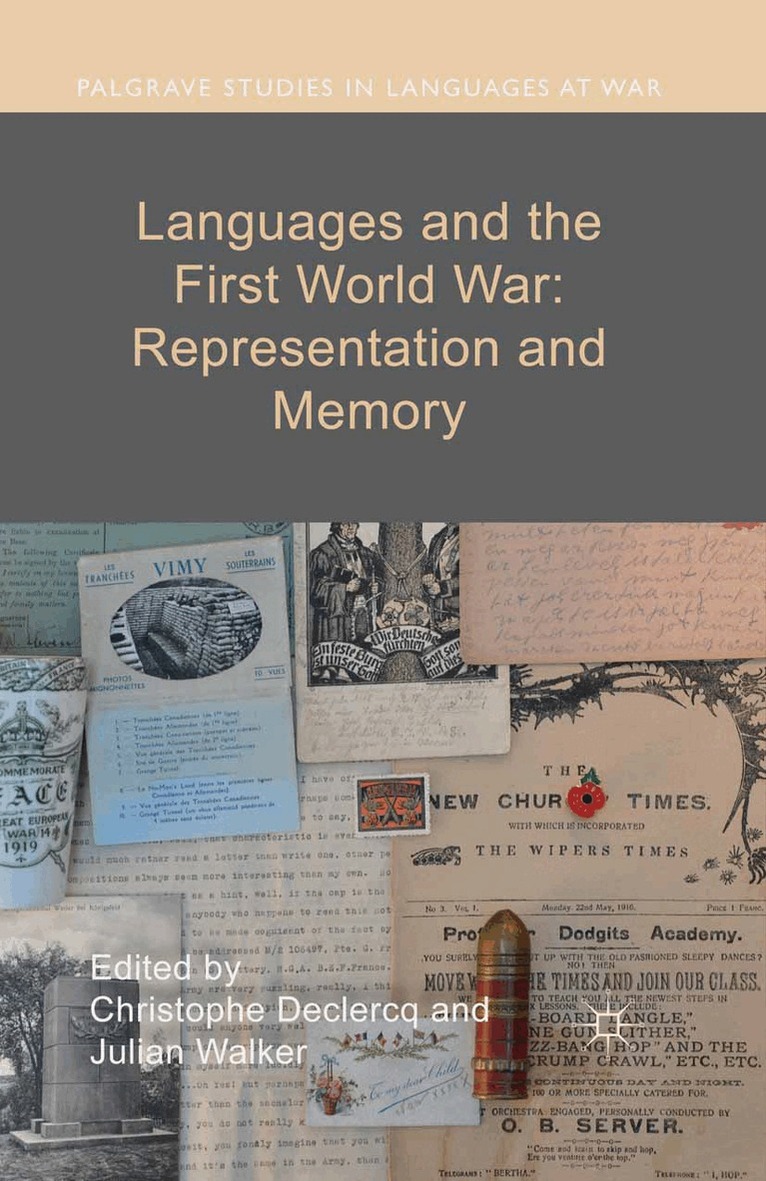
    Languages and the First World War: Representation and Memory

    AvChristophe Declercq,Julian Walker

    Häftad, Engelska, 2017

    Del i serien Palgrave Studies in Languages at War

    563 kr

    Beställningsvara. Skickas inom 10-15 vardagar. Fri frakt över 249 kr.

    Beskrivning

    With several terms from the First World War still present in modern speech, Languages and the First World War presents over 30 essays by international academics investigating the linguistic aspects of the 1914-18 conflict. The first of the two volumes covers language change and documentation during the period of the war, while the second examines the representation and the memory of the war. Communicating in a Transnational War examines languages at the front, including the subject of interpretation, translation and parallels between languages; communication with the home front; propaganda and language manipulation; and recording language during the war. Representation and Memory examines historiographical issues; the nature of representing the war in letters and diaries; the documentation of language change; the language of representing the war in reportage and literature; and the language of remembering the war. Covered in the process are slang, censorship, soldiers' phrasebooks, code-switching, borrowing terms, the problems facing multilingual armies, and gendered language.

    Produktinformation

    • Utgivningsdatum:2017-02-27
    • Mått:140 x 216 x 15 mm
    • Vikt:346 g
    • Format:Häftad
    • Språk:Engelska
    • Serie:Palgrave Studies in Languages at War
    • Antal sidor:256
    • Förlag:Palgrave Macmillan
    • ISBN:9781349715473

    Utforska kategorier

    • Första världskriget inom Historia och arkeologi
    • Språkvetenskap och lingvistik inom Språk och ordböcker

    Mer om författaren

    Julian Walker is a British Library educator, an artist and writer. His books on language include Discovering Words, Team Talk: Sporting Words and their Origins and Trench Talk. Christophe Declercq is a lecturer in translation (University College London, UK and University of Antwerp, Belgium) who has been working on Belgian refugees in Britain for well over a decade. On the subject, he has spoken widely at conferences in both Britain and Belgium, has worked with the BBC and VRT (Belgian television) and manages several social media outlets.

    Innehållsförteckning

    • AcknowledgementsPART I: THE HISTORIAN'S PROBLEMS1. Problems and challenges of a historical approach2. Translation, interpretation and mistranslation: Belgian exiles and 'reformed' soldiers, their records and problems encountered by English language researchersPART II: REPRESENTING THE PRESENT3. 'Fake Belgium' Linguistic issues in the diary of Father Achiel Van Walleghem (1914-1919)4. Out of the Trenches: The Rhetoric of Letters from the Western FrontPART III: LANGUAGE USE AND CHANGE5. 'Aussie': code-switching in an Australian soldiers' magazine – an overview6. From Antwerp to Britain and back again: the language of the Belgian refugee in Britain during the First World War7. Language Changes in the Jewish Community in Kosovo and Metohija after the Balkan Wars (1912-1913) and the First World War (1914-1918)PART IV: LITERATURE AND REPRESENTATION8. 'Excursion into a Foreign Language': Frederic Manning and Ford Madox Ford9. 14 / 1914. On Jean Échenoz's Great War, meta-discourse and the English reception10. 'The Language of Espionage: Mata Hari and the creation of the spy-courtesan'PART V: COMMEMORATION AND MEMORY11. ''Here is our blood. When are our rights?' Flemish Graffiti and the Great War'12. The Languages of Remembrance: An Attempt at a Taxonomy13. Wartime citations in Ernest Weekley's An Etymological Dictionary of Modern English (1921) and contemporary dictionaries14. War Discourse: still talking about the First World War in Britain, 1914-2014