• Fri frakt över 249 kr
  • •
  • Snabba leveranser
  • •
  • Billiga böcker
Kundservice

Du är på sajten för privatpersoner.

Företag, bibliotek eller offentlig verksamhet?

Du handlar på classic.bokus.com, där alla dina funktioner finns intakta.
Till classic.bokus.com
Bokus logotyp. Gå till startsidan.
  • Erbjudanden
  • Nyheter
  • Student
  • Topplistor
  • Barn & ungdom
  • Bokus Play
  • E-böcker
  • Pocketböcker
  • Spel & pussel

10% rabatt på allt med kod: NYSTART10 →

Sidfot

Mina sidor

    Hjälp

    • Kundservice
    • Vanliga frågor och svar
    • Frakt och leverans
    • Retur vid ångerrätt
    • Reklamera vara
    • Betalning
    • Köpvillkor
    • Allmänna villkor
    • Information om webbplatsens tillgänglighet

    Om Bokus

    • Om oss
    • Pressrum
    • För studenter
    • För företag
    • För bibliotek och offentlig verksamhet
    • För leverantörer
    • Hållbarhet

    Populärt

    • Aktuella erbjudanden
    • Presentkort
    • Studentlitteratur
    • Nya böcker
    • Topplistor
    • Signerade böcker
    • Engelska böcker

    Inspiration

    • Boktips
    • BookTok
    • Populära bokserier
    • Barnbokskaraktärer
    • Populära författare
    Logotyp för Bokus
    Följ oss på Facebook (extern länk)Följ oss på Instagram (extern länk)Följ oss på YouTube (extern länk)Följ oss på TikTok (extern länk)
    bokus @ CookiesAnpassa cookiesIntegritetspolicyKöpvillkor
    Till Citymail hemsida (extern länk)Till Budbee hemsida (extern länk)Till Postnord hemsida (extern länk)Till Schenker hemsida (extern länk)Till Early Bird hemsida (extern länk)Till Walleys hemsida (extern länk)
    1. Historia och arkeologi
    2. Historia
    3. Historia: särskilda händelser och ämnen
    4. Kolonialism och imperialism

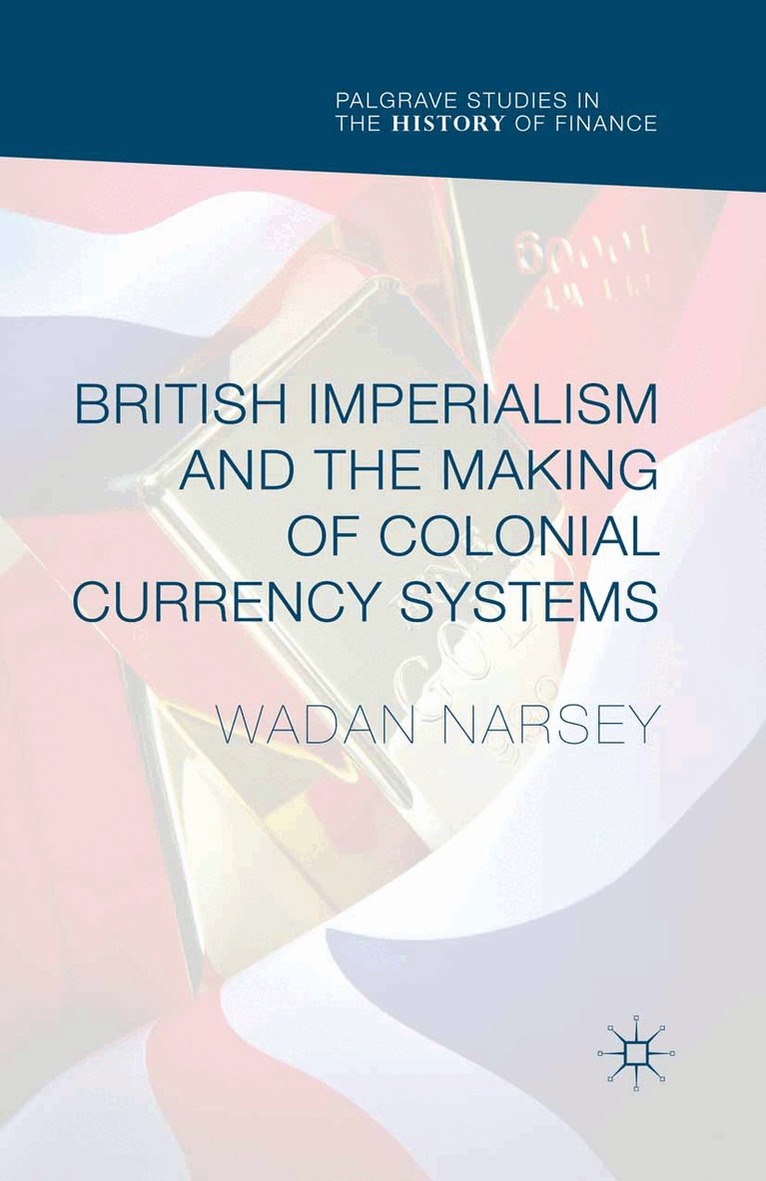
    British Imperialism and the Making of Colonial Currency Systems

    AvWadan Narsey

    Häftad, Engelska, 2019

    Del i serien Palgrave Studies in the History of Finance

    1 452 kr

    Beställningsvara. Skickas inom 10-15 vardagar. Fri frakt över 249 kr.

    Fler format och utgåvor

    Inbunden

    1 452 kr

    E-bok

    1 891 kr

    Beskrivning

    Based on archival research covering more than two centuries and most former British colonies (West Indies, India, Singapore, Malaya, West Africa and East Africa), this book is a revisionist history of the British imperial manipulations of colonial currency systems to facilitate the rise of sterling to world supremacy via the gold standard, and to slow its eventual decline after World War II. Britain forcibly replaced international currencies, including gold and sterling itself, by new localised silver currencies, backed by gold and sterling reserves in London, under the total control of the British Treasury and the powerful influence of the Bank of England. Ignoring colonial needs, imperial decision-makers continuously over-ruled colonial governments, commercial interest in colonies (British and local), Colonial Office and the Crown Agents, to support liquidity in the London Money Market, convertibility of sterling, export of British capital, and cheap readilyavailable finance for the British Government. Academia, including Keynes and institutions like the London School of Economics, are shown to have played supporting roles. This book is valuable reading for academics and students interested in theories of imperialism, colonial underdevelopment, money (national and international) and related topics such as currency areas and exchange rates. Its comprehensive index links monetary concepts to actual events in the British Empire, with pointers to new research areas. This account of the rise and fall of sterling as a world currency may have lessons for the future trajectories of the US dollar, Euro, Chinese renminbi and the Indian rupee.

    Produktinformation

    • Utgivningsdatum:2019-03-07
    • Mått:140 x 216 x 21 mm
    • Vikt:473 g
    • Format:Häftad
    • Språk:Engelska
    • Serie:Palgrave Studies in the History of Finance
    • Antal sidor:356
    • Förlag:Palgrave Macmillan
    • ISBN:9781349716319

    Utforska kategorier

    • Kolonialism och imperialism inom Historia och arkeologi
    • Europas historia inom Historia och arkeologi
    • Ekonomisk historia inom Ekonomi och Ledarskap

    Mer om författaren

    Wadan Narsey is a former Professor of Economics at The University of the South Pacific. He is currently an Adjunct Professor at The Cairns Institute, James Cook University, and at Swinburne University, Australia. He is a former Fiji parliamentarian, a commentator on the political economy of Fiji and the Pacific and a regular columnist for the Fiji Times. He has a personal website: NarseyOnFiji.

    Recensioner i media

    Narsey offers us an original and pioneering investigation of how the British state regulated gold, silver and paper as media of exchange, debt, and savings in colonies, from simple management of coinage to the emergence of the currency board, to become a critical part and the heart of the British Empire. Appearing in the fascinating story are privateers in the eighteenth-century West Indies with gold standards based on the slave economy and contraband from the Spanish main, Keynes's work on the currency of the Raj, and twentieth-century debates about the colonial money supply and economic development. The common theme is that the economic interests of metropolitan Britain were almost always given primacy in the administration of colonial money. The book is a valuable addition to the economic history of both the British empire and of globalization.'- Professor Richard Drayton, Rhodes Professor of Imperial History, Kings College, London 'Based on extensive archival research,Professor Narsey shows that imperial priorities took precedence over native desires for economic development in dependent colonies throughout the history of the British Empire. This was an undesirable, but fully intended, consequence of imperial financial innovations in the British colonies, including the currency boards of Hong Kong and Singapore whose later success came only when British political control was lifted.'- Professor Larry Neal, Professor Emeritus of Economics, University of Illinois at Urbana-Champaign 'This is an important contribution to the growing body of knowledge on the history of colonial currency systems.' - Chibuike Uche, Senior Researcher, African Studies Centre, Leiden

    Innehållsförteckning

    • 1. The accepted history of British colonial currency systems and the key questions.- 2 . Currency policies for Britain (1698-1893): adoption of the Gold Standard and rejection of silver and bimetallism.- 3. Colonial currency policies (1600-1893): from international to localized currencies.-4. India 1893-1912: conflicts and imperial resolution.- 5. Straits Settlements 1893 – 1912: the transition from India to West Africa.- 6 . The establishment of the West African Currency Board: 1893-1912.- 7. Conflicts over the administration of colonial reserves in London (1927-1957), academic criticisms and imperial responses.- 8. Reassessment of the currency board debate.- 9. Currency and monetary policies in white settler colonies.- 10. Conclusion.