• Fri frakt över 249 kr
  • •
  • Snabba leveranser
  • •
  • Billiga böcker
Kundservice

Du är på sajten för privatpersoner.

Företag, bibliotek eller offentlig verksamhet?

Du handlar på classic.bokus.com, där alla dina funktioner finns intakta.
Till classic.bokus.com
Bokus logotyp. Gå till startsidan.
  • Erbjudanden
  • Nyheter
  • Student
  • Topplistor
  • Barn & ungdom
  • Bokus Play
  • E-böcker
  • Pocketböcker
  • Spel & pussel

10% rabatt på allt med kod NYSTART10 →

Sidfot

Mina sidor

    Hjälp

    • Kundservice
    • Vanliga frågor och svar
    • Frakt och leverans
    • Retur vid ångerrätt
    • Reklamera vara
    • Betalning
    • Köpvillkor
    • Allmänna villkor
    • Information om webbplatsens tillgänglighet

    Om Bokus

    • Om oss
    • Pressrum
    • För studenter
    • För företag
    • För bibliotek och offentlig verksamhet
    • För leverantörer
    • Hållbarhet

    Populärt

    • Aktuella erbjudanden
    • Presentkort
    • Studentlitteratur
    • Nya böcker
    • Topplistor
    • Signerade böcker
    • Engelska böcker

    Inspiration

    • Boktips
    • BookTok
    • Populära bokserier
    • Barnbokskaraktärer
    • Populära författare
    Logotyp för Bokus
    Följ oss på Facebook (extern länk)Följ oss på Instagram (extern länk)Följ oss på YouTube (extern länk)Följ oss på TikTok (extern länk)
    bokus @ CookiesAnpassa cookiesIntegritetspolicyKöpvillkor
    Till Citymail hemsida (extern länk)Till Budbee hemsida (extern länk)Till Postnord hemsida (extern länk)Till Schenker hemsida (extern länk)Till Early Bird hemsida (extern länk)Till Walleys hemsida (extern länk)
    1. Samhälle och politik
    2. Samhälle och kultur
    3. Kultur och medier
    4. Referensverk och tvärvetenskap

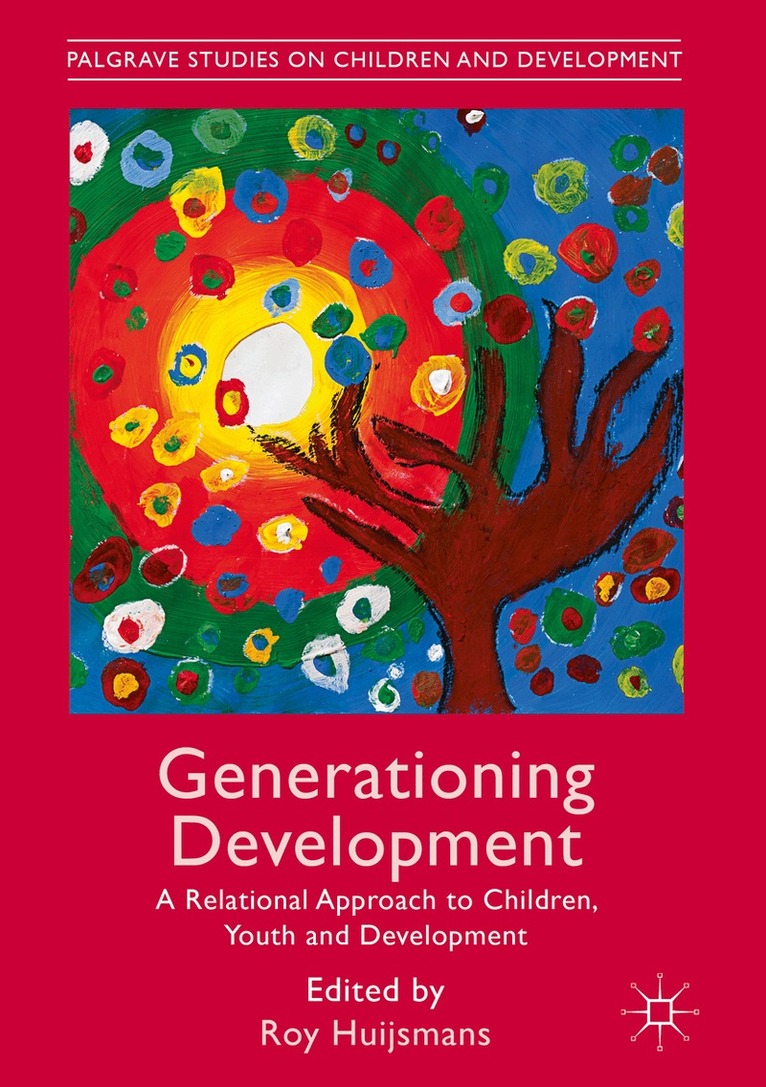
    Generationing Development

    A Relational Approach to Children, Youth and Development

    AvRoy Huijsmans

    Häftad, Engelska, 2018

    Del i serien Palgrave Studies on Children and Development

    284 kr

    Beställningsvara. Skickas inom 10-15 vardagar. Fri frakt över 249 kr.

    Beskrivning

    This ground-breaking book weaves together insights from the children and youth studies literature and critical development studies. Debunking the idea of childhood and youth as self-evident social categories, the author unravels how these generational constructs are (re)constituted and experienced in relational terms in development contexts spanning both the Global South and the Global North. Running through these chapters is a fundamental concern with age, gender and generation as key principles of social differentiation.  This is developed in Part 1 at a theoretical level, and applied to everyday contexts, including school, work, migration and the street in Part 2. Part 3 zooms in on the generational dynamics of development by exploring how prominent development interventions (conditional cash transfers, schooling) problems (gender discrimination) and questions (the generational question of farming) shape the (gendered) experience of being young and growing up.

    Produktinformation

    • Utgivningsdatum:2018-11-19
    • Mått:148 x 210 x 20 mm
    • Vikt:461 g
    • Format:Häftad
    • Språk:Engelska
    • Serie:Palgrave Studies on Children and Development
    • Antal sidor:335
    • Upplaga:18001
    • Förlag:Palgrave Macmillan
    • ISBN:9781349717552

    Utforska kategorier

    • Referensverk och tvärvetenskap inom Samhälle och politik
    • Genusvetenskap inom Samhälle och politik
    • Sociala grupper och identitet inom Samhälle och politik

    Mer om författaren

    Roy Huijsmans is Senior Lecturer in Children & Youth Studies at the International Institute of Social Studies (ISS) in the Hague, the Netherlands (part of Erasmus University Rotterdam). He has written on childhood, youth and migration, the generational dynamics of multi-local householding, and on nationalism, youth and mobile telephony.

    Recensioner i media

    “This volume is a timely addition for academics and practitioners working in policy, youth and development fields. … The volume provides timely insights for why children and youth perspectives need to be integrated within current development research and approaches.” (Jessica Clendenning, Children's Geographies, Vol. 17 (6), 2019)

    Innehållsförteckning

    • Chapter 1. 'Generationing' Development: An introduction; Roy Huijsmans.- PART I: Theorising Age and Generation in Young Lives.- Chapter 2. Locating Young Refugees Historically: Attending to age position in humanitarianism; Jason Hart.- Chapter 3. Bodies, Brains and Age: Unpacking the age question in the Dutch sex work debate; Sara Vida Coumans.- Chapter 4. The Impact of ‘Age-Class’ on Becoming a Young Farmer in an Industrialised Agricultural Sector: Insights from Nova Scotia, Canada; Elyse N. Mills.- Chapter 5. Mainstreaming Social Age in the Sustainable Development Goals (SDGs): Progress, pitfalls and prospects; Christina Clark-Kazak.- PART II: Everyday Relationalities: School, work and belonging.- Chapter 6 'Generationing' School Bullying: Age-based power relations, the hidden curriculum and bullying in northern Vietnamese schools; Paul Horton.- Chapter 7. ‘Being Small is Good’: A relational understanding of dignity and vulnerability among young male shoe-shiners and lottery vendors on the streets of Addis Ababa, Ethiopia; Degwale G. Belay.- 8. ‘We Don’t Even Use Our Older Children’: Young children accompanying blind adult beggars in Tamale, Ghana; Wedadu Sayibu.- Chapter 9.Travelling Identities: Gendered experiences while doing research with young allochtoon Dutch Muslims; Mahardhika Sjamsoeoed Sadjad.- Part III: Negotiating Development.- Chapter 10.Subjects of Development: Teachers, parents and youth negotiating education in rural North India.- Karuna Morarji.- Chapter 11.Little People, Big Words: ‘Generationing’ conditional cash transfers in urban Ecuador; María Gabriela Palacio.- Chapter 12. Growing Up Unwanted: Girls’ experiences of gender discrimination and violence in Tamil Nadu, India; Sharada Srinivasan.- Chapter 13. Youth, Farming and Precarity in Rural Burundi; Lidewyde H. Berckmoes and Ben White.- Chapter 14. Commentary: Age and Generation in the Service of Development?; Nicola Ansell.