• Fri frakt över 249 kr
  • •
  • Snabba leveranser
  • •
  • Billiga böcker
Kundservice

Du är på sajten för privatpersoner.

Företag, bibliotek eller offentlig verksamhet?

Du handlar på classic.bokus.com, där alla dina funktioner finns intakta.
Till classic.bokus.com
Bokus logotyp. Gå till startsidan.
  • Erbjudanden
  • Nyheter
  • Student
  • Topplistor
  • Barn & ungdom
  • Bokus Play
  • E-böcker
  • Pocketböcker
  • Spel & pussel

10% rabatt på allt med kod: NYSTART10 →

Sidfot

Mina sidor

    Hjälp

    • Kundservice
    • Vanliga frågor och svar
    • Frakt och leverans
    • Retur vid ångerrätt
    • Reklamera vara
    • Betalning
    • Köpvillkor
    • Allmänna villkor
    • Information om webbplatsens tillgänglighet

    Om Bokus

    • Om oss
    • Pressrum
    • För studenter
    • För företag
    • För bibliotek och offentlig verksamhet
    • För leverantörer
    • Hållbarhet

    Populärt

    • Aktuella erbjudanden
    • Presentkort
    • Studentlitteratur
    • Nya böcker
    • Topplistor
    • Signerade böcker
    • Engelska böcker

    Inspiration

    • Boktips
    • BookTok
    • Populära bokserier
    • Barnbokskaraktärer
    • Populära författare
    Logotyp för Bokus
    Följ oss på Facebook (extern länk)Följ oss på Instagram (extern länk)Följ oss på YouTube (extern länk)Följ oss på TikTok (extern länk)
    bokus @ CookiesAnpassa cookiesIntegritetspolicyKöpvillkor
    Till Citymail hemsida (extern länk)Till Budbee hemsida (extern länk)Till Postnord hemsida (extern länk)Till Schenker hemsida (extern länk)Till Early Bird hemsida (extern länk)Till Walleys hemsida (extern länk)
    1. Samhälle och politik
    2. Samhälle och kultur
    3. Kultur och medier
    4. Medievetenskap

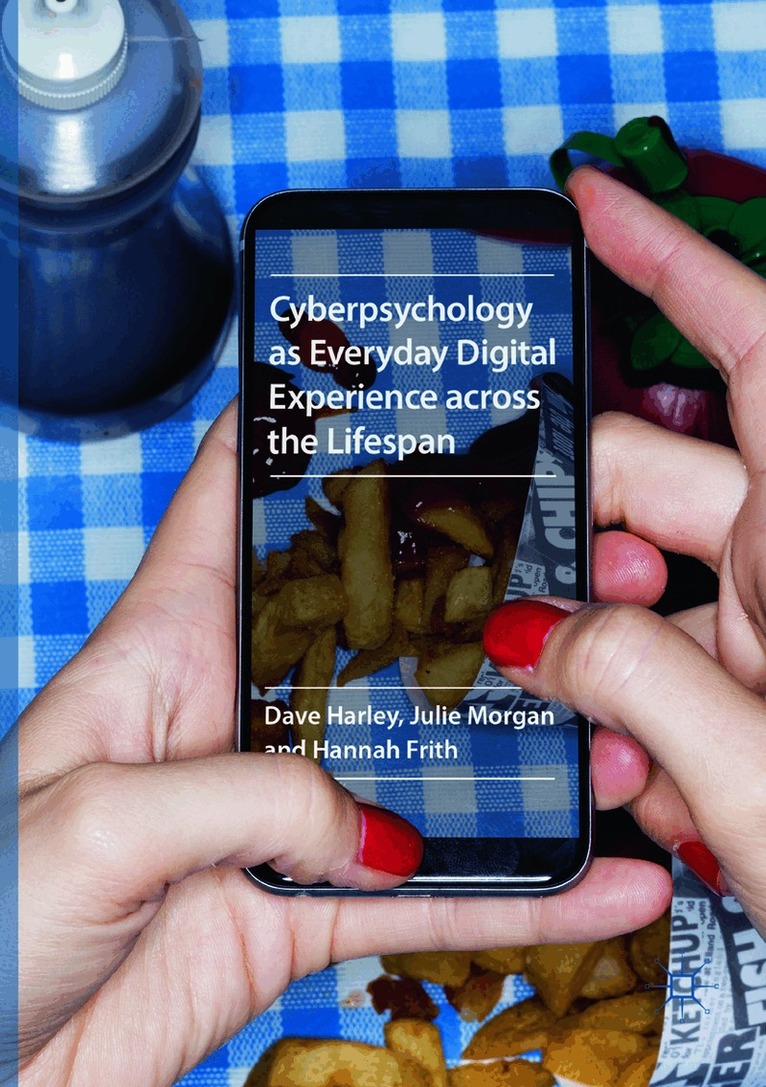
    Cyberpsychology as Everyday Digital Experience across the Lifespan

    AvDave Harley,Julie Morgan

    Häftad, Engelska, 2019

    1 160 kr

    Beställningsvara. Skickas inom 10-15 vardagar. Fri frakt över 249 kr.

    Fler format och utgåvor

    Inbunden

    1 194 kr

    Beskrivning

    Digital technologies are deeply embedded in everyday life with opportunities for information access and perpetual social contact now mediating most of our activities and relationships. This book expands the lens of Cyberpsychology to consider how digital experiences play out across the various stages of people’s lives. Most psychological research has focused on whether human-technology interactions are a ‘good’ or a ‘bad’ thing for humanity. This book offers a distinctive approach to the emergent area of Cyberpsychology, moving beyond these binary dilemmas and considering how popular technologies have come to frame human experience and relationships. In particular the authors explore the role of significant life stages in defining the evolving purpose of digital technologies. They discuss how people’s symbiotic relationship with digital technologies has started to redefine our childhoods, how we experience ourselves, how we make friends, our experience of being alone, how we have sex and form romantic relationships, our capacity for being antisocial as well as the experience of growing older and dying. This interdisciplinary book will be of great interest to scholars and practitioners across psychology, digital technology and media studies as well as anyone interested in how technology influences our behaviour.

    Produktinformation

    • Utgivningsdatum:2019-07-25
    • Mått:148 x 210 x 16 mm
    • Vikt:348 g
    • Format:Häftad
    • Språk:Engelska
    • Antal sidor:251
    • Förlag:Palgrave Macmillan
    • ISBN:9781349959174

    Utforska kategorier

    • Medievetenskap inom Samhälle och politik
    • Människa – datorinteraktion inom Data och IT
    • Socialpsykologi och gruppsykologi inom Psykologi och pedagogik

    Mer om författaren

    Dave Harley is a Senior Lecturer at the University of Brighton, UK. His broad research areas cover Cyberpsychology and Human Computer Interaction with a particular interest in older people’s use of digital technologies. In 2016 he completed a Culture and Communities Network+ research project looking at older people’s experiences of online community.Julie Morgan is a Senior Lecturer at the University of Brighton, UK. Her research focuses on autobiographical memory, social anxiety and the development of social fears. She has also published research exploring the social dimension of nature-connectedness within mental health recovery.    Hannah Frith is Principal Lecturer at the University of Brighton, UK. Her research centres on sexuality, embodiment and subjectivity including constructions of sexual consent/non-consent, orgasm and sexual pleasure, and the meaning of sexual practices. She previously authored Orgasmic Bodies published by Palgrave in 2015.

    Recensioner i media

    “This text moves beyond the aim of other books in the realm of cyberpsychology that parse the positive and negative impacts of technology, incorporating a broad range of topics … . Written in a clear, seamless fashion, the text uses the complex topic of cyberpsychology to illuminate how context and motivation help shape the social and psychological experience of the user. This text is extensively researched and well documented, and will appeal to scholarly and general audiences alike.” (J. Bailey, Choice, Vol. 56 (5), January, 2019)​“Cyberpsychology as Everyday Digital Experience across the Lifespan is a solid and compelling work that makes itself conspicuous through criticism, inclusiveness, interdisciplinary perspectives, and sharp points of view. This book offers a distinguishable approach to Cyberpsychology, and it will be of great interest to anyone who wants to decipher the complex relationship between technology and our lives.” (Camelia Gradinaru,Europe's Journal of Psychology, Vol. 14 (4), 2018)

    Innehållsförteckning

    • Chapter 1: Understanding Digital Technology as Everyday Experience.- Chapter 2: Growing Up Online.- Chapter 3: Being yourself.- Chapter 4: Having a social life.- Chapter 5: Being ‘Sexy’.- Chapter 6: Behaving badly.- Chapter 7: Being alone.- Chapter 8: Growing Older.- Chapter 9: Dying.- Chapter 10: Reflections on a Digital Life.