• Fri frakt över 249 kr
  • •
  • Snabba leveranser
  • •
  • Billiga böcker
Kundservice

Du är på sajten för privatpersoner.

Företag, bibliotek eller offentlig verksamhet?

Du handlar på classic.bokus.com, där alla dina funktioner finns intakta.
Till classic.bokus.com
Bokus logotyp. Gå till startsidan.
  • Erbjudanden
  • Nyheter
  • Student
  • Topplistor
  • Barn & ungdom
  • Bokus Play
  • E-böcker
  • Pocketböcker
  • Spel & pussel

10% rabatt på allt med kod NYSTART10 →

Sidfot

Mina sidor

    Hjälp

    • Kundservice
    • Vanliga frågor och svar
    • Frakt och leverans
    • Retur vid ångerrätt
    • Reklamera vara
    • Betalning
    • Köpvillkor
    • Allmänna villkor
    • Information om webbplatsens tillgänglighet

    Om Bokus

    • Om oss
    • Pressrum
    • För studenter
    • För företag
    • För bibliotek och offentlig verksamhet
    • För leverantörer
    • Hållbarhet

    Populärt

    • Aktuella erbjudanden
    • Presentkort
    • Studentlitteratur
    • Nya böcker
    • Topplistor
    • Signerade böcker
    • Engelska böcker

    Inspiration

    • Boktips
    • BookTok
    • Populära bokserier
    • Barnbokskaraktärer
    • Populära författare
    Logotyp för Bokus
    Följ oss på Facebook (extern länk)Följ oss på Instagram (extern länk)Följ oss på YouTube (extern länk)Följ oss på TikTok (extern länk)
    bokus @ CookiesAnpassa cookiesIntegritetspolicyKöpvillkor
    Till Citymail hemsida (extern länk)Till Budbee hemsida (extern länk)Till Postnord hemsida (extern länk)Till Schenker hemsida (extern länk)Till Early Bird hemsida (extern länk)Till Walleys hemsida (extern länk)
    1. Naturvetenskap och teknik
    2. Geovetenskap
    3. Miljövetenskap och miljöpolitik

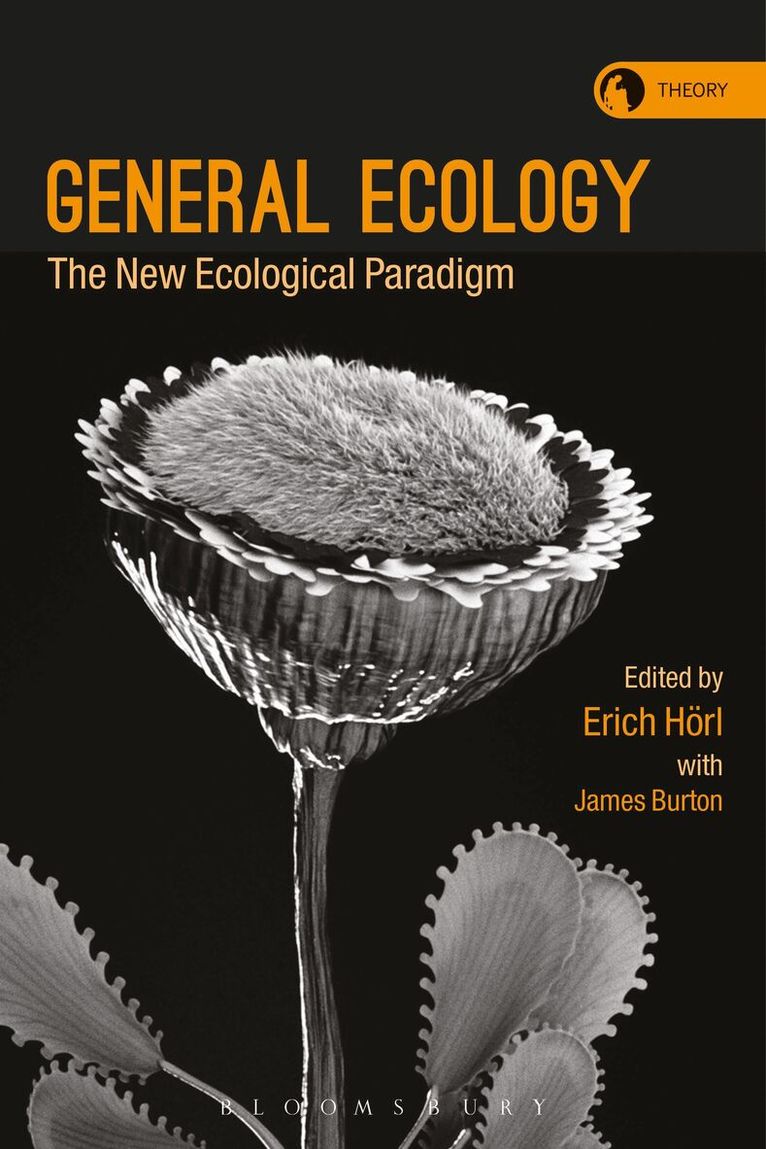
    General Ecology

    The New Ecological Paradigm

    AvErich Hörl

    Inbunden, Engelska, 2017

    Del i serien Theory in the New Humanities

    1 534 kr

    Beställningsvara. Skickas inom 10-15 vardagar. Fri frakt över 249 kr.

    Beskrivning

    Ecology has become one of the most urgent and lively fields in both the humanities and sciences. In a dramatic widening of scope beyond its original concern with the coexistence of living organisms within a natural environment, it is now recognized that there are ecologies of mind, information, sensation, perception, power, participation, media, behavior, belonging, values, the social, the political… a thousand ecologies. This proliferation is not simply a metaphorical extension of the figurative potential of natural ecology: rather, it reflects the thoroughgoing imbrication of natural and technological elements in the constitution of the contemporary environments we inhabit, the rise of a cybernetic natural state, with its corresponding mode of power. Hence this ecology of ecologies initiates and demands that we go beyond the specificity of any particular ecology: a general thinking of ecology which may also constitute an ecological transformation of thought itself is required.In this ambitious and radical new volume of writings, some of the most exciting contemporary thinkers in the field take on the task of revealing and theorizing the extent of the ecologization of existence as the effect of our contemporary sociotechnological condition: together, they bring out the complexity and urgency of the challenge of ecological thought—one we cannot avoid if we want to ask and indeed have a chance of affecting what forms of life, agency, modes of existence, human or otherwise, will participate—and how—in this planet’s future.

    Produktinformation

    • Utgivningsdatum:2017-05-04
    • Mått:156 x 234 x 26 mm
    • Vikt:739 g
    • Format:Inbunden
    • Språk:Engelska
    • Serie:Theory in the New Humanities
    • Antal sidor:400
    • Förlag:Bloomsbury Publishing PLC
    • ISBN:9781350014701

    Utforska kategorier

    • Miljövetenskap och miljöpolitik inom Naturvetenskap och teknik
    • Filosofiska discipliner inom Filosofi och religion

    Mer om författaren

    Erich Hörl is a philosopher and cultural theorist. He is professor of Media Culture at the Institute of Culture and Aesthetics of Digital Media (ICAM) at Leuphana University of Lüneburg, Germany.James Burton is a lecturer in Cultural Studies and Cultural History at Goldsmiths, University of London. He is the author of The Philosophy of Science Fiction (Bloomsbury, 2015).

    Recensioner i media

    Proponents of the philosophy called “deep ecology” view humans as one of the many integral components of the biosphere. They do not place humans above or outside the rest of nature. Rather humans are considered a natural constituent that modifies nature according to cultural and economic value systems. This book does not explain the principles of ecology in a traditional scientific manner. In contrast, the various chapter authors describe ecology from a deep ecology philosophical perspective. The first chapter begins with an essay on how societal interpretations of ecology vary between cultures and change over time as cultures develop economically and philosophically. This is followed by a diverse array of essays on the influence of computational logic, economics, politics, popular literature, prevailing social norms, religion, and technology on setting a paradigm for conceptualizing ecology. All of these perspectives are used to explain how current environmental issues, such as extinction, are valued by society. Plus, the contributors exactingly prognosticate the influence of the Anthropocene epoch on the natural processes of the Earth. The content and readability targets an audience well versed in bioethics and philosophy. Summing Up: Recommended. Upper-division undergraduates and above; faculty and professionals.

    Innehållsförteckning

    • AcknowledgmentsIntroduction to General Ecology: the Ecologization of Thinking (Erich Hörl, Professor of Media Culture, Leuphana University of Lüneburg, Germany)1. Computational Logic and Ecological Rationality (Luciana Parisi, Reader in Cultural Theory, Goldsmith's, University of London, UK)2. Elements for an Ecology of Separation: Beyond Ecological Constructivism (Frédéric Neyrat, a French philosopher and Assistant professor in Comparative Literature at University of Wisconsin–Madison, USA)3. General Ecology, Economy, and Organology (Bernard Stiegler, a French philosopher. He is head of the Institut de recherche et d'innovation (IRI), which he founded in 2006 at the Centre Georges-Pompidou, France)4. Critique of the Cosmology of the Moderns (Didier Debaise, Professor of Philosophy, ULB, Brussels, Belgium)5. Deep Times and Media Mines: A Descent into Ecological Materiality of Technology (Jussi Parikka, media theorist, writer and Professor in Technological Culture & Aesthetics at Winchester School of Art, University of Southampton, UK)6. Planetary Immunity: Biopolitics, Gaia Theory, the Holobiont, and the Systems Counterculture (Bruce Clarke, Paul Whitfield Horn Professor of Literature and Science, Texas Tech University, USA)7. Ecologizing Biopolitics, or, What is the “Bio-” of Biopolitics and Bioart? (Cary Wolfe, Bruce and Elizabeth Dunlevie Professor of English and Director, 3CT: Center for Critical and Cultural Theory, Rice University, USA)8. Ecologies of Communication, Contagion and Bataille (David Wills, Professor of French Studies, Brown University, USA)8. Metafiction and General Ecology: Making Worlds with Worlds (James Burton, fellow of ICI, Berlin, Germany)9. An Ecology of Differences: Communication, the Web, and the Question of Borders (Elena Esposito, Professor of Sociology at the University Modena/Reggio Emilia, Italy)10. Specters of Ecology (Timothy Morton, Rita Shea Guffey Chair in English, Rice University, USA)11. Devastation (Matthew Fuller, Professor of Cultural Studies and Director of the Centre for Cultural Studies, Goldsmiths, University of London, UK and Olga Goriunova, Senior Lecturer in Digital Culture, Royal Holloway, University of London, UK)12. Virtual Ecology and the Question of Value (Brian Massumi, Professor in the Department of Communication Sciences at the University of Montréal, Canada)List of ContributorsBibliographyIndex