• Fri frakt över 249 kr
  • •
  • Snabba leveranser
  • •
  • Billiga böcker
Kundservice

Du är på sajten för privatpersoner.

Företag, bibliotek eller offentlig verksamhet?

Du handlar på classic.bokus.com, där alla dina funktioner finns intakta.
Till classic.bokus.com
Bokus logotyp. Gå till startsidan.
  • Erbjudanden
  • Nyheter
  • Student
  • Topplistor
  • Barn & ungdom
  • Bokus Play
  • E-böcker
  • Pocketböcker
  • Spel & pussel

10% rabatt på allt med kod: NYSTART10 →

Sidfot

Mina sidor

    Hjälp

    • Kundservice
    • Vanliga frågor och svar
    • Frakt och leverans
    • Retur vid ångerrätt
    • Reklamera vara
    • Betalning
    • Köpvillkor
    • Allmänna villkor
    • Information om webbplatsens tillgänglighet

    Om Bokus

    • Om oss
    • Pressrum
    • För studenter
    • För företag
    • För bibliotek och offentlig verksamhet
    • För leverantörer
    • Hållbarhet

    Populärt

    • Aktuella erbjudanden
    • Presentkort
    • Studentlitteratur
    • Nya böcker
    • Topplistor
    • Signerade böcker
    • Engelska böcker

    Inspiration

    • Boktips
    • BookTok
    • Populära bokserier
    • Barnbokskaraktärer
    • Populära författare
    Logotyp för Bokus
    Följ oss på Facebook (extern länk)Följ oss på Instagram (extern länk)Följ oss på YouTube (extern länk)Följ oss på TikTok (extern länk)
    bokus @ CookiesAnpassa cookiesIntegritetspolicyKöpvillkor
    Till Citymail hemsida (extern länk)Till Budbee hemsida (extern länk)Till Postnord hemsida (extern länk)Till Schenker hemsida (extern länk)Till Early Bird hemsida (extern länk)Till Walleys hemsida (extern länk)
    1. Historia och arkeologi
    2. Historia
    3. Militärhistoria
    4. Första världskriget

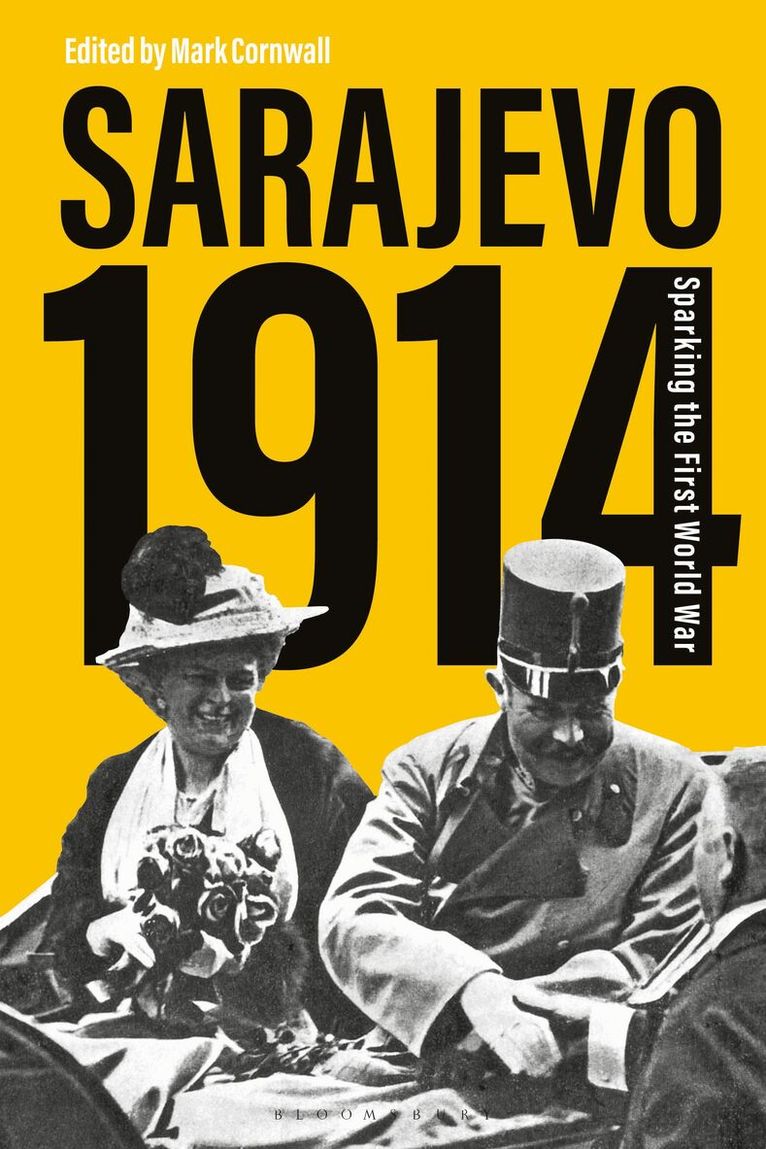
    Sarajevo 1914

    Sparking the First World War

    AvMark Cornwall

    Häftad, Engelska, 2020

    377 kr

    Skickas . Fri frakt över 249 kr.

    Beskrivning

    In June 1914, Archduke Franz Ferdinand was assassinated in the Bosnian capital of Sarajevo. This key event in 20th-century history continues to fascinate the public imagination, yet few historians have examined in depth the regional context which allowed this assassination to happen or the murder's ripples which quickly spread out across the Balkans, Austria-Hungary and Europe as a whole. In this study, Mark Cornwall has gathered an impressive cast of contributors to explore the causes of the Sarajevo assassination and its consequences for the Balkans in the context of the First World War.The volume assesses from a variety of regional perspectives how the 'South Slav Question' destabilized the empire's southern provinces, provoking violent discontent in Croatia and Bosnia, and exacerbating the empire's relations with Serbia, regarded by Austria-Hungary as a dangerous state. It then explores the ripples of the Sarajevo event, from its evolution into a European crisis to the creation of a new independent state of Yugoslavia.Bringing together fresh perspectives by historians from Austria, Croatia, Slovenia and Serbia, as well as leading British historians of Austria-Hungary, this book is essential reading for anyone wanting to understand the Sarajevo violence and how it shaped modern Balkan history.

    Produktinformation

    • Utgivningsdatum:2020-09-03
    • Mått:156 x 234 x 20 mm
    • Vikt:495 g
    • Format:Häftad
    • Språk:Engelska
    • Antal sidor:320
    • Förlag:Bloomsbury Publishing PLC
    • ISBN:9781350093201

    Utforska kategorier

    • Första världskriget inom Historia och arkeologi
    • Europas historia inom Historia och arkeologi

    Mer om författaren

    Mark Cornwall is Professor of Modern European History at the University of Southampton, UK. He is a leading authority on the late Habsburg monarchy and the history of 20th-century Czechoslovakia and Yugoslavia. His recent publications include Sacrifice and Rebirth: The Legacy of the Last Habsburg War (co-edited along with John Paul Newman; 2016) and The Devil's Wall: The Nationalist Youth Mission of Heinz Rutha (2012).

    Recensioner i media

    An excellent collection of essays that brings original insight to an historical topic that has occupied historians for over a century. Too often, the Sarajevo assassination is treated as the opening act in a war drama whose most important actions took place elsewhere. Not here: Sarajevo 1914 puts Franz Ferdinand and the Southern South question at the centre of its narrative, exploring its causes and consequences from a range of perspective and casting new light onto one of the most consequential events of the twentieth century.

    Innehållsförteckning

    • List of IllustrationsIntroduction: The Southern Slav Question, Mark Cornwall (University of Southampton, UK)Part I - Tinder and Spark1. Franz Ferdinand: Power and Image, Alma Hannig (University of Bonn, Germany)2. Great Expectations: The Habsburgh Heir-Apparent and the Southern Slavs, Andrej Rahten (Slovene Academy of Sciences, Slovenia)3. Mlada Bosna: The Educational and Cultural Context, Robin Okey (University of Warwick, UK)4. Bosnian, Croatian, Serbian, or Serbo-Croatian?: Frictions over the Language Question in the Habsburg Army, Tamara Scheer (University of Vienna, Austria)5. The Mentality of the Croatian Aristocracy, Iskra Iveljic (University of Zagreb, Croatia)Part II - International Blaze6. Why Did Nobody Control Apis?: Serbian Military Intelligence and the Sarajevo Assassinations, Danilo Šarenac (University of Belgrade, Serbia)7. Why Fight a Third Balkan War?: The Habsburg Mindset in 1914, Lothar Höbelt (University of Vienna, Austria)8. 'Six Powers Appalled by War': The July Crisis and the Limits of Crisis Management, Thomas Otte (University of East Anglia, UK)9. The British Elite and the Sarajevo Assassinations, Roy Bridge (University of Leeds, UK)Part III - Regional Blaze10. The Outbreak of War in Habsburg Trieste, Borut Klabjan (University of Koper, Slovenia)11. Defining Traitors and Loyalists in Habsburg Croatia, Mark Cornwall (University of Southampton, UK)12. The Inner Enemy: The Habsburg State and its Serb Citizens in Herzegovina 1913-1918, Heiner Grunert (Ludwig Maximilian University Munich, Germany)13. The Sarajevo Assassinations in Czech Memory after the Great War, Dagmar Hajková (Czech Academic of Sciences, Czech Republic)14. The Combustible Impact of Sarajevo, Cathie Carmichael (University of East Anglia, UK)Index