• Fri frakt över 249 kr
  • •
  • Snabba leveranser
  • •
  • Billiga böcker
Kundservice

Du är på sajten för privatpersoner.

Företag, bibliotek eller offentlig verksamhet?

Du handlar på classic.bokus.com, där alla dina funktioner finns intakta.
Till classic.bokus.com
Bokus logotyp. Gå till startsidan.
  • Erbjudanden
  • Nyheter
  • Student
  • Topplistor
  • Barn & ungdom
  • Bokus Play
  • E-böcker
  • Pocketböcker
  • Spel & pussel

10% rabatt på allt med kod: NYSTART10 →

Sidfot

Mina sidor

    Hjälp

    • Kundservice
    • Vanliga frågor och svar
    • Frakt och leverans
    • Retur vid ångerrätt
    • Reklamera vara
    • Betalning
    • Köpvillkor
    • Allmänna villkor
    • Information om webbplatsens tillgänglighet

    Om Bokus

    • Om oss
    • Pressrum
    • För studenter
    • För företag
    • För bibliotek och offentlig verksamhet
    • För leverantörer
    • Hållbarhet

    Populärt

    • Aktuella erbjudanden
    • Presentkort
    • Studentlitteratur
    • Nya böcker
    • Topplistor
    • Signerade böcker
    • Engelska böcker

    Inspiration

    • Boktips
    • BookTok
    • Populära bokserier
    • Barnbokskaraktärer
    • Populära författare
    Logotyp för Bokus
    Följ oss på Facebook (extern länk)Följ oss på Instagram (extern länk)Följ oss på YouTube (extern länk)Följ oss på TikTok (extern länk)
    bokus @ CookiesAnpassa cookiesIntegritetspolicyKöpvillkor
    Till Citymail hemsida (extern länk)Till Budbee hemsida (extern länk)Till Postnord hemsida (extern länk)Till Schenker hemsida (extern länk)Till Early Bird hemsida (extern länk)Till Walleys hemsida (extern länk)
    1. Kultur
    2. Arkitektur

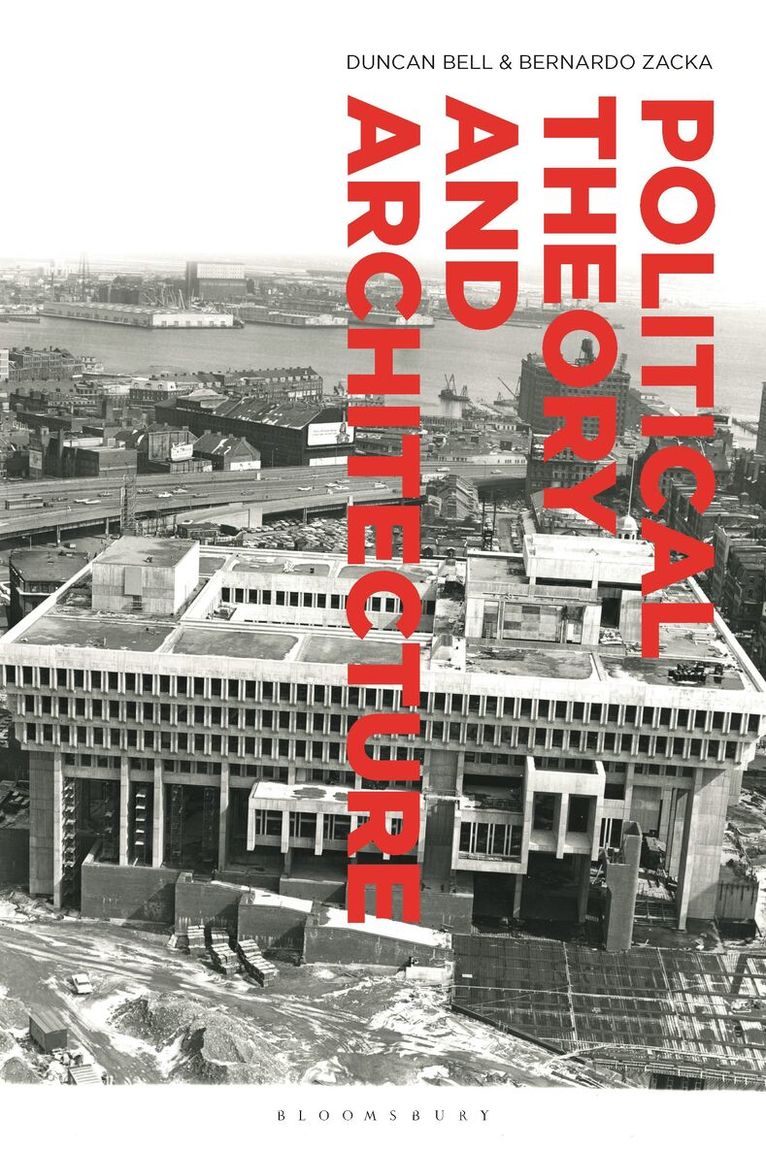
    Political Theory and Architecture

    AvDuncan Bell,Bernardo Zacka

    Inbunden, Engelska, 2020

    1 533 kr

    Beställningsvara. Skickas inom 10-15 vardagar. Fri frakt över 249 kr.

    Beskrivning

    What can political theory teach us about architecture, and what can it learn from paying closer attention to architecture? The essays assembled in this volume begin from a common postulate: that architecture is not merely a backdrop to political life but a political force in its own right. Each in their own way, they aim to give countenance to that claim, and to show how our thinking about politics can be enriched by reflecting on the built environment.The collection advances four lines of inquiry, probing the connection between architecture and political regimes; examining how architecture can be constitutive of the ethical and political realm; uncovering how architecture is enmeshed in logics of governmentality and in the political economy of the city; and asking to what extent we can think of architecture—tributary as it is to the flows of capital—as a partially autonomous social force.Taken together, the essays demonstrate the salience of a range of political theoretical approaches for the analysis of architecture, and show that architecture deserves a place as an object of study in political theory, alongside institutions, laws, norms, practices, imaginaries, and discourses.


    Produktinformation

    • Utgivningsdatum:2020-02-20
    • Mått:156 x 234 x 22 mm
    • Vikt:630 g
    • Format:Inbunden
    • Språk:Engelska
    • Antal sidor:328
    • Förlag:Bloomsbury Publishing PLC
    • ISBN:9781350096592

    Utforska kategorier

    • Arkitektur inom Kultur
    • Statsvetenskap och politisk teori inom Samhälle och politik
    • Geografi inom Naturvetenskap och teknik

    Mer om författaren

    Duncan Bell is Professor of Political Thought and International Relations at the University of Cambridge, UK.Bernardo Zacka is Assistant Professor of Political Science at the Massachusetts Institute of Technology, USA.

    Recensioner i media

    The editors' introduction … is a model of conceptual clarity and concision … The 17 figures (photographs, paintings, sketches, and plans) are especially useful. Summing Up: Highly recommended. Upper-division undergraduates. Graduate students, faculty, and researchers.

    Innehållsförteckning

    • Introduction, Duncan Bell (University of Cambridge, UK) and Bernardo Zacka (Massachusetts Institute of Technology, USA)Part One: Architecture and Political Regimes1. What (If Anything) is ‘Democratic Architecture’? Jan-Werner Müller (Princeton University, USA)2. Fortification and Democracy in the Ancient Greek World, Josiah Ober (Stanford University, USA) and Barry Weingast (Stanford University, USA)3. Plato’s Magnesia and Costa’s Brasilia, Gabor Betegh (University of Cambridge, UK)Part Two: Architecture as Constitutive of Political Space4. What’s in a Balcony? The In-Between as Public Good, Bernardo Zacka (Massachusetts Institute of Technology, USA)5. Durability and Citizenship: Towards an Arendtian Political Philosophy of Architecture, Ronald Beiner (University of Toronto, Canada)6. The Soft Power of Neighbors: Proximity, Scale, and Responses to Violence, Nancy Rosenblum (Harvard University, USA)Part Three: Architecture as Infrastructure: Governmentality and Political Economy7. Scripting the City: J. G. Ballard Among the Architects, Duncan Bell (University of Cambridge, UK)8. Architecture as Government, Ali Aslam (Mount Holyoke College, USA)9. Making Superstar Cities Work: Jane Jacobs in Toronto, Margaret Kohn (University of Toronto, USA)10. Whose Right to the City? Lessons from the Territorial Rights Debate, Benjamin Hofmann (Princeton University, USA)Part Four: The Political Agency of Architecture11. Can Architecture Really Do Nothing? Lefebvre, Bloch, and Jameson on Utopia, Nathaniel Coleman (Newcastle University, UK)12. The Architecture of Political Renewal, Mihaela Mihai (University of Edinburgh, UK)13. The Modesty of Architecture, Randall Lindstrom (University of Tasmania, Australia) and Jeff Malpas (University of Tasmania, Australia) 14. Architecture, Materiality and Politics: Sensations, Symbols, Situations and Decors, Antoine Picon (Harvard Graduate School of Design, USA)Epilogue: Top-Down / Bottom-Up: Co-Producing the City, Fonna Forman (UC San Diego, USA)Index