• Fri frakt över 249 kr
  • •
  • Snabba leveranser
  • •
  • Billiga böcker
Kundservice

Du är på sajten för privatpersoner.

Företag, bibliotek eller offentlig verksamhet?

Du handlar på classic.bokus.com, där alla dina funktioner finns intakta.
Till classic.bokus.com
Bokus logotyp. Gå till startsidan.
  • Erbjudanden
  • Nyheter
  • Student
  • Topplistor
  • Barn & ungdom
  • Bokus Play
  • E-böcker
  • Pocketböcker
  • Spel & pussel

10% rabatt på allt med kod: NYSTART10 →

Sidfot

Mina sidor

    Hjälp

    • Kundservice
    • Vanliga frågor och svar
    • Frakt och leverans
    • Retur vid ångerrätt
    • Reklamera vara
    • Betalning
    • Köpvillkor
    • Allmänna villkor
    • Information om webbplatsens tillgänglighet

    Om Bokus

    • Om oss
    • Pressrum
    • För studenter
    • För företag
    • För bibliotek och offentlig verksamhet
    • För leverantörer
    • Hållbarhet

    Populärt

    • Aktuella erbjudanden
    • Presentkort
    • Studentlitteratur
    • Nya böcker
    • Topplistor
    • Signerade böcker
    • Engelska böcker

    Inspiration

    • Boktips
    • BookTok
    • Populära bokserier
    • Barnbokskaraktärer
    • Populära författare
    Logotyp för Bokus
    Följ oss på Facebook (extern länk)Följ oss på Instagram (extern länk)Följ oss på YouTube (extern länk)Följ oss på TikTok (extern länk)
    bokus @ CookiesAnpassa cookiesIntegritetspolicyKöpvillkor
    Till Citymail hemsida (extern länk)Till Budbee hemsida (extern länk)Till Postnord hemsida (extern länk)Till Schenker hemsida (extern länk)Till Early Bird hemsida (extern länk)Till Walleys hemsida (extern länk)
    1. Filosofi och religion
    2. Religion och tro
    3. Andra religioner och trosföreställningar
    4. Östasiatiska religioner

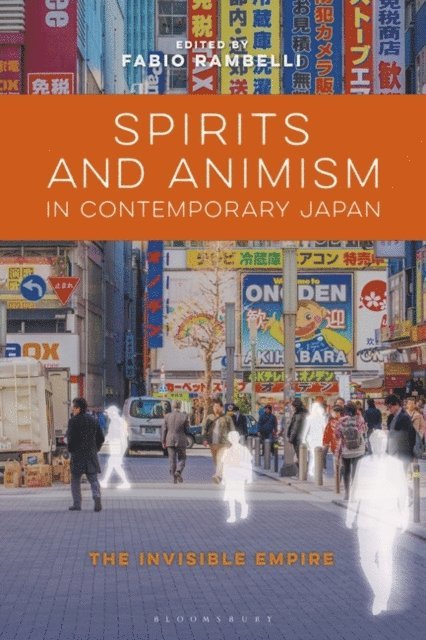
    Spirits and Animism in Contemporary Japan

    The Invisible Empire

    AvFabio Rambelli

    Inbunden, Engelska, 2019

    1 672 kr

    Beställningsvara. Skickas inom 10-15 vardagar. Fri frakt över 249 kr.

    Beskrivning

    This book draws attention to a striking aspect of contemporary Japanese culture: the prevalence of discussions and representations of “spirits” (tama or tamashii). Ancestor cults have played a central role in Japanese culture and religion for many centuries; in recent decades, however, other phenomena have expanded and diversified the realm of Japanese animism. For example, many manga, anime, TV shows, literature, and art works deal with spirits, ghosts, or with an invisible dimension of reality. International contributors ask to what extent these are cultural forms created by the media for consumption, rather than manifestations of “traditional” ancestral spirituality in their adaptations to contemporary society. Spirits and Animism in Contemporary Japan considers the modes of representations and the possible cultural meanings of spirits, as well as the metaphysical implications of contemporary Japanese ideas about spirits. The chapters offer analyses of specific cases of “animistic attitudes” in which the presence of spirits and spiritual forces is alleged, and attempt to trace cultural genealogies of those attitudes. In particular, they present various modes of representation of spirits (in contemporary art, architecture, visual culture, cinema, literature, diffuse spirituality) while at the same time addressing their underlying intellectual and religious assumptions.


    Produktinformation

    • Utgivningsdatum:2019-05-02
    • Mått:152 x 230 x 18 mm
    • Vikt:500 g
    • Format:Inbunden
    • Språk:Engelska
    • Antal sidor:240
    • Förlag:Bloomsbury Publishing PLC
    • ISBN:9781350097094

    Utforska kategorier

    • Östasiatiska religioner inom Filosofi och religion
    • Antropologi inom Samhälle och politik

    Mer om författaren

    Fabio Rambelli is Professor of Japanese Religions and International Shinto Foundation Endowed Chair in Shinto Studies at the University of California, Santa Barbara, USA. He is series editor of Bloomsbury Shinto Studies, and his publications include The Sea and the Sacred in Japan (Bloomsbury, 2018) and A Buddhist Theory of Semiotics (2013).

    Recensioner i media

    [The] diversity of approaches and subjects in Spirits and Animism render “visible” the complexities of an invisible realmin ways that will excite scholars and students of Japanese religions and entice those working in comparative fields.

    Innehållsförteckning

    • List of Figures List of Contributors Introduction: The Invisible Empire: Spirits and Animism in Contemporary Japan, Fabio Rambelli (University of California, Santa Barbara, USA)1. The Dead Who Remain: Spirits and Changing Views of the Afterlife,Sato Hiroo (Tohoku University in Sendai, Japan) translation by Emily B. Simpson (University of California, Santa Barbara, USA)2. The Mystical “Occident” or the Vibrations of “Modernity” in the Mirror of Japanese Thought, Jason A. Josephson-Storm (Williams College, USA)3. A Metaphysics of the Invisible Realm: Minakata Kumagusu on Spirits, Molds, and the Cosmic Mandala, Fabio Rambelli (University of California, Santa Barbara, USA)4. New Religious Movements, the Media, and “Japanese Animism”, Ioannis Gaitanidis (Chiba University, Japan)5. Animated City: Life Force, Guardians, and Contemporary Architecture in Kyoto, Ellen Van Goethem (Kyushu University, Japan)6. Essays in Vagueness: Aspects of Diffused Religiosity in Japan, Carina Roth (University of Geneva, Switzerland)7. Came Back Hounded: A Spectrum of Experiences with Spirits and Inugami Possession in Contemporary Japan, Andrea De Antoni (Ritsumeikan University, Japan)8. The Spirit(s) of Modern Japanese Fiction, Rebecca Suter (University of Sydney, Australia)9. Techno-Animism: Japanese Media Artists and their Buddhist and Shinto Legacy, Mauro Arrighi (Independent Scholar, Japan)10. Spirit/Medium Critically Examining the Relationship between Animism and Animation, Jolyon Baraka Thomas (University of Pennsylvania, USA)11. From Your Name to Shin-Gojira: Spiritual Crisscrossing, Spatial Soteriology, and Catastrophic Identity in Contemporary Japanese Visual Culture,Andrea Castiglioni (University of California, Berkeley, USA)Notes Bibliography Index