• Fri frakt över 249 kr
  • •
  • Snabba leveranser
  • •
  • Billiga böcker
Kundservice

Du är på sajten för privatpersoner.

Företag, bibliotek eller offentlig verksamhet?

Du handlar på classic.bokus.com, där alla dina funktioner finns intakta.
Till classic.bokus.com
Bokus logotyp. Gå till startsidan.
  • Erbjudanden
  • Nyheter
  • Student
  • Topplistor
  • Barn & ungdom
  • Bokus Play
  • E-böcker
  • Pocketböcker
  • Spel & pussel

10% rabatt på allt med kod: NYSTART10 →

Sidfot

Mina sidor

    Hjälp

    • Kundservice
    • Vanliga frågor och svar
    • Frakt och leverans
    • Retur vid ångerrätt
    • Reklamera vara
    • Betalning
    • Köpvillkor
    • Allmänna villkor
    • Information om webbplatsens tillgänglighet

    Om Bokus

    • Om oss
    • Pressrum
    • För studenter
    • För företag
    • För bibliotek och offentlig verksamhet
    • För leverantörer
    • Hållbarhet

    Populärt

    • Aktuella erbjudanden
    • Presentkort
    • Studentlitteratur
    • Nya böcker
    • Topplistor
    • Signerade böcker
    • Engelska böcker

    Inspiration

    • Boktips
    • BookTok
    • Populära bokserier
    • Barnbokskaraktärer
    • Populära författare
    Logotyp för Bokus
    Följ oss på Facebook (extern länk)Följ oss på Instagram (extern länk)Följ oss på YouTube (extern länk)Följ oss på TikTok (extern länk)
    bokus @ CookiesAnpassa cookiesIntegritetspolicyKöpvillkor
    Till Citymail hemsida (extern länk)Till Budbee hemsida (extern länk)Till Postnord hemsida (extern länk)Till Schenker hemsida (extern länk)Till Early Bird hemsida (extern länk)Till Walleys hemsida (extern länk)
    1. Filosofi och religion
    2. Religion och tro
    3. Religion: allmänt

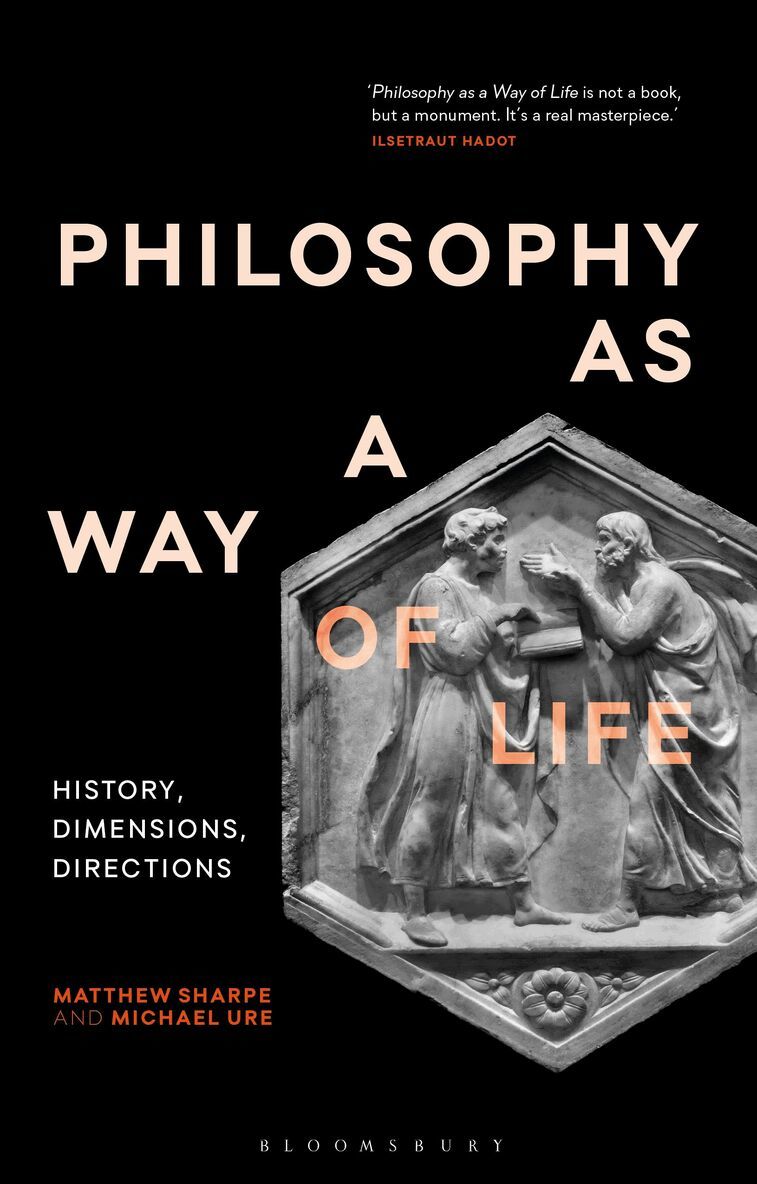
    Philosophy as a Way of Life

    History, Dimensions, Directions

    AvMatthew Sharpe,Michael Ure

    Häftad, Engelska, 2021

    Del i serien Re-inventing Philosophy as a Way of Life

    340 kr

    Skickas . Fri frakt över 249 kr.

    Fler format och utgåvor

    E-bok

    393 kr

    Inbunden

    1 186 kr

    E-bok

    393 kr

    Beskrivning

    In this first ever introduction to philosophy as a way of life in the Western tradition, Matthew Sharpe and Michael Ure take us through the history of the idea from Socrates and Plato, via the medievals, Renaissance and Enlightenment thinkers, to Schopenhauer and Nietzsche, Foucault and Hadot. They examine the kinds of practical exercises each thinker recommended to transform their philosophy into manners of living.Philosophy as a Way of Life also examines the recent resurgence of thinking about philosophy as a practical, lived reality and why this ancient tradition still has so much relevance and power in the contemporary world.

    Produktinformation

    • Utgivningsdatum:2021-07-15
    • Mått:138 x 214 x 24 mm
    • Vikt:540 g
    • Format:Häftad
    • Språk:Engelska
    • Serie:Re-inventing Philosophy as a Way of Life
    • Antal sidor:424
    • Förlag:Bloomsbury Publishing PLC
    • ISBN:9781350102149

    Utforska kategorier

    • Religion: allmänt inom Filosofi och religion
    • Filosofiska discipliner inom Filosofi och religion

    Mer om författaren

    Matthew Sharpe is Associate Professor of Philosophy, Deakin University, Australia. He is co-author of Zizek and Politics : a Critical Introduction (2010) and Understanding Psychoanalysis (2008) and author of Slavoj Zizek: a Little Piece of the Real (2004) and Camus, Philosophe: to Return to Our Beginnings (2016)Michael Ure is Senior Lecturer in Politics in the School of Political and Social Inquiry, Monash University, Australia. He is author of Nietzsche’s Therapy: Self-Cultivation in the Middle Works (2008) and Nietzsche’s 'The Gay Science' (2018) and co-editor of The Politics of Compassion (2014)

    Recensioner i media

    Sharpe and Ure have written a fantastic book and have made an important contribution to PWL as a sub-discipline. They acknowledge their debt to Hadot whilst building upon his work with their own scholarship in an outstanding way. The book works well for both the specialist and as an introduction for the beginner. It encourages a radical and welcome rethinking of what philosophy actually is and allows us to see it in a new and exciting way, not just as something to be studied, but as something to be lived.

    Innehållsförteckning

    • IntroductionPart 1: The AncientsCh. 1. Socrates and the Inception of Philosophy as a Way of Life1.1 the atopia of Socrates1.2 a founding exception1.3 Socrates contra the Sophists1.4 the elenchus as spiritual exercise1.5 care of the psyche1.6 the sage and the Socratic paradoxes1.7 the Socratic legacyCh. 2. Epicureanism: Philosophy as a Divine Way of Life2.1 Introduction 2.2 Epicureanism as way of life, therapy, and of writing2.3 the turn inwards: against empty opinions, unnatural and unnecessary desires2.4 Epicurus’ revaluation of happiness, pleasure and the good2.5 the gods and the figure of the sage2.6 the four-fold cure, and physics as spiritual exercise2.7 spiritual exercises in the garden2.7` CriticismsCh. 3. Stoicism: Philosophy as the Art of Living3.1 Wisdom, knowledge of things human and divine, and an art of living3.2 The Socratic lineage: dialectic, the emotions, and the sufficiency of virtue 3.3 From Musonius Rufus to Seneca3.4 Epictetus’ Paranetic Discourses, and his Handbook3.5 Marcus Aurelius’ Meditations (Ta Eis Heauton)Ch. 4. Platonisms as Ways of Life4.1 Introduction: Platonisms4.2 From Arcesilaus to Pyrrhonism: scepticism as a way life4.3 Cicero: the philosopher as rhetorician and physician of the soul4.4 Plotinus’ philosophical mysticism4.5 Boethius and the end of ancient philosophyPart 2: medievals and early modernsCh. 5. Philosophy as a way of life in the middle ages5.1 On Christianity as “philosophy”5.2 Monastic philosophia, and the Christianisation of spiritual exercises5.3 Scholasticism, the theoreticisation of philosophia, & the ascendancy of dialectic5.4 Counter-strains: from Abelard to Dante’s Il ConvivioCh. 6. The Renaissance of Philosophy as a Way of Life6.1 Philosophy, the humanisti, and the ascendancy of rhetoric6.2 Petrarch’s Christian-Stoic medicines of the mind6.3 Montaigne: The essayist as philosopher6.4 Justus Lipsius’ NeostoicismCh. 7. Cultura Animi in Early Modern Philosophy7.1 The end of PWL (again)?7.2 Francis Bacon: the Idols and the Georgics of the mind7.3 On Descartes, Method and MeditationsCh. 8. Figures of the philosophe in the French enlightenment8.1 “The philosophe”8.2 Voltaire and the view from Sirius8.3 Diderot and his SenecaPart 3: the modernsInterlude: The Nineteenth Century Conflict between PWL and University PhilosophyCh. 9. Schopenhauer: Philosophy as the Way Out of Life9.1 Introduction9.2 Philosophy against sophistry (again)9.3 Two cheers for Stoicism9.4 The Saint versus the Sage9.5 Schopenhauerian salvationCh. 10. Nietzsche: Philosophy as the Return to Life10.1 Introduction10.2 Nietzsche’s metaphilosophical meditations10.3 Nietzsche’s philosophy as a spiritual exercise10.4 Nietzsche’s spiritual exercise: eternal recurrence10.5 ConclusionCh. 11. Foucault’sReinvention of Philosophy as a Way of Life11.1 Philosophical heroism: Foucault’s Cynics11.2 Foucault’s reinvention of Philosophy as a Way of Life11.3 Genealogy as spiritual exercise11.4 ConclusionConclusion1. PWL, today2. History, declines and rebirths3. Criticisms4. PWL of the future?