• Fri frakt över 249 kr
  • •
  • Snabba leveranser
  • •
  • Billiga böcker
Kundservice

Du är på sajten för privatpersoner.

Företag, bibliotek eller offentlig verksamhet?

Du handlar på classic.bokus.com, där alla dina funktioner finns intakta.
Till classic.bokus.com
Bokus logotyp. Gå till startsidan.
  • Erbjudanden
  • Nyheter
  • Student
  • Topplistor
  • Barn & ungdom
  • Bokus Play
  • E-böcker
  • Pocketböcker
  • Spel & pussel

10% rabatt på allt med kod NYSTART10 →

Sidfot

Mina sidor

    Hjälp

    • Kundservice
    • Vanliga frågor och svar
    • Frakt och leverans
    • Retur vid ångerrätt
    • Reklamera vara
    • Betalning
    • Köpvillkor
    • Allmänna villkor
    • Information om webbplatsens tillgänglighet

    Om Bokus

    • Om oss
    • Pressrum
    • För studenter
    • För företag
    • För bibliotek och offentlig verksamhet
    • För leverantörer
    • Hållbarhet

    Populärt

    • Aktuella erbjudanden
    • Presentkort
    • Studentlitteratur
    • Nya böcker
    • Topplistor
    • Signerade böcker
    • Engelska böcker

    Inspiration

    • Boktips
    • BookTok
    • Populära bokserier
    • Barnbokskaraktärer
    • Populära författare
    Logotyp för Bokus
    Följ oss på Facebook (extern länk)Följ oss på Instagram (extern länk)Följ oss på YouTube (extern länk)Följ oss på TikTok (extern länk)
    bokus @ CookiesAnpassa cookiesIntegritetspolicyKöpvillkor
    Till Citymail hemsida (extern länk)Till Budbee hemsida (extern länk)Till Postnord hemsida (extern länk)Till Schenker hemsida (extern länk)Till Early Bird hemsida (extern länk)Till Walleys hemsida (extern länk)
    1. Språk och ordböcker
    2. Språkundervisning och språkinlärning

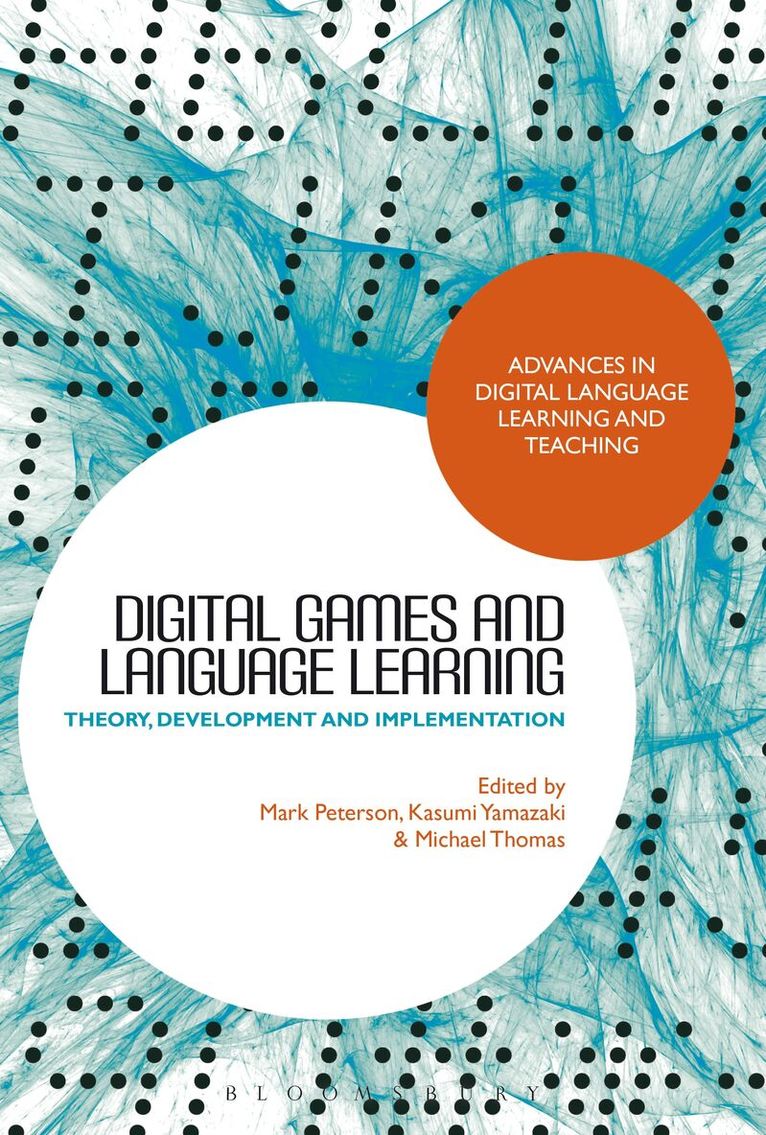
    Digital Games and Language Learning

    Theory, Development and Implementation

    AvMark Peterson,Kasumi Yamazaki

    Inbunden, Engelska, 2021

    Del i serien Advances in Digital Language Learning and Teaching

    1 626 kr

    Beställningsvara. Skickas inom 10-15 vardagar. Fri frakt över 249 kr.

    Beskrivning

    Due to the rapid development of gaming technologies in recent years, there has been a surge of interest in the role that digital games can play in foreign and second language learning. Bringing together innovative research from an international team of contributors, this book provides a comprehensive overview of the use of digital games in computer-assisted language learning (CALL).The book firstly lays the theoretical foundations and outlines various rationales for using digital games, incorporating contemporary theories of second language acquisition. It also explores the development and impact of digital games designed specifically for language learning, giving due consideration to design principles, pedagogical requirements and student health. Chapters then draw on case studies from Europe and Japan to analyse in-game interaction, attitudes and participation in both institutional and out-of-classroom settings. Seamlessly combining theory with practical application, this book outlines recent developments in the field and the direction of future research, and is a valuable resource for instructors, researchers and practitioners who are designing games or looking to use them in their classrooms.

    Produktinformation

    • Utgivningsdatum:2021-04-22
    • Mått:156 x 234 x undefined mm
    • Vikt:599 g
    • Format:Inbunden
    • Språk:Engelska
    • Serie:Advances in Digital Language Learning and Teaching
    • Antal sidor:300
    • Förlag:Bloomsbury Publishing PLC
    • ISBN:9781350133006

    Utforska kategorier

    • Språkundervisning och språkinlärning inom Språk och ordböcker
    • Material och digital teknik i undervisningen inom Psykologi och pedagogik
    • Språkvetenskap och lingvistik inom Språk och ordböcker

    Mer om författaren

    Mark Peterson is Associate Professor of Linguistics at Kyoto University, Japan.Kasumi Yamazaki is Associate Professor of Japanese at the University of Toledo, USA.Michael Thomas is Professor of Education at Liverpool John Moores University, UK.

    Recensioner i media

    This edited book is an ideal choice for readers willing to learn about the status quo of digital games in language education. It is particularly informative and valuable for language teachers who attempt to use digital games in their instructional practices ... this book makes a timely contribution to this research area as it demonstrates the breadth of topics for investigation and the pedagogical potential of digital games for language education.

    Innehållsförteckning

    • PrefaceForeword, Jozef Colpert (The University of Antwerp, Belgium)Acknowledgements1. Digital Games and Language Learning: The State of Play, Mark Peterson (Kyoto University Japan), Kasumi Yamazaki (University of Toledo, USA) and Michael Thomas (Liverpool John Moores University, UK)Part I: Theory and Research2. A Critical Review of Game-Based Learning, Gamification and Second Language Acquisition, Silvia Benini (University of Limerick, Ireland) and Michael Thomas (Liverpool John Moores University, UK)3. Second Language Development in the Context of Massively Multiplayer Online Games: Theoretical Perspectives, Nasser Jabbari (University of Essex, UK)4. Not All MMOGs are Created Equal: A Design-Informed Approach to the Study of L2 Learning in Multiplayer Online Games, Jonathon Reinhardt (University of Arizona, USA)5. Human Linguistics as a Framework for Analyzing Simulation-Gaming, Douglas W. Coleman (University of Toledo, USA)Part II: Development and Implementation of Digital Games in CALL6. Playing with Digital Game Pedagogies, Alex Bacalja and Kate Euphemia Clark (University of Melbourne, Australia) 7. The Use of Avatars in Digital Role-Playing Games (RPGS ) in Computer-Assisted Language Learning (CALL), Charly Harbord, Euan Dempster and Darshana Jayemanne (Abertay University, UK)8. Reinforcing International Students’ Language Skills for Disaster Preparedness, Kazuhiro Yonemoto (Tokyo Medical and Dental University, Japan)9.The Relationship between Extramural Digital Gameplay and 21st Century Skills in the Language Classroom, Daniel J. Mills and Benjamin Thanyawatpokin (Ritsumeikan University, Japan)10. Gaming as a Gateway to L2 English Learning, Liss Kerstin Sylven (University of Gothenburg, Sweden)Part III: Towards the Future of Game-Based Language Learning11. Issues in the Current State of Teaching Languages with Games, Benjamin Thanyawatpokin (Ritsumeikan University, Japan) and James York (Tokyo Denki University, Japan)12. Is Game-Based Language Teaching “Vaporware”?, Jonathan deHaan (University of Shizuoka, Japan)Index