• Fri frakt över 249 kr
  • •
  • Snabba leveranser
  • •
  • Billiga böcker
Kundservice

Du är på sajten för privatpersoner.

Företag, bibliotek eller offentlig verksamhet?

Du handlar på classic.bokus.com, där alla dina funktioner finns intakta.
Till classic.bokus.com
Bokus logotyp. Gå till startsidan.
  • Erbjudanden
  • Nyheter
  • Student
  • Topplistor
  • Barn & ungdom
  • Bokus Play
  • E-böcker
  • Pocketböcker
  • Spel & pussel

10% studentrabatt med kod TERM26

Sidfot

Mina sidor

    Hjälp

    • Kundservice
    • Vanliga frågor och svar
    • Frakt och leverans
    • Retur vid ångerrätt
    • Reklamera vara
    • Betalning
    • Köpvillkor
    • Allmänna villkor
    • Information om webbplatsens tillgänglighet

    Om Bokus

    • Om oss
    • Pressrum
    • För studenter
    • För företag
    • För bibliotek och offentlig verksamhet
    • För leverantörer
    • Hållbarhet

    Populärt

    • Aktuella erbjudanden
    • Presentkort
    • Studentlitteratur
    • Nya böcker
    • Topplistor
    • Signerade böcker
    • Engelska böcker

    Inspiration

    • Boktips
    • BookTok
    • Populära bokserier
    • Barnbokskaraktärer
    • Populära författare
    Logotyp för Bokus
    Följ oss på Facebook (extern länk)Följ oss på Instagram (extern länk)Följ oss på YouTube (extern länk)Följ oss på TikTok (extern länk)
    bokus @ CookiesAnpassa cookiesIntegritetspolicyKöpvillkor
    Till Citymail hemsida (extern länk)Till Budbee hemsida (extern länk)Till Postnord hemsida (extern länk)Till Schenker hemsida (extern länk)Till Early Bird hemsida (extern länk)Till Walleys hemsida (extern länk)
    1. Historia och arkeologi
    2. Historia
    3. Europas historia

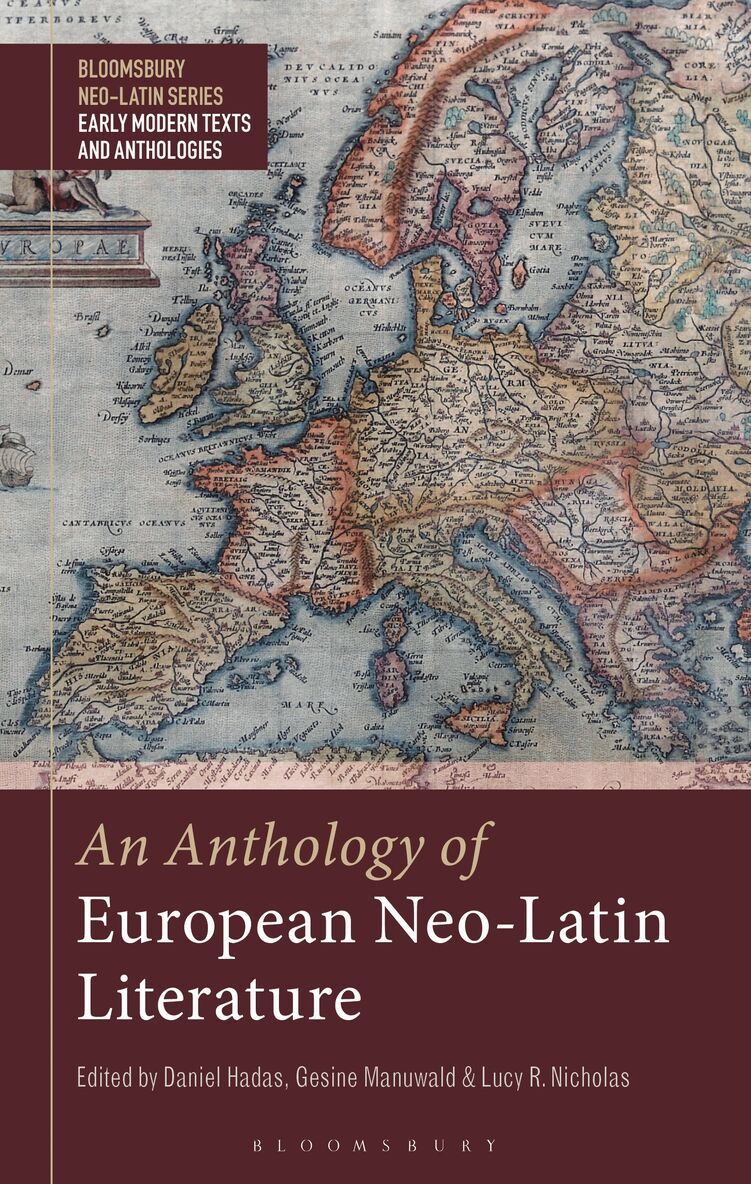
    Anthology of European Neo-Latin Literature

    AvGesine Manuwald,Daniel Hadas

    Häftad, Engelska, 2020

    Del i serien Bloomsbury Neo-Latin Series: Early Modern Texts and Anthologies

    551 kr

    Beställningsvara. Skickas inom 10-15 vardagar. Fri frakt över 249 kr.

    Beskrivning

    Compiled by a team of international experts, this volume showcases the best of the huge abundance of literature written in Latin in Europe from about 1500 to 1800. A general introduction provides readers with the context they need before diving into the 19 high-quality short Latin extracts and English translations. Together these texts present a rich panorama of the different literary genres, styles and themes that flourished at the time, and include authors such as Erasmus, Buchanan, Leibniz and Newton, along with less well-known writers.From the vast array of material available, a varied and meaningful sample of texts has been carefully curated by the editors of the volume. Passages not only exhibit literary merit or historical importance, but also illustrate the role of the complete texts from which they have been selected in the development of Neo-Latin literature. They reflect the wide range of authors writing in Latin in early modern Europe, as well as the importance of Latin in the history of ideas.As with all volumes in the series, section introductions and accompanying notes on every text provide orientation on the material for students.

    Produktinformation

    • Utgivningsdatum:2020-10-01
    • Mått:137 x 213 x 20 mm
    • Vikt:409 g
    • Format:Häftad
    • Språk:Engelska
    • Serie:Bloomsbury Neo-Latin Series: Early Modern Texts and Anthologies
    • Antal sidor:328
    • Förlag:Bloomsbury Publishing PLC
    • ISBN:9781350157293

    Utforska kategorier

    • Europas historia inom Historia och arkeologi
    • Dramatik inom Skönlitteratur
    • Litteraturvetenskap inom Skönlitteratur

    Mer om författaren

    Daniel Hadas is Lecturer in Medieval Latin at King's College London, UK. His research interests centre around Latin patristics, the development of post-classical Latin, and manuscript culture and textual criticism.Gesine Manuwald is Professor of Latin at University College London, UK, and President of the Society for Neo-Latin Studies. She has published a number of articles on early modern Latin literature and co-edited the collected volume Neo-Latin Poetry in the British Isles (Bloomsbury, 2012).Lucy R. Nicholas is a Teaching Fellow in Classics at King’s College London and the Warburg Institute, University of London, UK. She has published on Roger Ascham and written on other early modern Latin authors, including Thomas More and Walter Haddon, and also co-edited Themes of Polemical Theology Across Early Modern Literary Genres (2016) with Andrea Riedl Svorad Zavarský. She is the Treasurer of the Society for Neo-Latin Studies.

    Recensioner i media

    This anthology provides an excellent introduction to a wide-range of Latin writing from the pivotal centuries after the introduction of the printing press. You’ll find in it a treasure trove of excerpts from famous and fascinating authors sure to delight anyone interested in European learning and letters.

    Innehållsförteckning

    • List of contributorsPrefaceINTRODUCTION(Lucy R. Nicholas, King’s College London, UK and William M. Barton, Ludwig Boltzmann Institute for Neo-Latin Studies, Austria) 1 European Neo-Latin and its development 2 Neo-Latin as a literary medium 3 Neo-Latin literature and its genres 4 Aims and coverage of this volume 5 Latin texts: sources and conventions 6 Bibliography TEXTS 1 A pastoral exchange on the treatment of poetryBattista Spagnoli Mantovano (1447–1516), Adolescentia 5.1–23, 68–91, 111–25 (Bobby Xinyue, University of Warwick, UK) 2 The pierced ear: divine revelation and impregnationJacopo Sannazaro (1458–1530), De partu Virginis, extracts from Book 1 (Lucy R. Nicholas, King’s College London, UK) 3 The abbot and the learned womanDesiderius Erasmus (1466–1536), Colloquia (Abbatis et Eruditae) (Astrid Khoo, Harvard University, USA) 4 Christopher Columbus’ first voyagePietro Bembo (1470–1547), Rerum Venetarum historiae libri, extracts from 6.1–3 (Gareth Williams, Columbia University, USA) 5 Morbid measures and contaminated airs: the poetics of poxGirolamo Fracastoro (1476/8–1553), Syphilis sive de morbo Gallico, extracts (Gareth Williams, Columbia University, USA) 6 A Protestant on the attack in LatinMartin Luther (1483–1546), De abroganda missa privata (Lucy R. Nicholas, King’s College London, UK)7 Greeting Charles at BordeauxGeorge Buchanan (1506–1582), Silvae 1 (Stephen J. Harrison, University of Oxford, UK) 8 Epistolae Obscurorum Virorum (1515–1519),Letter 1.37: The converted Jew and his foreskin (Daniel Hadas, King’s College London, UK) 9 The pleasures of the hillsConrad Gessner (1516–1565), Descriptio Montis Fracti sive Montis Pilati, pp. 47–9 (William M. Barton, Ludwig Boltzmann Institute for Neo-Latin Studies, Austria) 10 Neo-Latin love elegyJoachim Du Bellay (c. 1522–1560), selection from Amores (1558) (Paul White, University of Leeds, UK) 11 A Jesuit encounter with an Indian YogiFrancesco Benci (1542–1594), Quinque martyres 5.96–132 (Paul Gwynne, The American University of Rome, Italy) 12 Mary, liturgy and missionsFrancisco Enzinas’ Correspondence with Robert Bellarmine (1605–1607) (Jan Machielsen, Cardiff University, UK) 13 Seneca’s death dramatizedMatthew Gwinne (1558–1627), Nero: Nova Tragaedia (1603), Act 5, Scene 6 (Emma Buckley, St Andrews University, UK) 14 Virgilian commentaryJuan Luis de la Cerda (1558/60–1643), on Aeneas’ first appearance in the Aeneid (Fiachra Mac Góráin, University College London, UK) 15 Vitalist philosophy from a long lost authorAnne Conway (1631–1679), Principia philosophiae antiquissimae & recentissimae, excerpts from Chapter VII (Laurynas Adomaitis, Scuola Normale Superiore di Pisa, Italy) 16 A new approach to studying old documentsJean Mabillon (1632–1707), De re diplomatica, extracts (Alfred Hiatt, Queen Mary, University of London, UK) 17 Newton on theologyIsaac Newton (1642–1727), theological section from the General Scholium to the Principia mathematica (Pablo Toribio, Spanish National Research Council, Spain) 18 Damnation and divine justiceGottfried Wilhelm Leibniz (1646–1716), Confessio philosophi, extract (Lucy Sheaf, King’s College London, UK) 19 A school playGottlob Krantz (1660–1733), Memorabilia Bibliothecae …Wratislaviensis, excerpts from Acts I and IV (Jacqueline Glomski, University College London, UK) Index