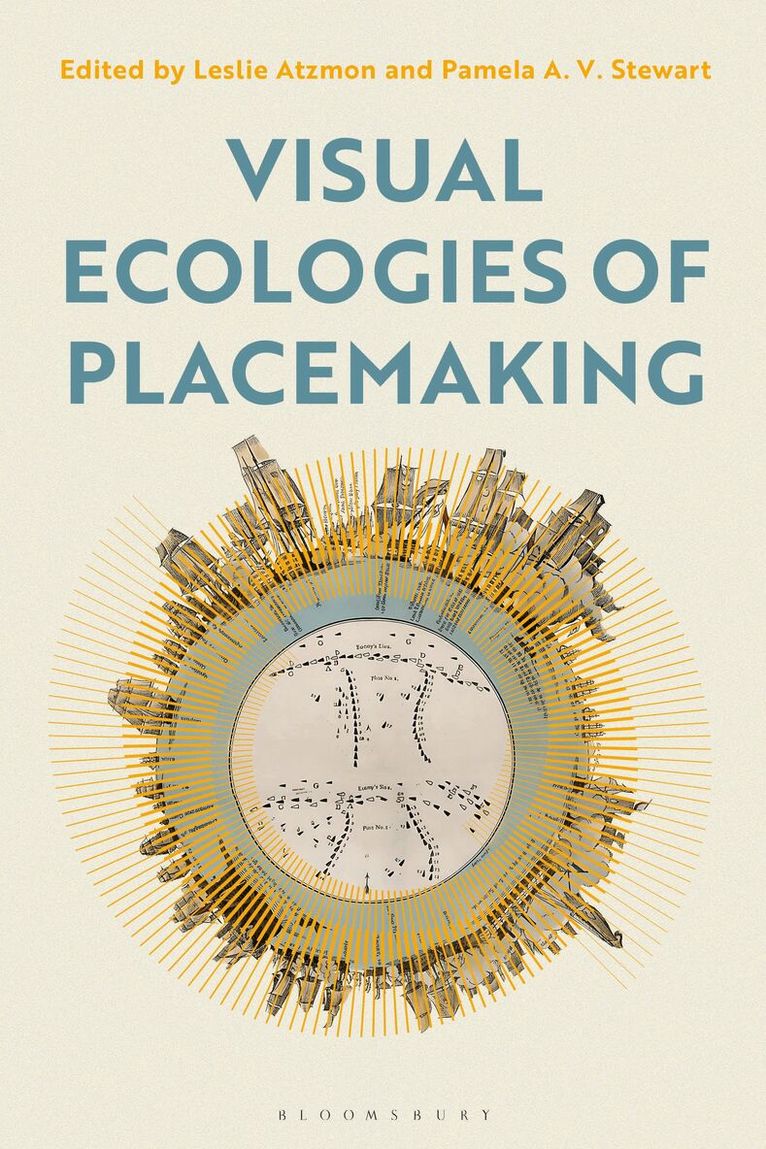
Inbunden, Engelska, 2026
Visual Ecologies of Placemaking
Av Leslie Atzmon, Pamela Stewart
1232 kr
Beställningsvara. Skickas inom 5-8 vardagar. Fri frakt över 249 kr.
Beskrivning
Contributing to a growing discourse in spatial humanities, this collection of essays provides a unique, critical insight into how place is shaped through visual and sensory practices. By looking at a range of natural, built, and digital environments, across historical and contemporary contexts, Visual Ecologies of Placemaking offers an in-depth study into place as a spatial, social, and cultural construct.From holy shrines to a local bar, panoramic illusions to the uncanny landscapes of Zoom, and the depths of the ocean to city streets, these 14 case studies excavate the layered ecologies of place across time and geography. Essays explore public and private spaces, cities, gardens, sacred settings, and domestic scenes. This timely volume engages diverse disciplinary perspectives and contributes to emerging areas of inquiry, such as somaesthetics, decolonial studies, and the digital humanities. In particular, the authors consider the relationship between human beings and the concept of place at times when places are undergoing radical shifts, due to occurrences such as global pandemics, changing climates, and widespread social unrest.Visual Ecologies of Placemaking offers a broad examination of the sensorial aspects of place, yielding new ways of thinking about how places are shaped, negotiated, lost, and reconstituted. Leslie Atzmon and Pamela A. V. Stewart’s collection provides fresh and essential insights into the varied roles that place plays in our understanding and expression of the world and our place within it.
Produktinformation
- Utgivningsdatum: 2026-05-14
- Mått: 158 x 236 x 26 mm
- Vikt: 800 g
- Format: Inbunden
- Språk: Engelska
- Antal sidor: 296
- Förlag: Bloomsbury Publishing PLC
- ISBN: 9781350224858
Utforska kategorier
Betyg & recensioner
0 recensioner
Inga recensioner tillgängliga.