• Fri frakt över 249 kr
  • •
  • Snabba leveranser
  • •
  • Billiga böcker
Kundservice

Du är på sajten för privatpersoner.

Företag, bibliotek eller offentlig verksamhet?

Du handlar på classic.bokus.com, där alla dina funktioner finns intakta.
Till classic.bokus.com
Bokus logotyp. Gå till startsidan.
  • Erbjudanden
  • Student
  • Topplistor
  • Barn & ungdom
  • Bokus Play
  • E-böcker
  • Ljudböcker
  • Pocketböcker
  • Spel & pussel

Upp till 25% på utvalda nyheter →

Sidfot

Mina sidor

    Hjälp

    • Kundservice
    • Vanliga frågor och svar
    • Frakt och leverans
    • Retur vid ångerrätt
    • Reklamera vara
    • Betalning
    • Köpvillkor
    • Allmänna villkor
    • Information om webbplatsens tillgänglighet

    Om Bokus

    • Om oss
    • Pressrum
    • För studenter
    • För företag
    • För bibliotek och offentlig verksamhet
    • För leverantörer
    • Hållbarhet

    Populärt

    • Aktuella erbjudanden
    • Presentkort
    • Studentlitteratur
    • Nya böcker
    • Topplistor
    • Signerade böcker
    • Engelska böcker

    Inspiration

    • Boktips
    • BookTok
    • Populära bokserier
    • Barnbokskaraktärer
    • Populära författare
    Logotyp för Bokus
    Följ oss på Facebook (extern länk)Följ oss på Instagram (extern länk)Följ oss på YouTube (extern länk)Följ oss på TikTok (extern länk)
    bokus @ CookiesAnpassa cookiesIntegritetspolicyKöpvillkor
    Till Citymail hemsida (extern länk)Till Budbee hemsida (extern länk)Till Postnord hemsida (extern länk)Till Schenker hemsida (extern länk)Till Early Bird hemsida (extern länk)Till Walleys hemsida (extern länk)
    1. Samhälle och politik
    2. Samhälle och kultur
    3. Sociala och etiska frågor

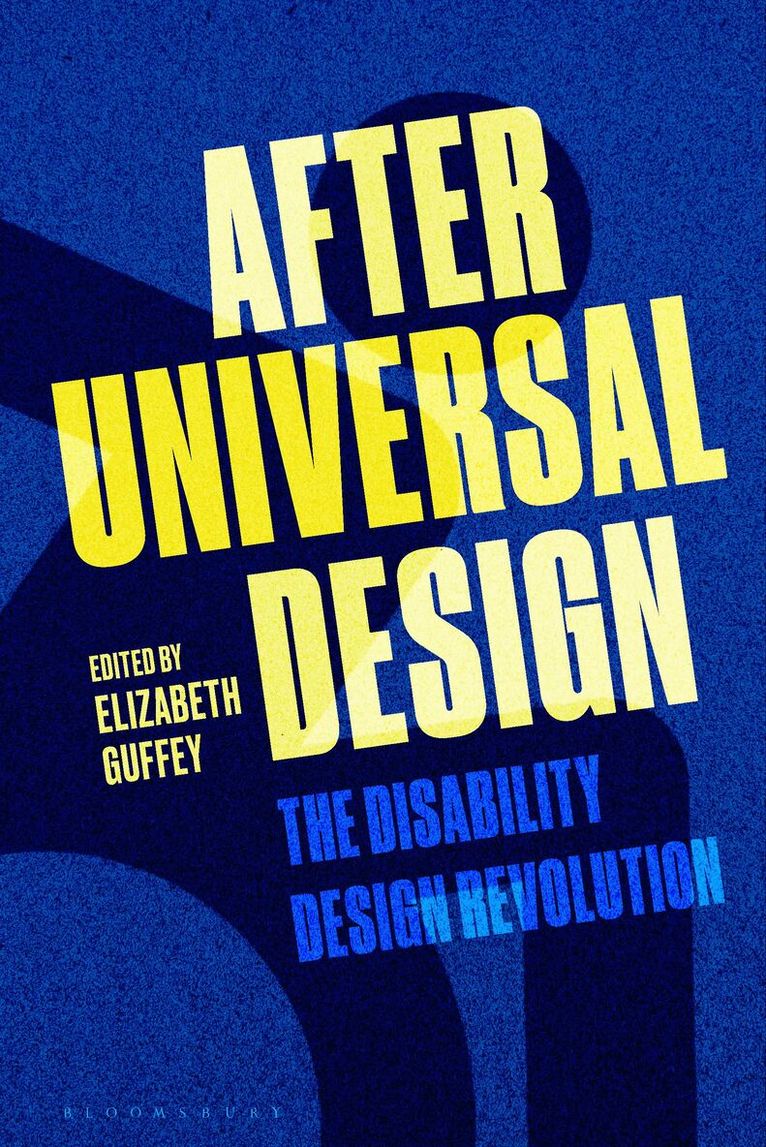
    After Universal Design

    The Disability Design Revolution

    AvElizabeth Guffey

    Häftad, Engelska, 2023

    311 kr

    Skickas . Fri frakt över 249 kr.

    Beskrivning

    How might we develop products made with and by disabled users rather than for them? Could we change living and working spaces to make them accessible rather than designing products that "fix" disabilities? How can we grow our capabilities to make designs more “bespoke” to each individual? After Universal Design brings together scholars, practitioners, and disabled users and makers to consider these questions and to argue for the necessity of a new user-centered design. As many YouTube videos demonstrate, disabled designers are not only fulfilling the grand promises of DIY design but are also questioning what constitutes meaningful design itself. By forcing a rethink of the top-down professionalized practice of Universal Design, which has dominated thinking and practice around design for disability for decades, this book models what inclusive design and social justice can look like as activism, academic research, and everyday life practices today. With chapters, case studies, and interviews exploring questions of design and personal agency, hardware and spaces, the experiences of prosthetics' users, conventional hearing aid devices designed to suit personal style, and ways of facilitating pain self-reporting, these essays expand our understanding of what counts as design by offering alternative narratives about creativity and making. Using critical perspectives on disability, race, and gender, this book allow us to understand how design often works in the real world and challenges us to rethink ideas of "inclusion" in design.

    Produktinformation

    • Utgivningsdatum:2023-06-15
    • Mått:156 x 232 x 16 mm
    • Vikt:531 g
    • Format:Häftad
    • Språk:Engelska
    • Antal sidor:240
    • Förlag:Bloomsbury Publishing PLC
    • ISBN:9781350241503

    Utforska kategorier

    • Sociala och etiska frågor inom Samhälle och politik
    • Designhistoria inom Kultur
    • Produktdesign inom Kultur

    Mer om författaren

    Elizabeth Guffey is Professor of Art and Design History and directs the MA in Modern and Contemporary Art, Criticism and Theory at the State University of New York, Purchase College, USA. She is co-editor of Making Disability Modern (Bloomsbury, 2020) and author of Designing Disability (Bloomsbury, 2018), Posters: A Global History (2015) and Retro: The Culture of Revival (2013). She is Founding Editor of Design and Culture journal and has also published essays in a number of popular publications, including The New York Times and The Nation.

    Innehållsförteckning

    • List of FiguresAcknowledgmentsGlossary of TermsIntroduction: A Universal Conundrum, Elizabeth Guffey (SUNY, Purchase College, USA)Section One: AgencySection IntroductionKey Points1. Four Commitments of Crip Technoscience, Kelly Fritsch (Carleton University, Canada) and Aimi Hamraie (Vanderbilt University, USA)2. Fixing Meets Expressing: Design by Designers with Disability Experience, Natalia Pérez Liebergesell, Peter-Willem Vermeersch, and Ann Heylighen (KU Leuven, Belgium) 3. Case Study: Brett's Leather Case, Jaipreet Virdi (University of Delaware, USA)4. Case Study: Zebreda Makes It Work! and the "Key" to Innovation, Elizabeth Guffey (SUNY, Purchase College, USA)5. Case Study: Privileging Agency: A Conversation with Design and Disability Advocate Jessica Ryan-Ndegwa, Alison Kurdock Adams (SUNY, Purchase College, USA)6. Case Study: Rehabilitation Technology at the Self-Help Shop Then and Now, Bess Williamson (SAIC, USA)7. Case Study: Beyond the Bespoke: Agency and The Hands of X, Andrew Cook and Graham Pullin (University of Dundee, UK)8. Case Study: Re-imagining Access and Its Pedagogies, Maggie Hendrie, Joshua Halstead, Robert Dirig, Elise Co, and Todd Masilko (ArtCenter College of Design, USA)Section Two: EquitySection IntroductionKey Points9. Equations for Reducing Disability Stigma through Design Equity, Josh Halstead (ArtCenter College of Design, USA)10. Making Equity: How the Disability Community Met the Maker Movement, Émeline Brulé (University of Sussex, UK)11. Case Study: Shaping Inclusive and Equitable Makerspaces, Katherine M. Steele (University of Washington, USA)12. Case Study: A Study of Skilled Craftwork among Blind Fiber Artists, Maitraye Das and Katya Borgos-Rodriguez (Northwestern University, USA), and Anne Marie Piper (University of California, USA)13. Case Study: Towards Sensory Equity: A More Inclusive Museum Space Designed from Disability Experience, Peter-Willem Vermeersch and Ann Heylighen (KU Leuven, Belgium) 14. Case Study: The Politics of Friction: Designing a Sex Toy for Every Body, David Serlin (UC San Diego, USA)15. Case Study: The Face-Based Pain Scale: A Tool for Whom? Gabi Schaffzin (York University, Canada)16. Case Study: Next Practice: Towards Equalities Design, Natasha Trotman (RCA, UK)Section Three: SpeculationSection IntroductionKey Points17. Speculative Making, Sara Hendren (Olin College of Engineering, USA)18. Speculating on Upstanding Norms, Ashley Shew (Virginia Tech, USA)19. Case Study: M Eifler’s Prosthetic Memory as Speculative Archive, Lindsey D. Felt (Stanford University, USA)20. Case Study: The Way Ahead, Caroline Cardus (Independent Artist, UK)21. Case Study: Customizing Reading: Harvey Lauer’s “Reading Machine of the Future”, Mara Mills (New York University, USA) 22. Case Study: “Captioning on Captioning” with Shannon Finnegan, Louise Hickman (University of Cambridge, UK)23. Case Study: A Squishy House, Emily Watlington (Art in America, USA)24. Case Study: Black Disabled Joy as an Act of Resistance, Jen White-Johnson (Bowie State University, USA)List of ContributorsIndex