• Fri frakt över 249 kr
  • •
  • Snabba leveranser
  • •
  • Billiga böcker
Kundservice

Du är på sajten för privatpersoner.

Företag, bibliotek eller offentlig verksamhet?

Du handlar på classic.bokus.com, där alla dina funktioner finns intakta.
Till classic.bokus.com
Bokus logotyp. Gå till startsidan.
  • Erbjudanden
  • Nyheter
  • Student
  • Topplistor
  • Barn & ungdom
  • Bokus Play
  • E-böcker
  • Pocketböcker
  • Spel & pussel

10% rabatt på allt med kod: NYSTART10 →

Sidfot

Mina sidor

    Hjälp

    • Kundservice
    • Vanliga frågor och svar
    • Frakt och leverans
    • Retur vid ångerrätt
    • Reklamera vara
    • Betalning
    • Köpvillkor
    • Allmänna villkor
    • Information om webbplatsens tillgänglighet

    Om Bokus

    • Om oss
    • Pressrum
    • För studenter
    • För företag
    • För bibliotek och offentlig verksamhet
    • För leverantörer
    • Hållbarhet

    Populärt

    • Aktuella erbjudanden
    • Presentkort
    • Studentlitteratur
    • Nya böcker
    • Topplistor
    • Signerade böcker
    • Engelska böcker

    Inspiration

    • Boktips
    • BookTok
    • Populära bokserier
    • Barnbokskaraktärer
    • Populära författare
    Logotyp för Bokus
    Följ oss på Facebook (extern länk)Följ oss på Instagram (extern länk)Följ oss på YouTube (extern länk)Följ oss på TikTok (extern länk)
    bokus @ CookiesAnpassa cookiesIntegritetspolicyKöpvillkor
    Till Citymail hemsida (extern länk)Till Budbee hemsida (extern länk)Till Postnord hemsida (extern länk)Till Schenker hemsida (extern länk)Till Early Bird hemsida (extern länk)Till Walleys hemsida (extern länk)
    1. Kultur
    2. Designböcker
    3. Designhistoria

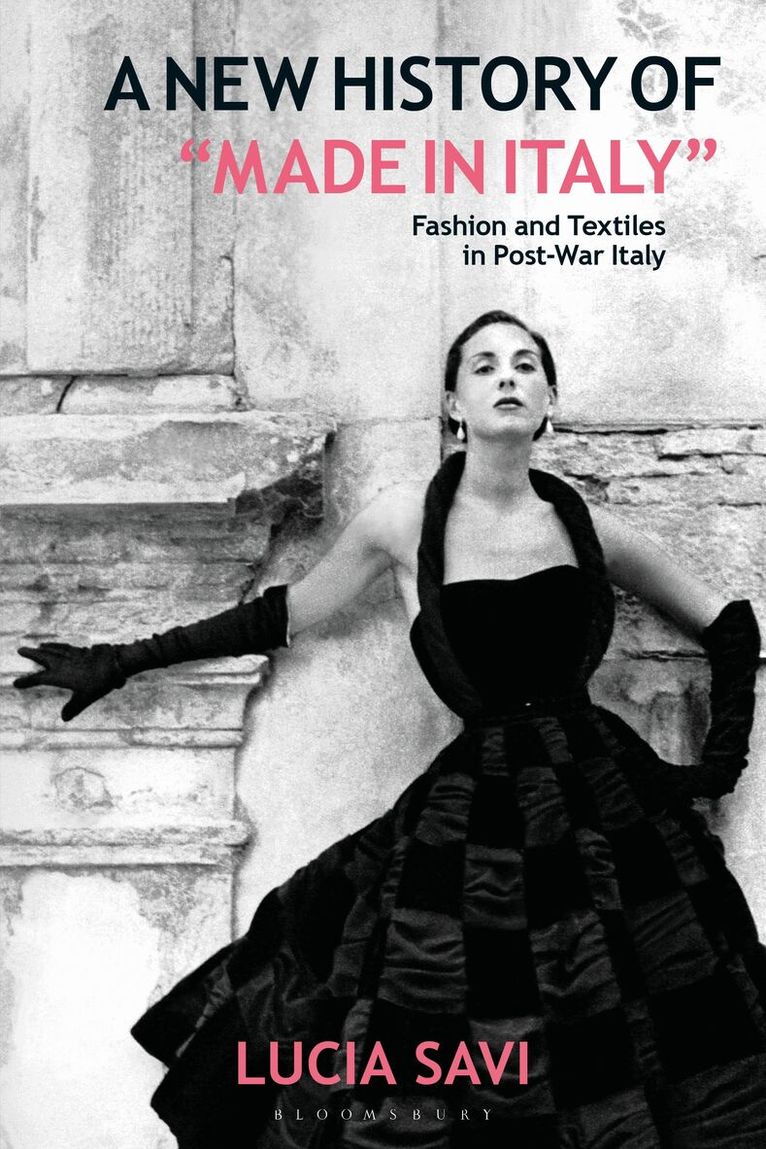
    New History of "Made in Italy"

    Fashion and Textiles in Post-War Italy

    AvLucia Savi

    Häftad, Engelska, 2024

    Del i serien Bloomsbury Visual Arts

    416 kr

    Beställningsvara. Skickas inom 5-8 vardagar. Fri frakt över 249 kr.

    Fler format och utgåvor

    E-bok

    451 kr

    E-bok

    451 kr

    Beskrivning

    Shortlisted for the Association of Dress Historians Book of the Year Award, 2024In the first book to examine the role played by textile manufacturing in the development of fashion in Italy, A New History of ‘Made in Italy’ investigates Italy’s transition from a country of dressmakers, tailors and small-scale couturiers in the early post-Second World War period to a major producer of ready-to-wear fashion in the 1980s. It takes the reader from Italy’s first internationally attended fashion show in 1951 to Time magazine’s Giorgio Armani April 1982 cover story, which signalled the fashion designer’s international arrival, and Milan’s presence as the capital of ready-to-wear.Chapters focus on the material substance of Italian fashion – textile – looking at questions including the importance of manufacturing quality, design innovation, composition, production techniques, commerce and the role of textile on the country’s overall fashion system. Through these, Lucia Savi brings to light the importance of synthetic fibres, previously little-known players, such as the carnettisti (a type of textile wholesalers) as well as re-investigating well-known couturiers and designers such as Simonetta, Gianfranco Ferré and Gianni Versace.By looking at how things are made, by whom, and where, this book seeks to unpack the ‘Made in Italy’ label through a focus on making. Informed by extensive archival materials retrieved from a wide range of sources, it brings together the often-separated disciplines of fashion, textile and design history.

    Produktinformation

    • Utgivningsdatum:2024-11-14
    • Mått:156 x 230 x 18 mm
    • Vikt:580 g
    • Format:Häftad
    • Språk:Engelska
    • Serie:Bloomsbury Visual Arts
    • Antal sidor:248
    • Förlag:Bloomsbury Publishing PLC
    • ISBN:9781350247796

    Utforska kategorier

    • Designhistoria inom Kultur

    Mer om författaren

    Lucia Savi is a curator at the Design Museum, London. In 2021 she curated the V&A exhibition Bags: Inside Out and authored its accompanying publication. Dr Savi has a PhD from Kingston University, UK, on Italian fashion and textiles, and has contributed to fashion and design exhibitions and their catalogues including The Glamour of Italian Fashion 1945–2014 (V&A, 2014) and Beyond Bloomsbury: Design of the Omega Workshops 1913-1919 (Courtauld, 2009).

    Recensioner i media

    In this long-awaited study, [Savi] probes with surgical acuity the connections in economics and fashion history that led to the worldwide spread and ... democratization of Italian fashion ... [exploring] new territory in terms of both method and sources ... with crisp color illustrations, indispensable for the reproduction of fabric patterns and drawings.

    Innehållsförteckning

    • List of FiguresAcknowledgmentsGlossaryIntroductionLocating Italian FashionMade in ItalyResearching ‘Made in Italy’Primary Research SourcesThe Inside-Out MethodResearch ParametersChapter Structure1. Fibers and the Making of Italian Textiles in the Post-War PeriodIntroductionItaly between Tradition and ModernityBetween Couturiers and ManufacturersFrom Paris to the USA’s influenceThe Fascist Period and the 1930sFibers and PoliticsItalian Fashion’s MaterialityNatural, Artificial and Synthetic FibersSilk, artificial and synthetic fibersSNIA Viscosa and Fibers PromotionThe Legitimization of New Fibers2. The American Export Market and its Influence on Italian designIntroductionTextiles Make Fashion: Italy at Work and Sala BiancaItalian Fashion in Italy at WorkItalian Textiles in Italy at WorkSala BiancaItaly and the USA: Export and Domestic MarketThe Value of Hand Made and Machine Made in Italy and USABoutique Fashion as Proto Italian Ready-to-WearThe Mechanisms of Copies– Italy and the USA between ‘Made in Italy’ and ExportMade in Italy and ExportThe Transatlantic Commerce of Italian Couture: Simonetta Case StudyReady-to-Wear versus CoutureThe Value of Copies3. The 1960s, a Decade of Metamorphosis in Italian FashionIntroductionTreaty of Rome and ExportThe Camera Nazionale della Moda Italiana (CNMI) and the Promotion of High FashionNew Ways of Production, with New Products and New Ways of ConsumptionIndustry and Alta ModaBoutique of Ready-to-Wear4. Fashion meets Industry: The Role of Carnettisti in Domestic and International MarketsCarnettisti in ItalyThe Assortitori Tessuti Novità (Sorter of New Textiles)Distribution of Textiles in the 1960sCarnettisti in CNMI: Towards a Codified Role and Crisis5. Milan and the StilistiIntroductionRise of MilanDistretti Industriali (Industrial Districts)The Stilista, the Link between Textile and Fashion ProductionStilista and Industrial ProductionTransition from Carnettista to Stilista6. Designing for Mass-ProductionDesigning FashionLiterature Review for Fashion Working DrawingsFashion Working Drawing DecodedPaper, Type of Drawing and InscriptionsStyle and AestheticsTextilesGianfranco Ferré: a Case StudyConclusionInside Fashion: the Role of Materials and ProductionFibers and materialsInternationalizationIndustrializationBibliographyIndex