• Fri frakt över 249 kr
  • •
  • Snabba leveranser
  • •
  • Billiga böcker
Kundservice

Du är på sajten för privatpersoner.

Företag, bibliotek eller offentlig verksamhet?

Du handlar på classic.bokus.com, där alla dina funktioner finns intakta.
Till classic.bokus.com
Bokus logotyp. Gå till startsidan.
  • Erbjudanden
  • Nyheter
  • Student
  • Topplistor
  • Barn & ungdom
  • Bokus Play
  • E-böcker
  • Pocketböcker
  • Spel & pussel

10% rabatt på allt med kod NYSTART10 →

Sidfot

Mina sidor

    Hjälp

    • Kundservice
    • Vanliga frågor och svar
    • Frakt och leverans
    • Retur vid ångerrätt
    • Reklamera vara
    • Betalning
    • Köpvillkor
    • Allmänna villkor
    • Information om webbplatsens tillgänglighet

    Om Bokus

    • Om oss
    • Pressrum
    • För studenter
    • För företag
    • För bibliotek och offentlig verksamhet
    • För leverantörer
    • Hållbarhet

    Populärt

    • Aktuella erbjudanden
    • Presentkort
    • Studentlitteratur
    • Nya böcker
    • Topplistor
    • Signerade böcker
    • Engelska böcker

    Inspiration

    • Boktips
    • BookTok
    • Populära bokserier
    • Barnbokskaraktärer
    • Populära författare
    Logotyp för Bokus
    Följ oss på Facebook (extern länk)Följ oss på Instagram (extern länk)Följ oss på YouTube (extern länk)Följ oss på TikTok (extern länk)
    bokus @ CookiesAnpassa cookiesIntegritetspolicyKöpvillkor
    Till Citymail hemsida (extern länk)Till Budbee hemsida (extern länk)Till Postnord hemsida (extern länk)Till Schenker hemsida (extern länk)Till Early Bird hemsida (extern länk)Till Walleys hemsida (extern länk)
    1. Skönlitteratur
    2. Litteraturvetenskap
    3. Litteraturvetenskap

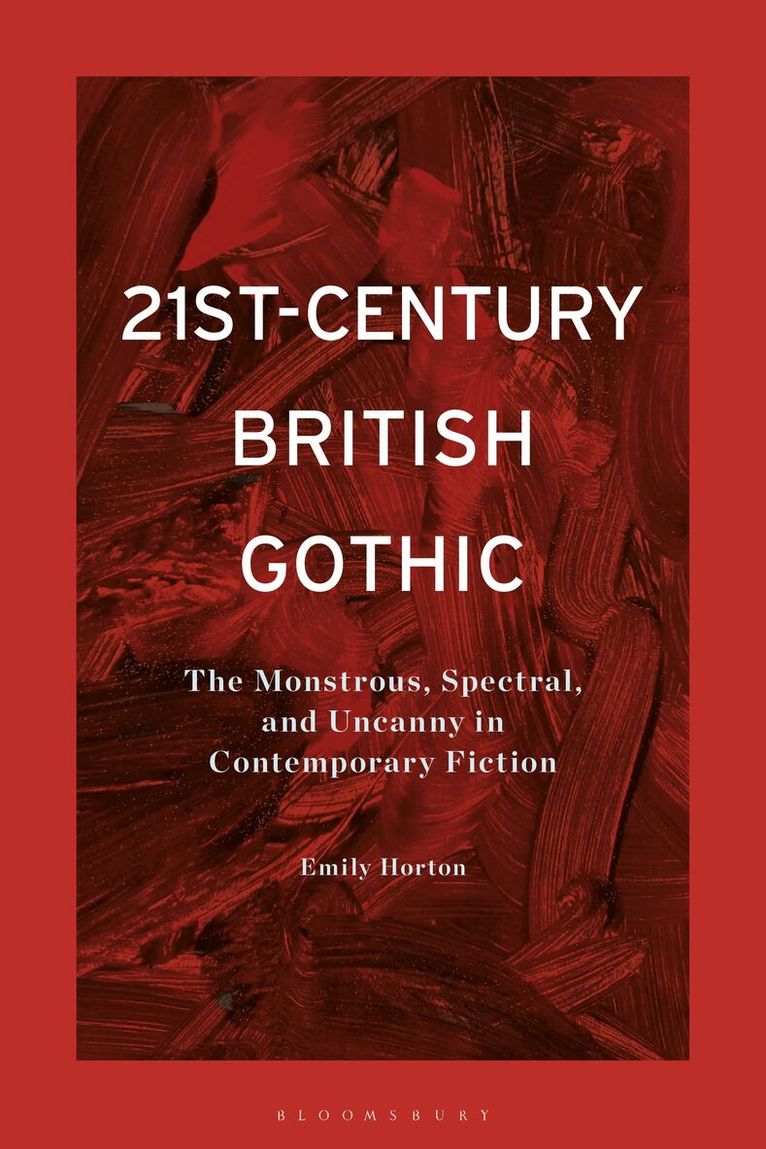
    21st-Century British Gothic

    The Monstrous, Spectral, and Uncanny in Contemporary Fiction

    AvEmily Horton

    Häftad, Engelska, 2025

    471 kr

    Beställningsvara. Skickas inom 10-15 vardagar. Fri frakt över 249 kr.

    Fler format och utgåvor

    Inbunden

    1 446 kr

    E-bok

    503 kr

    E-bok

    505 kr

    Beskrivning

    In this innovative re-casting of the genre and its received canon, Emily Horton explores fictional investments in the Gothic within contemporary British literature, revealing how such concepts as the monstrous, spectral and uncanny work to illuminate the insecure, uneven and precarious experience of 21st-century life. Reading contemporary works of Gothic fiction by Helen Oyeyemi, Kazuo Ishiguro, Sarah Moss, Patrick McGrath and M.R. Carey alongside writers not previously grouped under this umbrella, including Brian Chikwava, Chloe Aridjis and Mohsin Hamid, Horton illuminates the way the Gothic has been engaged and reread by contemporary writers to address the cultural anxieties invoked living under neocolonial and neoliberal governance, including terrorism, migration, homelessness, racism, and climate change.Marshalling new modes of diasporic and cross-disciplinary critical theory concerned with the violent dimensions of contemporary life, this book sets the Gothic aesthetics in such works as White is for Witching, Double Vision, Never Let Me Go, The Wasted Vigil and Ghost Wall against a backdrop of key events in the 21st-century. Drawing connections between moments of anxiety, such as 9/11, the wars in Afghanistan and Iraq, ecological disaster, the refugee crisis, Brexit, the pandemic, and the Gothic, Horton demonstrates how British literature mediates transnational experiences of trauma and horror, while also addressing local and national insecurities and preoccupations. As a result, 21st-Century British Gothic can tests geographical, psychological, cultural, and aesthetic borders to expose an often spectralised experience of human and planetary vulnerability and speaks back against the brutality of global capitalism.

    Produktinformation

    • Utgivningsdatum:2025-07-24
    • Mått:152 x 232 x 18 mm
    • Vikt:420 g
    • Format:Häftad
    • Språk:Engelska
    • Antal sidor:272
    • Förlag:Bloomsbury Publishing PLC
    • ISBN:9781350286603

    Utforska kategorier

    • Litteraturvetenskap inom Skönlitteratur
    • Kulturvetenskap inom Samhälle och politik

    Mer om författaren

    Emily Horton is Senior Lecturer in English at Brunel University, UK. She is author of Contemporary Crisis Fictions (2014), and co-editor of Ali Smith (Bloomsbury, 2013), The 1980s: A Decade in Contemporary British Fiction, (Bloomsbury, 2014)The 2010s: A Decade in Contemporary British Fiction (Bloomsbury, 2024).

    Recensioner i media

    Horton’s 21st-Century British Gothic is a fresh reassessment of an infamously mutable mode, bringing recognition to the uncanny, substance to the spectral, and hope to the monstrous by focusing the critical conversation on justice.

    Innehållsförteckning

    • INTRODUCTION: 21st-Century British Gothic: The Monstrous, Spectral, and Uncanny in Contemporary FictionCHAPTER 1: Post-9/11 Gothic: The Uncanny and Contemporary Trauma in Pat Barker’s Double Vision and Patrick McGrath’s Ghost TownCHAPTER 2: Decolonial Gothic: Tropical Terrors and Subterranean Ghosts in Tash Aw’s The Harmony Silk Factory and Nadeem Aslam’s The Wasted VigilCHAPTER 3: Gothic Inheritance: Imperial Witchcraft and Haunted Houses in Helen Oyeyemi’s White is for Witching and Sarah Waters’ The Little StrangerCHAPTER 4: Digital Gothic: Digital Technology, Migration, and the Gothic in Hari Kunzru’s Transmission and Mohsin Hamid’s Exit WestCHAPTER 5: Gothic Homelessness: Spectral Inhabitants and Uncanny Spaces in Ali Smith’s Hotel World, Trezza Azzopardi’s Remember Me, and Brian Chikwava’s Harare NorthCHAPTER 6: The Gothic City: Uncanny spaces, historical spectres, and monstrous urbanity in Louise Welsh’s The Cutting Room and Chloe Aridjis’s Book of CloudsCHAPTER 7: Brexit Gothic: Spectral Illusions and Affect Memories in Sarah Moss’s Ghost Wall and Niall Griffith’s Broken GhostCHAPTER 8: Pandemic Gothic: Childhood Terror and Monstrous Illness in the Fiction of Kazuo Ishiguro and M.R. CareyCHAPTER 9: Wet Gothic: Ecofeminism and Horror in Julie Armfield’s Our Wives Under the Sea, Daisy Johnson’s Fen, and Zoe Gilbert’s FolkBibliographyIndex