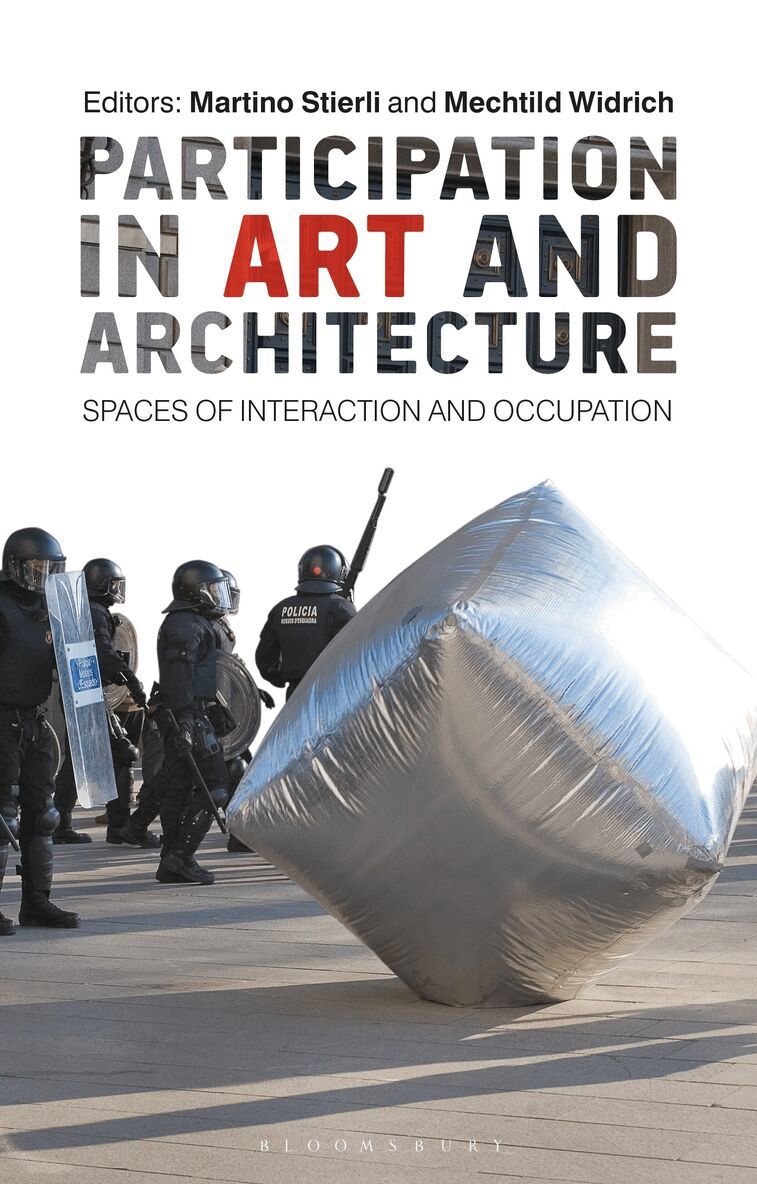
Häftad, Engelska, 2022
Participation in Art and Architecture
Spaces of Interaction and Occupation
Av Martino Stierli, Mechtild Widrich
Del i serien Bloomsbury Visual Arts
471 kr
Beställningsvara. Skickas inom 10-15 vardagar. Fri frakt över 249 kr.
Beskrivning
Produktinformation
- Utgivningsdatum: 2022-06-30
- Mått: 138 x 216 x 24 mm
- Vikt: 620 g
- Format: Häftad
- Språk: Engelska
- Serie: Bloomsbury Visual Arts
- Antal sidor: 344
- Förlag: Bloomsbury Publishing PLC
- ISBN: 9781350297012
Utforska kategorier
Mer om författaren
Martino Stierli is Chief Curator of Architecture and Design at the Museum of Modern Art (MoMA) in New York, USA. He was previously SNSF Professor for the History of Architecture & Art at the Art History Institute, University of Zurich, Switzerland.Mechtild Widrich is Professor of Art History at the School of the Art Institute of Chicago, USA. She was previously Postdoctoral Fellow and Lecturer at the Department for the History and Theory of Architecture at ETH Zurich, Switzerland.
Recensioner i media
Marking out a knowingly complex field of contemporary scholarship on 'participation' in art and architecture, this volume is testament not only to the multiple valences of the term - artistic, social, political, civic, urban, economic, and more - and the distinct contexts in which participatory acts and forms of agency have appeared or been strategically mobilized, but also of the term’s rich and ongoing potential as a critical and artistic lens. Inviting us to continue to 'think' through participation, it will be a welcome addition to contemporary debates on the ethical and political dimensions of art and architecture.
Betyg & recensioner
0 recensioner
Inga recensioner tillgängliga.