• Fri frakt över 249 kr
  • •
  • Snabba leveranser
  • •
  • Billiga böcker
Kundservice

Du är på sajten för privatpersoner.

Företag, bibliotek eller offentlig verksamhet?

Du handlar på classic.bokus.com, där alla dina funktioner finns intakta.
Till classic.bokus.com
Bokus logotyp. Gå till startsidan.
  • Erbjudanden
  • Nyheter
  • Student
  • Topplistor
  • Barn & ungdom
  • Bokus Play
  • E-böcker
  • Pocketböcker
  • Spel & pussel

10% rabatt på allt med kod: NYSTART10 →

Sidfot

Mina sidor

    Hjälp

    • Kundservice
    • Vanliga frågor och svar
    • Frakt och leverans
    • Retur vid ångerrätt
    • Reklamera vara
    • Betalning
    • Köpvillkor
    • Allmänna villkor
    • Information om webbplatsens tillgänglighet

    Om Bokus

    • Om oss
    • Pressrum
    • För studenter
    • För företag
    • För bibliotek och offentlig verksamhet
    • För leverantörer
    • Hållbarhet

    Populärt

    • Aktuella erbjudanden
    • Presentkort
    • Studentlitteratur
    • Nya böcker
    • Topplistor
    • Signerade böcker
    • Engelska böcker

    Inspiration

    • Boktips
    • BookTok
    • Populära bokserier
    • Barnbokskaraktärer
    • Populära författare
    Logotyp för Bokus
    Följ oss på Facebook (extern länk)Följ oss på Instagram (extern länk)Följ oss på YouTube (extern länk)Följ oss på TikTok (extern länk)
    bokus @ CookiesAnpassa cookiesIntegritetspolicyKöpvillkor
    Till Citymail hemsida (extern länk)Till Budbee hemsida (extern länk)Till Postnord hemsida (extern länk)Till Schenker hemsida (extern länk)Till Early Bird hemsida (extern länk)Till Walleys hemsida (extern länk)
    1. Filosofi och religion
    2. Filosofi
    3. Filosofiska discipliner

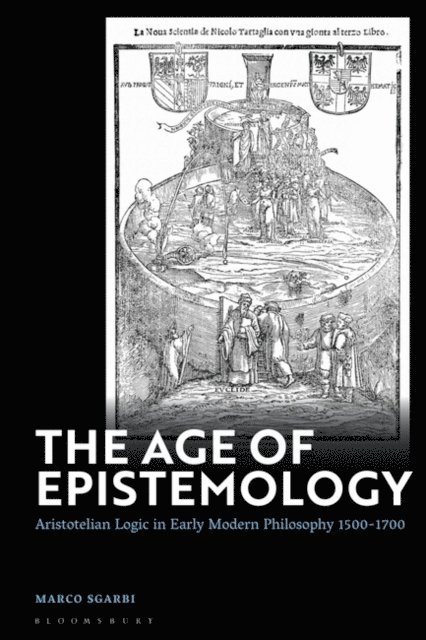
    Age of Epistemology

    Aristotelian Logic in Early Modern Philosophy 1500-1700

    AvMarco Sgarbi

    Häftad, Engelska, 2024

    423 kr

    Beställningsvara. Skickas inom 10-15 vardagar. Fri frakt över 249 kr.

    Fler format och utgåvor

    Inbunden

    1 325 kr

    E-bok

    454 kr

    E-bok

    453 kr

    Beskrivning

    Marco Sgarbi tells a new history of epistemology from the Renaissance to Newton through the impact of Aristotelian scientific doctrines on key figures including Galileo Galilei, Thomas Hobbes, René Descartes, John Locke, Gottfried Wilhelm Leibniz and Isaac Newton. This history illuminates the debates philosophers had on deduction, meditation, regressus, syllogism, experiment and observation, the certainty of mathematics and the foundations of scientific knowledge. Sgarbi focuses on the Aristotelian education key philosophers received, providing a concrete historical framework through which to read epistemological re-definitions, developments and transformations over three centuries. The Age of Epistemology further highlights how Aristotelianism itself changed over time by absorbing doctrines from other philosophical traditions and generating a variety of interpretations in the process.

    Produktinformation

    • Utgivningsdatum:2024-10-31
    • Mått:154 x 232 x 20 mm
    • Vikt:460 g
    • Format:Häftad
    • Språk:Engelska
    • Antal sidor:312
    • Förlag:Bloomsbury Publishing PLC
    • ISBN:9781350326699

    Utforska kategorier

    • Filosofiska discipliner inom Filosofi och religion
    • Naturvetenskapens filosofi inom Naturvetenskap och teknik

    Mer om författaren

    Marco Sgarbi is Professor of the History of Philosophy at Ca’ Foscari University of Venice, Italy.

    Recensioner i media

    In this thoroughly researched monograph, Sgarbi brings to light the ways in which the Aristotelian theory of scientific knowledge provided the framework for the development of Early Modern epistemology. Sgarbi’s mastery of a very broad (and complex) array of historical sources, as well as of existing interpretations, is impressive. This book is destined to become a major reference work for this period and is an essential read to all those interested in the history of epistemology from the Renaissance to Newton.

    Innehållsförteckning

    • Sources and Abbreviations1. Introduction2. Averroists3. Alexandrists4. Francis Bacon5. Galileo Galilei6. Thomas Hobbes7. René Descartes8. Isaac Barrow9. Robert Hooke10. John Locke11. Gottfried Wilhelm Leibniz12. Isaac Newton13. ConclusionNotesBibliographyIndex