• Fri frakt över 249 kr
  • •
  • Snabba leveranser
  • •
  • Billiga böcker
Kundservice

Du är på sajten för privatpersoner.

Företag, bibliotek eller offentlig verksamhet?

Du handlar på classic.bokus.com, där alla dina funktioner finns intakta.
Till classic.bokus.com
Bokus logotyp. Gå till startsidan.
  • Erbjudanden
  • Nyheter
  • Student
  • Topplistor
  • Barn & ungdom
  • Bokus Play
  • E-böcker
  • Pocketböcker
  • Spel & pussel

10% rabatt på allt med kod: NYSTART10 →

Sidfot

Mina sidor

    Hjälp

    • Kundservice
    • Vanliga frågor och svar
    • Frakt och leverans
    • Retur vid ångerrätt
    • Reklamera vara
    • Betalning
    • Köpvillkor
    • Allmänna villkor
    • Information om webbplatsens tillgänglighet

    Om Bokus

    • Om oss
    • Pressrum
    • För studenter
    • För företag
    • För bibliotek och offentlig verksamhet
    • För leverantörer
    • Hållbarhet

    Populärt

    • Aktuella erbjudanden
    • Presentkort
    • Studentlitteratur
    • Nya böcker
    • Topplistor
    • Signerade böcker
    • Engelska böcker

    Inspiration

    • Boktips
    • BookTok
    • Populära bokserier
    • Barnbokskaraktärer
    • Populära författare
    Logotyp för Bokus
    Följ oss på Facebook (extern länk)Följ oss på Instagram (extern länk)Följ oss på YouTube (extern länk)Följ oss på TikTok (extern länk)
    bokus @ CookiesAnpassa cookiesIntegritetspolicyKöpvillkor
    Till Citymail hemsida (extern länk)Till Budbee hemsida (extern länk)Till Postnord hemsida (extern länk)Till Schenker hemsida (extern länk)Till Early Bird hemsida (extern länk)Till Walleys hemsida (extern länk)
    1. Samhälle och politik
    2. Samhälle och kultur
    3. Kultur och medier
    4. Referensverk och tvärvetenskap

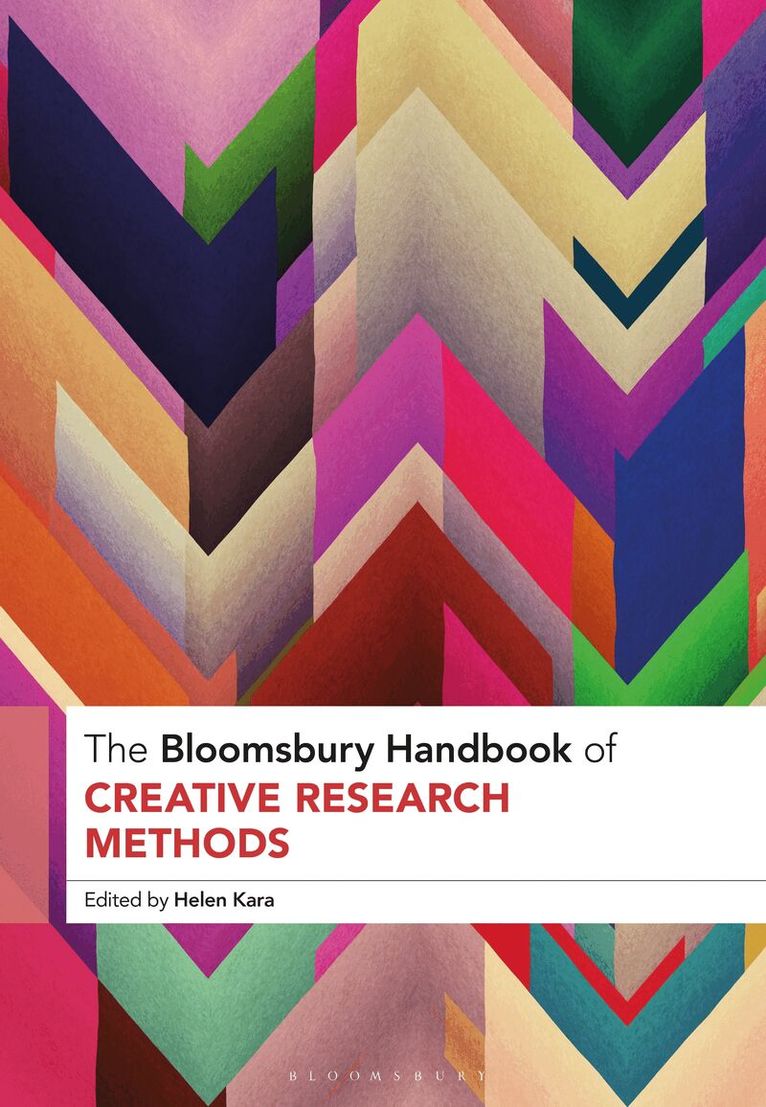
    Bloomsbury Handbook of Creative Research Methods

    AvHelen Kara

    Häftad, Engelska, 2026

    Del i serien Bloomsbury Handbooks

    595 kr

    Beställningsvara. Skickas inom 10-15 vardagar. Fri frakt över 249 kr.

    Beskrivning

    This book provides both an overview of, and an insight into, the rapidly expanding field of creative research methods. The contributors, from four continents, range from doctoral students through to independent and practice-based researchers to senior professors, providing a clear view of the applicability of creative research methods in all types of research work. Chapters offer examples of creative research methods in practice, and advice on how to transfer or adapt those methods for different disciplines and settings. Research ethics and research quality are considered throughout. This is a timely handbook which provides information for novice researchers and inspiration for experienced researchers, and is essential reading for anyone interested in creative research methods.

    Produktinformation

    • Utgivningsdatum:2026-01-22
    • Mått:166 x 242 x 22 mm
    • Vikt:580 g
    • Format:Häftad
    • Språk:Engelska
    • Serie:Bloomsbury Handbooks
    • Antal sidor:344
    • Förlag:Bloomsbury Publishing PLC
    • ISBN:9781350355781

    Utforska kategorier

    • Referensverk och tvärvetenskap inom Samhälle och politik

    Mer om författaren

    Helen Kara is an independent researcher, scholar, teacher and speaker, who has written several books on creative research methods and research ethics. She is a Fellow of the Academy of Social Sciences, UK.

    Recensioner i media

    Helen Kara continues to lead the way in creative research methods. This handbook is a must-read for anyone interested in developing deeper knowledge of how to do research "differently".

    Innehållsförteckning

    • List of FiguresList of TablesList of ContributorsIntroduction, Helen Kara (Independent Researcher, UK)Part I: Overview 1. Creative Research Methods and Ethics, Su-ming Khoo (National University of Ireland, Ireland)2. Creative Research Methods in the Geo-Political South, Bibek Dahal (University of Calgary, Canada), Suresh Gautam (Kathmandu University) 3. Digital Tools for Creative Data Analysis: Opportunities, Challenges, and Future Directions, Christina Silver (Qualitative Data Analysis Services, UK), Sarah L Bulloch (Qualitative Data Analysis Services, UK) and Michelle Salmona (Institute for Mixed Methods Research, Australia)4. Human Geography and Creative Methods: Moving and Mapping, Nadia von Benzon (Lancaster University, UK)Part II: Narrative Inquiry5. Understanding Intersectionality in a Metropolitan Space in India: Creative Data Methods Using Social Media, Paramjeet Chawla (Institute of Integrated Learning in Management, India), Gunjan Chandhok (University of Delhi, India) and Sonam Chandhok (University of Delhi, India)6. Micro-Stories and Meaning-Making in Narrative Research, Kim Nelson-Miles (Torrens University, Australia)7. The Use of Semiotics in Leadership Narrative Analysis, Lizana Oberholzer (University of East London, UK) and John Macklin (University of East London, UK)Part III: Poetic Analysis8. Grappling with Poetry: Why to Start and How to Start, Zoe John (Swansea University, UK)9. Discovering the Self-Voices of Authors and Speakers: A Text-Based Method for Exploring Pronouns via Regular Expressions, Robert Williams (Bennett College, USA)Part IV: Visual Methods10. Ethnograms, Richy Cook (Bath Spa University, UK)11. Presenting an Analytical Apparatus for Visual Imagery (AAVI) in Socially Engaged Research Practice, Karin Hannes (KU Leuven, Belgium) and Richard Siegesmund (Northern Illinois University, USA)Part V: Creating Visual Art12. Creative Process: Visual and Material Sense Making in Research, Francesca Bernardi (Independent Researcher, UK)13. Letting the Picture Tell the Story: Using Comics Capture Content as a Research Method, Bruce Mutard (Independent Researcher, Australia), Stuart Medley (Edith Cowan University, Australia) and Chris Kueh (Edith Cowan University, Australia)Part VI: Participatory Textiles14. Stitching as Creative Method: An Autoethnographic Account, Susie Bass (University of Kent, UK)15. Untangling Threads, Piecing Together, and Unpicking: The Possibilities and Barriers of Visual Vignettes in Trauma-Sensitive Research, Caroline Aldridge (Independent Researcher, UK)Part VII: Embodied Performative Methods16. Pregnant Box: What Happens When Opera Enacts an Embodied Analysis of Concealing Pregnancy, Catherine Conlon (Trinity College, Ireland) and Evangelia Rigaki (Trinity College, Ireland) 17. Performance Art and Embodied Data Analysis in Arts-Based Sociological Research on Whiteness, Katalin Halász (Brunel University, UK)Part VIII: Participants as Experts18. “I’ve got some more to add to that”: Using Creative Methods to Empower Autistic Young People to Tell their Stories, Ruth Moyse (University of Strathclyde, UK)19. ‘A little bit of advice’: Working Creatively with Children and their Foster Carers to Explore how they Would Like To Share Their Experiences, Dawn Mannay (Cardiff University, UK), Rachael Vaughan (Cardiff University, UK), Maria Boffey (Fostering Network, UK) and Charlotte Wooders (Fostering Network, UK)Part IX: Creative Collaboration20. Creative Research Methods in a Digital World: Problem-Solving and Collaboration in Research, Sharon McDonough (Federation University, Australia), Amanda Belton (University of Melbourne, Australia), Mark Selkrig (University of Melbourne, Australia) and Ron “Kim” Keamy (University of Melbourne, Australia)21. ARTiculating an Ethical Position: A Group of art psychotherapists use a Collaborative Arts-Based (Research) Process to Set their Ethical Scene when Employing Creative Methods within Mental Health Research, Kelly Jayne (Teesside University, UK), Lydia Pell (Higher Education Consultant, Supervisor and Art Psychotherapist, UK), Nicki Power (East London NHS Foundation Trust, UK) and Amy Stanhope, (University of Derby, UK)22. Ethno-Mimesis: Using Ethnography, Participatory Arts, Walking and Theatre in Ethical Research for Change, Maggie O’Neill (University College Cork, Ireland) and Catrina McHugh (Open Clasp Theatre Company, UK)Conclusion, Helen Kara (Independent Researcher, UK)Index