• Fri frakt över 249 kr
  • •
  • Snabba leveranser
  • •
  • Billiga böcker
Kundservice

Du är på sajten för privatpersoner.

Företag, bibliotek eller offentlig verksamhet?

Du handlar på classic.bokus.com, där alla dina funktioner finns intakta.
Till classic.bokus.com
Bokus logotyp. Gå till startsidan.
  • Erbjudanden
  • Nyheter
  • Student
  • Topplistor
  • Barn & ungdom
  • Bokus Play
  • E-böcker
  • Pocketböcker
  • Spel & pussel

10% rabatt på allt med kod: NYSTART10 →

Sidfot

Mina sidor

    Hjälp

    • Kundservice
    • Vanliga frågor och svar
    • Frakt och leverans
    • Retur vid ångerrätt
    • Reklamera vara
    • Betalning
    • Köpvillkor
    • Allmänna villkor
    • Information om webbplatsens tillgänglighet

    Om Bokus

    • Om oss
    • Pressrum
    • För studenter
    • För företag
    • För bibliotek och offentlig verksamhet
    • För leverantörer
    • Hållbarhet

    Populärt

    • Aktuella erbjudanden
    • Presentkort
    • Studentlitteratur
    • Nya böcker
    • Topplistor
    • Signerade böcker
    • Engelska böcker

    Inspiration

    • Boktips
    • BookTok
    • Populära bokserier
    • Barnbokskaraktärer
    • Populära författare
    Logotyp för Bokus
    Följ oss på Facebook (extern länk)Följ oss på Instagram (extern länk)Följ oss på YouTube (extern länk)Följ oss på TikTok (extern länk)
    bokus @ CookiesAnpassa cookiesIntegritetspolicyKöpvillkor
    Till Citymail hemsida (extern länk)Till Budbee hemsida (extern länk)Till Postnord hemsida (extern länk)Till Schenker hemsida (extern länk)Till Early Bird hemsida (extern länk)Till Walleys hemsida (extern länk)
    1. Naturvetenskap och teknik
    2. Geovetenskap
    3. Miljövetenskap och miljöpolitik

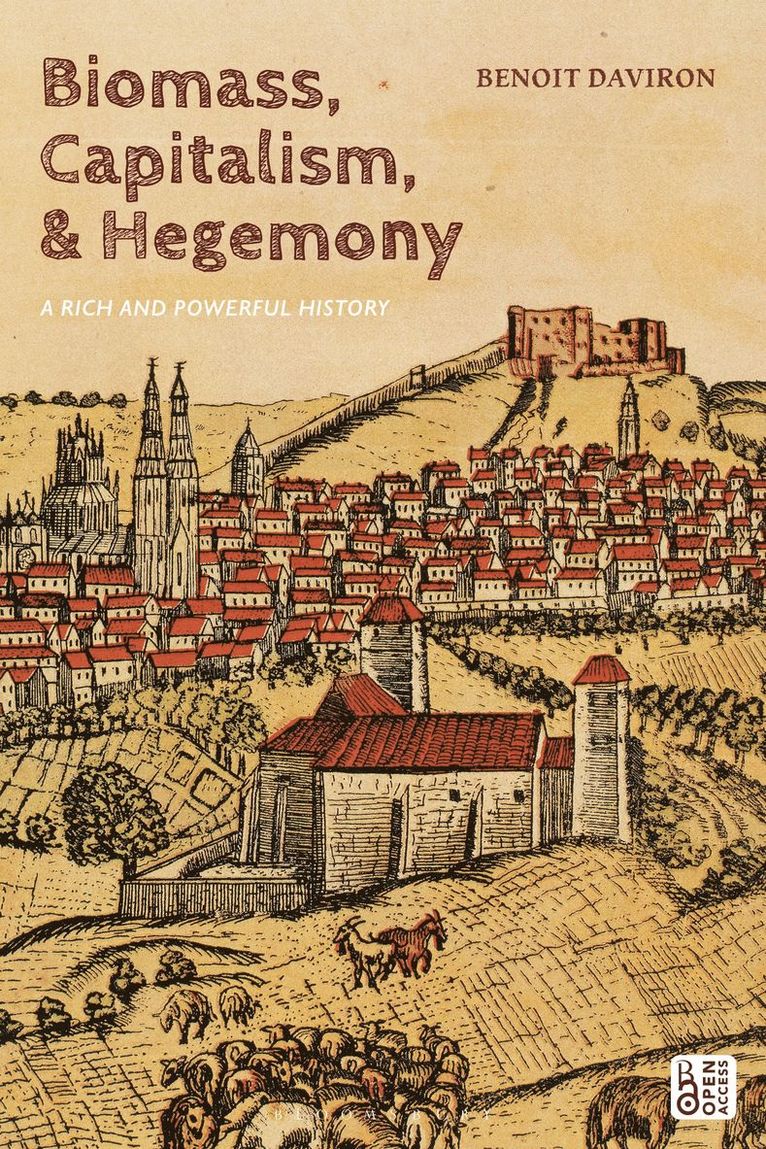
    Biomass, Capitalism, and Hegemony

    A Rich and Powerful History

    AvBenoit Daviron

    Häftad, Engelska, 2025

    331 kr

    Beställningsvara. Skickas inom 5-8 vardagar. Fri frakt över 249 kr.

    Fler format och utgåvor

    Inbunden

    1 009 kr

    Beskrivning

    How did Europeans achieve global dominance and continue to satisfy their ever-growing needs? How do we explain the effects this has on the rest of the world? In his magnum opus, published here in English for the first time as an open access book, world-renowned critical development scholar Benoit Daviron blends Braudelian history and a food systems approach to show how biomass--as the metabolism of societies and as a source of matter and energy--explains key historical phases of Western capitalist hegemony and the transitions between them. By examining various uses of biomass, technical production and extraction methods, forms of labour mobilization, and exchange systems, Daviron provides startling new insights into capitalist development from the 16th century to the present. This book is essential reading for students and scholars of critical approaches to global development, and for anyone interested in how capitalist domination came to be and how the bio-meatabolic imbalances it created might be redressed.The ebook editions of this book are available open access under a CC BY-NC-ND 4.0 licence on bloomsburycollections.com.

    Produktinformation

    • Utgivningsdatum:2025-01-23
    • Mått:156 x 234 x 26 mm
    • Vikt:660 g
    • Format:Häftad
    • Språk:Engelska
    • Antal sidor:424
    • Förlag:Bloomsbury Publishing PLC
    • ISBN:9781350443235

    Utforska kategorier

    • Miljövetenskap och miljöpolitik inom Naturvetenskap och teknik
    • Lantbruk, fiske och skogsbruk inom Ekonomi och Ledarskap
    • Miljöekonomi inom Ekonomi och Ledarskap

    Mer om författaren

    Benoit Daviron is a French agronomist and agricultural economist at the French Agricultural Research Centre for International Development (CIRAD). He is also currently a visiting scholar at the University of California, Berkeley, USA.

    Recensioner i media

    Biomass, Capitalism, and Hegemony brings political economy down to earth. Daviron penetrates the glittering surface of money to reveal a long history of successive ruptures in social metabolism, in which societies like living organisms, consume resources and produce waste. For millennia, biomass from plants supplied all human needs. Empires 500 years ago began to stretch solar metabolisms in space by reaching into distant landscapes to extract biomass, using enslaved labour, but still relying on energy from sun, wind, and water. Centuries later metabolism stretched in time by reaching deep into the earth for stored fossil energy and minerals. The “industrial revolution” not only separated labour from land, but also shifted the metabolic regime to mining. Viewed as metabolic regimes, wars are not only about hegemonic transitions from losers to victors. They create successive separations of “industry” from “agriculture,” and finally the rise of chemical industries that dominate agriculture and food along with everything else. More than cyclical transfers of wealth and power, extraction of biomass and energy have cumulatively led humans to a precipice, in which small course reversals face towering power and wealth locked into a disastrous trajectory of extraction and war.

    Innehållsförteckning

    • General IntroductionPart I: Where we see the United Provinces build wealth and power by trading distant biomass, 1580-1705Introduction1. The United Provinces: Territories, resources and economic sectors2. The Baltics and the North Sea: the first peripheries3. Spices and companies: trade with another world-economy, AsiaConclusionPart II: Where we see England pull ahead of France by exploiting its territory and its coloniesbetter, 1700-1846Introduction4. Mercantilism and the art of counting on your own forces5. Mobilizing resources from the national territory6. Distant biomass and social metabolismConclusionPart III: Where Great Britain, now a hegemon, mobilizes the world for its supply of biomass and prompts Europe to imitate her, 1815-1913Introduction7. A portrait of an English hegemon as a biomass importer8. Overcoming "the tyranny of distance": technical and institutional innovations9. The Golden Age of Frontiers10. An intensive animal farming pole in Northwestern Europe11. On Free Labor12. And capital? Key for transport, negligible for agricultural productionConclusionPart IV: Where the rivalry between Germany, the United States, and others gives a key roleto the chemical industry, 1865-1945Introduction13. Germany: on a quest for an industrialization not dependent on long-distance biomass trade14. Imperialist strategies, the weapon of the weak: France and Japan15. The United States: from the legendary frontier to resolution of the long farm crisisConclusionPart V: Where we see agriculture, under America's hegemony, become “modern”, “conventional” and food-focused, 1945-1972Introduction16. The American model17. Uneven spread of the American model and the institutionalization of the Global North-South division18. International agricultural trade: limited, food-focused, and administeredConclusionPart VI: American Hegemony, Season 2: The Return of GlobalizationIntroduction19. The second age of American hegemony20. Reorienting the world21. The "oil-based model" of biomass production and consumption pursues its global conquest22. The incomplete globalization of agricultural marketsConclusionGeneral Conclusion