• Fri frakt över 249 kr
  • •
  • Snabba leveranser
  • •
  • Billiga böcker
Kundservice

Du är på sajten för privatpersoner.

Företag, bibliotek eller offentlig verksamhet?

Du handlar på classic.bokus.com, där alla dina funktioner finns intakta.
Till classic.bokus.com
Bokus logotyp. Gå till startsidan.
  • Erbjudanden
  • Nyheter
  • Student
  • Topplistor
  • Barn & ungdom
  • Bokus Play
  • E-böcker
  • Pocketböcker
  • Spel & pussel

10% rabatt på allt med kod NYSTART10 →

Sidfot

Mina sidor

    Hjälp

    • Kundservice
    • Vanliga frågor och svar
    • Frakt och leverans
    • Retur vid ångerrätt
    • Reklamera vara
    • Betalning
    • Köpvillkor
    • Allmänna villkor
    • Information om webbplatsens tillgänglighet

    Om Bokus

    • Om oss
    • Pressrum
    • För studenter
    • För företag
    • För bibliotek och offentlig verksamhet
    • För leverantörer
    • Hållbarhet

    Populärt

    • Aktuella erbjudanden
    • Presentkort
    • Studentlitteratur
    • Nya böcker
    • Topplistor
    • Signerade böcker
    • Engelska böcker

    Inspiration

    • Boktips
    • BookTok
    • Populära bokserier
    • Barnbokskaraktärer
    • Populära författare
    Logotyp för Bokus
    Följ oss på Facebook (extern länk)Följ oss på Instagram (extern länk)Följ oss på YouTube (extern länk)Följ oss på TikTok (extern länk)
    bokus @ CookiesAnpassa cookiesIntegritetspolicyKöpvillkor
    Till Citymail hemsida (extern länk)Till Budbee hemsida (extern länk)Till Postnord hemsida (extern länk)Till Schenker hemsida (extern länk)Till Early Bird hemsida (extern länk)Till Walleys hemsida (extern länk)
    1. Historia och arkeologi
    2. Historia

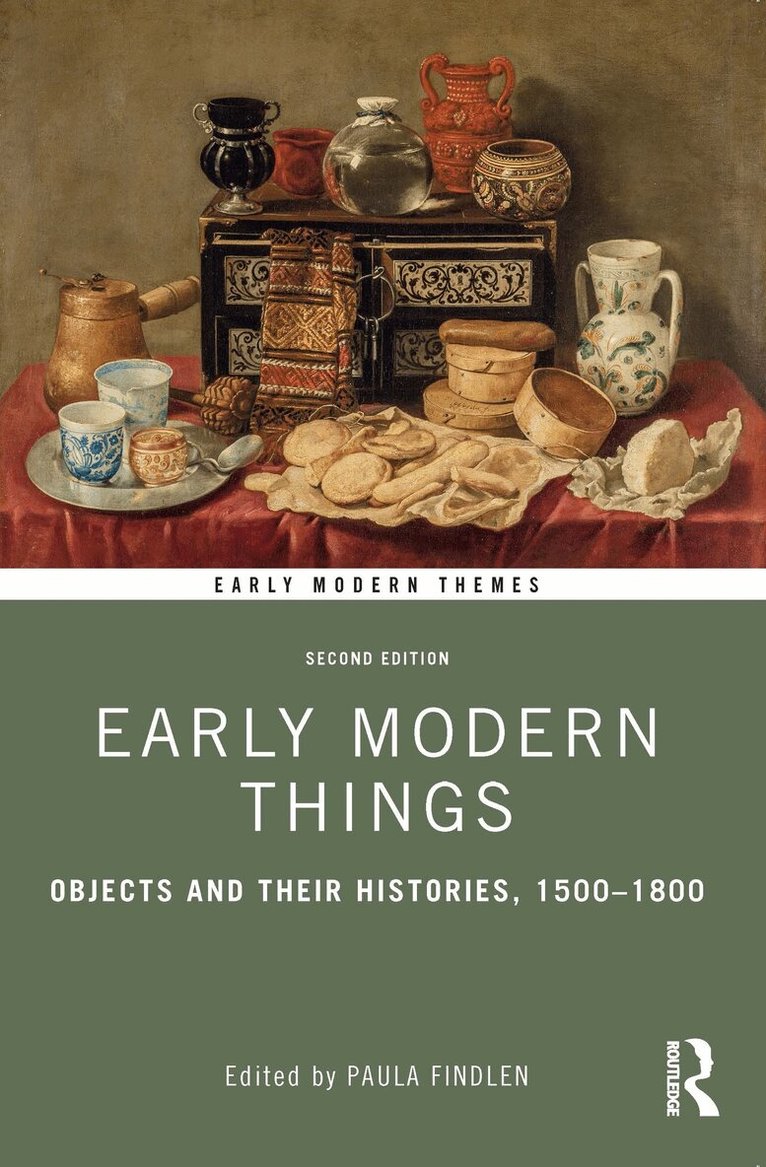
    Early Modern Things

    Objects and their Histories, 1500-1800

    AvPaula Findlen

    E-bok
    PDF, Engelska, 2021

    Del i serien Early Modern Themes

    898 kr

    Läs direkt i Bokus Reader – eller ladda ned till din enhet (PDF kräver ofta zoom och scroll på små skärmar).

    Beskrivning

    Early Modern Things supplies fresh and provocative insights into how objects – ordinary and extraordinary, secular and sacred, natural and man-made – came to define some of the key developments of the early modern world.Now in its second edition, this book taps a rich vein of recent scholarship to explore a variety of approaches to the material culture of the early modern world (c. 1500–1800). Divided into seven parts, the book explores the ambiguity of things, representing things, making things, encountering things, empires of things, consuming things, and the power of things. This edition includes a new preface and three new essays on ‘encountering things’ to enrich the volume. These look at cabinets of curiosities, American pearls, and the material culture of West Central Africa. Spanning across the early modern world from Ming dynasty China and Tokugawa Japan to Siberia and Georgian England, from the Kingdom of the Kongo and the Ottoman Empire to the Caribbean and the Spanish Americas, the authors provide a generous set of examples in how to study the circulation, use, consumption, and, most fundamentally, the nature of things themselves.Drawing on a broad range of disciplinary perspectives and lavishly illustrated, this updated edition of Early Modern Things is essential reading for all those interested in the early modern world and the history of material culture.

    Produktinformation

    • Utgivningsdatum:2021-03-01
    • Språk:Engelska
    • Filformat:PDF
    • Kopieringsskydd:LCP
    • ISBN:9781351055734
    • Förlag:Taylor & Francis Ltd
    • Upplaga:2
    • Serie:Early Modern Themes

    Utforska kategorier

    • Historia inom Historia och arkeologi
    • Allmän historia och världshistoria inom Historia och arkeologi
    • Europas historia inom Historia och arkeologi

    Mer om författaren

    Paula Findlen is Ubaldo Pierotti Professor of Italian History and Director of the Suppes Center for the History and Philosophy of Science and Technology at Stanford University, USA. Her previous works include Possessing Nature: Museums, Collecting, and Scientific Culture in Early Modern Italy (1994), and, most recently Empires of Knowledge: Scientific Networks in the Early Modern World (2019), Leonardo’s Library (2019), and The Renaissance of Letters (2020). She is a Fellow of the American Academy of Arts and Sciences.

    Recensioner i media

    "A cornucopia: a rich and valuable collection that ranges far and wide in its analysis of the dynamic and diverse powers – symbolic, material, economic, political and religious – of things in the early-modern world. These essays raise important questions about taking objects seriously for historians of any era." John Brewer, California Institute of Technology, USA

    Innehållsförteckning

    • Preface to the second edition: early modern things revisited Introduction: Early modern things: objects in motion, 1500–1800 Part I: The ambiguity of things 1.Surface Ttnsion: objectifying ginseng in Chinese early modernity 2. Going to the birds: animals as things and beings in early modernity 3. The restless clock Part II: Representing things 4. Stil-Staende Dingen: picturing objects in the Dutch Golden Age 5. 'Things seen and unseen': the material culture of early modern inventories and their representation of domestic interiors 6. Costume and character in the Ottoman Empire: dress as social agent in Nicolay’s Navigations Part III: Making things 7. Making things: techniques and books in early modern Europe 8. Capricious demands: artisanal goods, business strategies, and consumer behavior in seventeenth-century Florence Part IV: Encountering things 9. Catalogical encounters: worldmaking in early modern cabinets of curiosities 10. Unruly objects: baroque fantasies and early modern realities 11. The taste of others: finery, the slave trade, and Africa’s place in the traffic in early modern things Part V: Empires of things 12. Locating rhubarb: early modernity's relevant obscurity 13. The world in a shilling: silver coins and the challenge of political economy in the early modern Atlantic world 14. Anatolian timber and Egyptian grain: things that made the Ottoman Empire Part VI: Consuming things 15. The Tokugawa storehouse: Ieyasu’s encounters with things 16. Porcelain for the poor: the material culture of tea and coffee consumption in eighteenth-century Amsterdam 17. Fashioning difference in Georgian England: furniture for him and for her Epilogue: the power of things 18. Denaturalizing things: a comment 19. Something new: a comment 20. Identities through things: a comment