• Fri frakt över 249 kr
  • •
  • Snabba leveranser
  • •
  • Billiga böcker
Kundservice

Du är på sajten för privatpersoner.

Företag, bibliotek eller offentlig verksamhet?

Du handlar på classic.bokus.com, där alla dina funktioner finns intakta.
Till classic.bokus.com
Bokus logotyp. Gå till startsidan.
  • Erbjudanden
  • Nyheter
  • Student
  • Topplistor
  • Barn & ungdom
  • Bokus Play
  • E-böcker
  • Pocketböcker
  • Spel & pussel

10% rabatt på allt med kod NYSTART10 →

Sidfot

Mina sidor

    Hjälp

    • Kundservice
    • Vanliga frågor och svar
    • Frakt och leverans
    • Retur vid ångerrätt
    • Reklamera vara
    • Betalning
    • Köpvillkor
    • Allmänna villkor
    • Information om webbplatsens tillgänglighet

    Om Bokus

    • Om oss
    • Pressrum
    • För studenter
    • För företag
    • För bibliotek och offentlig verksamhet
    • För leverantörer
    • Hållbarhet

    Populärt

    • Aktuella erbjudanden
    • Presentkort
    • Studentlitteratur
    • Nya böcker
    • Topplistor
    • Signerade böcker
    • Engelska böcker

    Inspiration

    • Boktips
    • BookTok
    • Populära bokserier
    • Barnbokskaraktärer
    • Populära författare
    Logotyp för Bokus
    Följ oss på Facebook (extern länk)Följ oss på Instagram (extern länk)Följ oss på YouTube (extern länk)Följ oss på TikTok (extern länk)
    bokus @ CookiesAnpassa cookiesIntegritetspolicyKöpvillkor
    Till Citymail hemsida (extern länk)Till Budbee hemsida (extern länk)Till Postnord hemsida (extern länk)Till Schenker hemsida (extern länk)Till Early Bird hemsida (extern länk)Till Walleys hemsida (extern länk)
    1. Språk och ordböcker
    2. Språkundervisning och språkinlärning

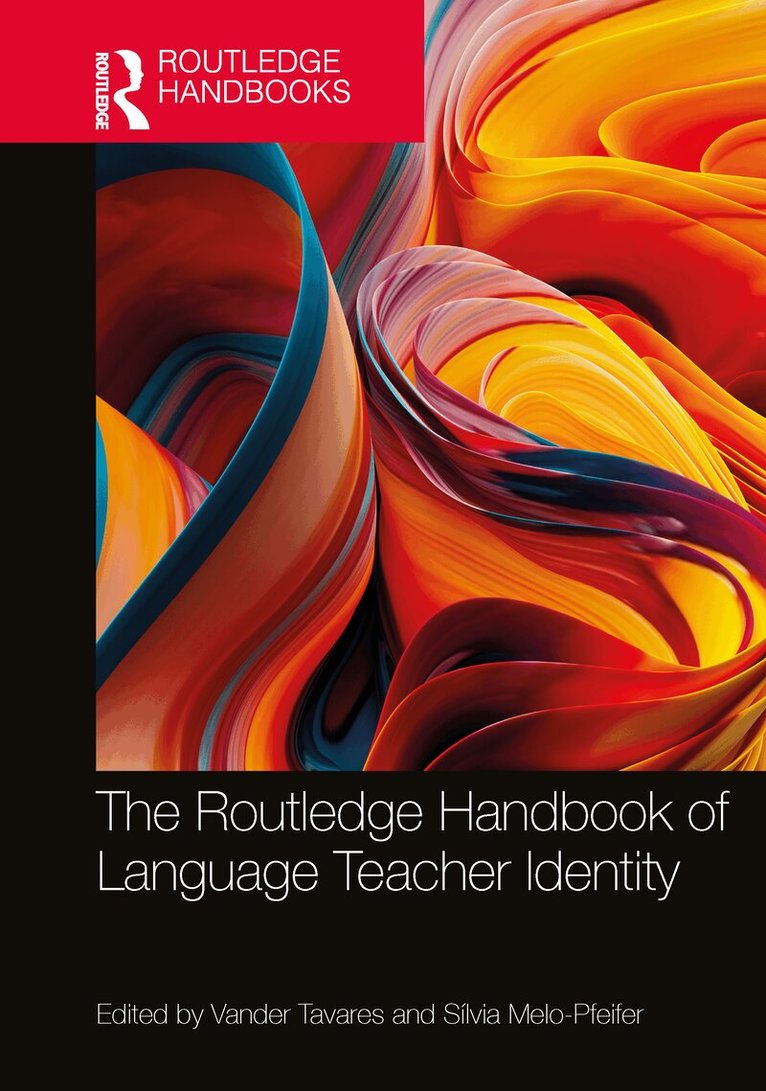
    Language Teacher Identity

    Confronting Ideologies of Language, Race, and Ethnicity

    AvSílvia Melo-Pfeifer,Vander Tavares

    Häftad, Engelska, 2024

    437 kr

    Beställningsvara. Skickas inom 5-8 vardagar. Fri frakt över 249 kr.

    Beskrivning

    The first volume to focus on race, ethnicity, and accent as elements of language teacher identity, a valuable guide for in-service teachers and teachers-in-training Language Teacher Identity presents a groundbreaking critical examination of how ideologies of race, ethnicity, accent, and immigration status impact perceptions of plurilingual teachers. Bringing together contributions by an international panel of established and emerging scholars, this important work of scholarship addresses issues related to native-speakerism, monolingualism, racism, competence, authenticity, and legitimacy while examining their role in the construction of professional identity. With an intersectional and holistic approach, the authors draw upon case studies of practical teacher experiences from Brazil, Canada, Germany, Norway, Mongolia, Pakistan, and the United States to provide teachers with real-world insights on responding to the assumptions, biases, and prejudices that students, student teachers, and teachers may bring into the classroom. Topics include the impact of policies and ideologies on teacher identity development, the intersection between L2 teacher identity and teacher emotion research, awareness of ethnic accent bullying, and the use of transraciolinguistic approaches in the classroom. This unique new work: Provides a broad overview of the different types of challenges language teachers face in their careersFocuses on race, ethnicity, plurilingualism, and accent as fundamental elements of a language teacher’s identityDiscusses the sensitive political and social factors that complicate the role of a language teacher in the classroomCovers the teaching of a wide range of languages, including English, Japanese, Portuguese, French, Spanish, and NorwegianAddresses key issues and significant gaps in contemporary research on language teacher education, including the experiences of teachers of two or more languagesEmploying a variety of methodological and theoretical approaches, Language Teacher Identity is a forward-looking look at an exciting area of research and theory in language teacher education and training. It is essential reading for students training to become language teachers, in-service teachers, and for students and scholars in applied linguistics with a focus on TESOL, teacher and language education.

    Produktinformation

    • Utgivningsdatum:2024-03-07
    • Mått:150 x 229 x 23 mm
    • Vikt:363 g
    • Format:Häftad
    • Språk:Engelska
    • Antal sidor:320
    • Förlag:John Wiley & Sons Inc
    • ISBN:9781394154531

    Utforska kategorier

    • Språkundervisning och språkinlärning inom Språk och ordböcker
    • Utbildningsstrategier och utbildningspolitik inom Psykologi och pedagogik
    • Språkvetenskap och lingvistik inom Språk och ordböcker

    Mer om författaren

    SÍLVIA MELO-PFEIFER is Professor of Romance Language Teacher Education at the University of Hamburg, Germany. Her research is focused on pluralistic language education and arts-based approaches to language teaching. Her publications include Portuguese as a Heritage Language in Europe: A Pluricentric Perspective and The Changing Face of the “Native Speaker”: Perspectives from Multilingualism and Globalization. VANDER TAVARES is Postdoctoral Researcher at Inland Norway University of Applied Sciences, Norway. His research focuses on language teacher identity development and second language education. He is the co-editor of Reconstructions of Canadian Identity: Towards Diversity and Inclusion and the author of International Students in Higher Education: Language, Identity, and Experience from a Holistic Perspective.
    Recensioner i media

    "Sílvia Melo-Pfeifer and Vander Tavares have put together a timely volume on language teacher identity at the interface of ideology, policy and practice. The studies, from diverse cultural and educational contexts, challenge assumptions about race, accent and ethnicity in language education. Together they make an invaluable contribution to scholarship and professional development." - Li Wei, Director and Dean, UCL Institute of Education"This exciting volume asks deep questions about language teacher identity focusing on teachers of two or more languages and racialised language teachers in diverse contexts.   Melo-Pfeifer and Tavares have done an amazing job in interrogating the dominant linguistic ideologies of race, ethnicity and language in language teacher education." - Xuesong (Andy) Gao, UNSW Australia"This volume is ground-breaking. Its focus on teachers of two or more languages and racialized language teachers is bold. Its decolonial theoretical compass is timely. A powerful contribution to the language teacher identity literature!" - Lourdes Ortega, Professor of Linguistics, Georgetown University

    Innehållsförteckning

    • About the Authors xiiForeword: Filling the Gaps in Language TeacherEducation: A Prologue xviiiOfelia García1 Language Teacher Identity and Education in the Crossfire of Evolving Raciolinguistic and Monolingual Ideologies 1Sílvia Melo-Pfeifer and Vander Tavares1.1 Introduction: How and Why Did We Get Here? 11.2 Addressing the Key Concepts of This Volume 41.3 The Volume in a Nutshell 91.4 Conclusion 16References 18Part 1 Experiences of Identity Construction of Plurilingual Language Teachers 212 Future Teachers of Two Languages in Germany: Self-reported Professional Knowledge and Teaching Anxieties 23Sílvia Melo-Pfeifer and Vander Tavares2.1 Introduction: Moving Beyond the Dichotomy of Native/Nonnative Foreign Language Teachers in the Study of Professional Knowledge and Teaching Anxiety 232.2 Teachers of Two Languages and Foreign Language (Teaching) Anxiety: Crisscrossing Two Research Fields 252.2.1 Teachers of Two Languages: Why Do They Matter? 252.2.2 Foreign Language (Teaching) Anxiety 272.3 The Empirical Study 292.3.1 Context and Participants 292.3.2 Data Collection Instrument 312.3.3 Data Analysis 312.4 Findings 322.4.1 Representations of Teachers’ Knowledge 322.4.1.1 Quantitative Analysis 322.4.1.2 Qualitative Analysis 342.4.2 Representations of Teachers’ Emotions: A Focus on Language Anxiety 372.4.2.1 Quantitative Analysis 372.4.2.2 Qualitative Analysis 382.5 Discussion of the Results, Unanswered Questions, and Further Research Perspectives 392.6 Implications for Teacher Education Programs 41References 423 Exploring Identities and Emotions of a Teacher of Multiple Languages: An Arts-based Narrative Inquiry Using Clay Work 45Eric K. Ku3.1 Introduction 453.2 Identities and Emotions in Teaching Multiple Languages 463.3 Clay Work as Arts-based Narrative Inquiry 473.4 Methodology 483.4.1 Data Collection 483.4.2 Data Analysis 493.5 Park’s Narratives 503.5.1 Learning Japanese and English 503.5.2 Teaching Korean and English 533.6 Discussion 583.6.1 Multiple Identities and Emotions as a TML 583.6.2 Race and Ethnicity in Teaching Multiple Languages 593.7 Reflections on Using Clay Work 60References 614 Emotional Geographies of Teaching Two Languages: Power, Agency, and Identity 63Vander Tavares4.1 L2 Teachers’ Experiences: Beyond Ideologies 644.2 Understanding Teaching Through Emotional Geographies 654.3 Research Design: Autoethnography 684.3.1 Data Collection and Analysis 694.4 Findings in Stories 714.4.1 Teaching Portuguese as an Additional Language 714.4.2 Teaching English as a Second Language 734.5 Discussion and Conclusion 75References 785 Teaching Languages in the Linguistic Marketplace: Exploring the Impact of Policies and Ideologies on My Teacher Identity Development 82Jonas Yassin Iversen5.1 Introduction 825.2 Language Teaching in Norway 835.3 The Linguistic Marketplace 855.4 A Poststructuralist Perspective on Teacher Identity 875.5 Autoethnography 895.6 Teaching a Language of Convenience: Destabilizing Identity 905.7 Teaching a Language of Necessity: Disintegrating Identity 925.8 Teaching a Language of High Prestige: Regaining Agency 935.9 Teacher Identity in the Linguistic Marketplace 955.10 Practical Implications for Language Teacher Education 96References 97Part 2 Emergent and Critical Perspectives on Language Teacher Education Programs 1036 Cultivating the Critical: Professional Development as Ideological Development for Teachers of Racialized Bi/Multilingual Students 105Kate Seltzer6.1 Introduction 1056.2 A Critical Translingual Approach to PD: Theoretical Framings 1066.3 Project Design and Methods 1086.3.1 Project Overview 1086.3.2 Participants 1096.3.3 Data Collection and Analysis 1106.3.4 Researcher Positionality 1116.4 Findings 1126.4.1 “I Don’t Want to Contribute to the Problems That I Feel Are Just, Like, Inherent in Our System” 1126.4.2 “Who Educates the Educators?” 1146.4.3 “I Have to Think and Really, Concretely, Make Sure That It Happens” 1156.5 Discussion and Implications for Language Teacher Education 1176.6 Conclusion 119References 1207 “The Words Flowed Like a River”: Taking Up Translanguaging in a Teacher Education Program 123Cecilia M. Espinosa, Melissa L. García, and Alison Lehner-Quam7.1 Introduction 1237.2 Methodology 1257.2.1 The Setting 1267.3 Translanguaging and Translanguaging in Teacher Education 1277.4 Capitalizing on Our Languaging Practices: Cecilia’s Story of Her Pedagogical Practices 1297.5 Serving the Campus Community Through Multilingual Library Services and Collections: Alison’s Story of Her Pedagogical Practice 1317.6 Child Development Reflections: Melissa’s Story of Her Pedagogical Practice 1347.7 Implications and Conclusion 136References 1388 Linguistic Journeys: Interrogating Linguistic Ideologies in a Teacher Preparation Setting 142Ivana Espinet8.1 Introduction 1428.2 Developing Teachers’ Stances and Leadership 1438.3 Pre-service Teachers at a Community College 1458.3.1 Starting Points: Examining Our Language Practices 1478.3.2 Widening the Lenses: Understanding District and School Language Policies 1508.3.3 Learning from Experienced Teachers 1528.4 Conclusion 154References 155Part 3 Confronting Ideologies of Ethnicity, Language, and Accent 1599 Racialization of the Japanese Language in the Narratives of Brazilian Undergraduate Students 161Fabiana Cristina Ramos Patrocínio and Paula Garcia de Freitas9.1 Introduction 1619.2 Methods and objectives 1639.3 The Racialization of the Japanese Language 1649.3.1 Perception of Non-descendants as Japanese Students 1649.3.2 The Perception of Descendants as Japanese Learners 1689.3.3 A Parallel Between the Effects of Racialization Among Descendants and Non-descendants 1709.4 Discussion 1749.5 Conclusion 176References 17810 Ethnic Accent Bullying, EFL Teaching and Learning in Mongolia 180Bolormaa Shinjee and Sender Dovchin10.1 Introduction 18010.2 Ethnic Accent Bullying 18410.3 Research Methodology 18610.3.1 Data Collection and Analysis 18710.4 Overt Ethnic Accent Bullying 18810.5 Covert Ethnic Accent Bullying 19010.6 Conclusion 192References 194Part 4 Disrupting Raciolinguistic Ideologies 19911 Englishes as a Site of Colonial Conflict: Nuances in Teacher Enactment of a Transraciolinguistic Approach 201Patriann Smith, Crystal Dail Rose, and Tala M. Karkar-Esperat11.1 Immigrant Multilingual Teachers Crossing Transnational Boundaries 20411.1.1 Teacher Beliefs About English for Teaching Language and Literacy 20411.1.2 Tensions Between Teacher Beliefs and Practice Based on Context 20511.1.3 Teacher Enactment of Ideologies About English in Teaching 20611.1.4 Former “Foreign-Born” Literacy Teachers in the United States 20711.2 Raciolinguicizing World/Global Englishes in a “Post-colonial” Transnational World 20811.3 Methods 21011.3.1 Participants 21011.3.2 Data Sources, Collection, Procedures 21111.3.3 Analysis 21111.4 Findings 21211.4.1 Colonially Inherited Raciolinguistic Ideologies 21211.4.1.1 Preference for Standardized English in the Home Country 21211.4.1.2 Emphasis on Basic Language Skills 21411.4.2 Sources for Inadvertently Subscribing to Raciolinguistic Ideologies 21511.4.3 Transraciolinguistics in World Englishes as Part of a “Postcolonial” Era 21711.5 Conclusion 220References 22212 The Raciolinguistic Enregisterment and Aestheticization of ELT Labor 226Vijay A. Ramjattan12.1 Introduction 22612.2 Aestheticizing and Racializing Labor 22812.3 The Consequences of Raciolinguistically Enregistered Aesthetic Labor in ELT 22912.3.1 Employment Discrimination 22912.3.2 Lower Wages 23212.3.3 Just Whiteness for Sale 23312.3.4 Erasure of Expertise and Compensatory Identity Work 23512.4 Concluding Thoughts 237References 23913 Issues of Legitimization, Authority, and Acceptance: Pakistani English Language Teachers and Their Confrontation of Raciolinguistic Ideologies in ELT/TESOL Classrooms 242Kashif Raza13.1 Introduction 24213.2 The Anecdotal Narrative and Raciolinguistic Ideologies 24413.3 English as a Lingua Franca-Aware Teaching and Learning 24613.4 Two-way Multilingual Turn in TESOL 24813.5 Research on English Language Teaching in the Gulf 25213.6 Conclusion and Implications for Confronting Raciolinguistic Ideologies 253References 25414 Language Student-Teachers of a Racialized Background: The Transracial Construction of the Competent Language Teacher 258Sílvia Melo-Pfeifer14.1 Introduction 25814.2 Empirical study 26114.2.1 Participants and methodology of the larger study 26114.2.2 The Comparative Case Study: Student-teachers 2 and 5 26314.3 Findings 26514.3.1 Student 2: “Oh Man, You Can See It So Clearly!?” 26514.3.2 Student 5: “It Could Have Been That I Am Cuban or Something” 26814.4 Discussion 27114.4.1 The Interplay of Raciolinguistic and Language Teaching Ideologies: Passing or Posing as a Native-speaker Teacher? 27114.4.2 The Transracial Construction of the Competent Language Teacher 27414.5 Conclusion 276References 277Postface 281Rahat ZaidiIndex 285