• Fri frakt över 249 kr
  • •
  • Snabba leveranser
  • •
  • Billiga böcker
Kundservice

Du är på sajten för privatpersoner.

Företag, bibliotek eller offentlig verksamhet?

Du handlar på classic.bokus.com, där alla dina funktioner finns intakta.
Till classic.bokus.com
Bokus logotyp. Gå till startsidan.
  • Erbjudanden
  • Nyheter
  • Student
  • Topplistor
  • Barn & ungdom
  • Bokus Play
  • E-böcker
  • Pocketböcker
  • Spel & pussel

Upp till 20% på populära nyheter →

Sidfot

Mina sidor

    Hjälp

    • Kundservice
    • Vanliga frågor och svar
    • Frakt och leverans
    • Retur vid ångerrätt
    • Reklamera vara
    • Betalning
    • Köpvillkor
    • Allmänna villkor
    • Information om webbplatsens tillgänglighet

    Om Bokus

    • Om oss
    • Pressrum
    • För studenter
    • För företag
    • För bibliotek och offentlig verksamhet
    • För leverantörer
    • Hållbarhet

    Populärt

    • Aktuella erbjudanden
    • Presentkort
    • Studentlitteratur
    • Nya böcker
    • Topplistor
    • Signerade böcker
    • Engelska böcker

    Inspiration

    • Boktips
    • BookTok
    • Populära bokserier
    • Barnbokskaraktärer
    • Populära författare

    Mina sidor

      Hjälp

      • Kundservice
      • Vanliga frågor och svar
      • Frakt och leverans
      • Retur vid ångerrätt
      • Reklamera vara
      • Betalning
      • Köpvillkor
      • Allmänna villkor
      • Information om webbplatsens tillgänglighet

      Om Bokus

      • Om oss
      • Pressrum
      • För studenter
      • För företag
      • För bibliotek och offentlig verksamhet
      • För leverantörer
      • Hållbarhet

      Populärt

      • Aktuella erbjudanden
      • Presentkort
      • Studentlitteratur
      • Nya böcker
      • Topplistor
      • Signerade böcker
      • Engelska böcker

      Inspiration

      • Boktips
      • BookTok
      • Populära bokserier
      • Barnbokskaraktärer
      • Populära författare
      Logotyp för Bokus
      Följ oss på Facebook (extern länk)Följ oss på Instagram (extern länk)Följ oss på YouTube (extern länk)Följ oss på TikTok (extern länk)
      bokus @ CookiesIntegritetspolicyKöpvillkor
      Till Citymail hemsida (extern länk)Till Budbee hemsida (extern länk)Till Postnord hemsida (extern länk)Till Schenker hemsida (extern länk)Till Early Bird hemsida (extern länk)Till Walleys hemsida (extern länk)
      1. Naturvetenskap och teknik
      2. Teknik och industri
      3. Tillverkningsteknik

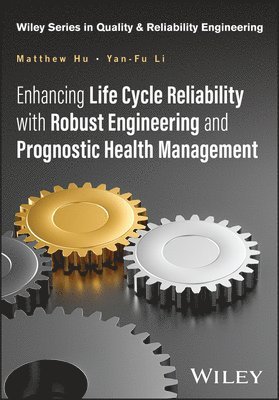
      Enhancing Life Cycle Reliability with Robust Engineering and Predictive Health Management

      AvMatthew Hu,Yan-Fu Li

      Inbunden, Engelska, 2026

      Del i serien Quality and Reliability Engineering Series

      1 533 kr

      Beställningsvara. Skickas inom 5-8 vardagar. Fri frakt över 249 kr.

      Beskrivning

      Enhancing Life Cycle Reliability with Robust Engineering and Predictive Health Management Complete process for ensuring product performance through robust concept design, robust optimization, selection, and verification in an uncontrollable user environment Enhancing Life Cycle Reliability with Robust Engineering and Predictive Health Management enables readers to build a robustness-thinking-based approach for robust design for reliability and prognostic health management (PHM), explaining best practices from early product design through the entire product lifecycle, leading to lower costs and shorter development cycles. The text integrates key tools and emerging reliability management systems into a comprehensive program for developing more robust and reliable technology-based products. The text provides value-added strategies for robustness development in new products and health management with three main types of robustness development and reliability growth case studies: intrinsic, instrumental, and collective. Readers can harness multiple forms of engineering knowledge to inform decision-making within reliability contexts. To ensure customer satisfaction, the text helps readers consciously consider noise factors (environmental variation during the product’s usage, manufacturing variation, and component deterioration) and cost of failure in the field for the Robust Design method. Written by two highly qualified authors, this book includes information on: Effective reliability efforts in an integrated product development environment, failure mode avoidance, and reliability analysis using the physics-of-failure processEssentials of robustness and robust design in reliability improvement, covering design-in reliability up front, eliminating failures prior to testing, and increasing fielded reliabilityRapid, cost-effective deployment of health and usage monitoring systems and improving diagnostic and prognostic techniques and processesROI analyses for PHM, selecting and deploying sensors, setting up data transmission channels, and developing data collection and data pre-processing functionsComprehensive in scope, this book is an essential resource on the subject for all individuals responsible for product development and design, increasing life-cycle product reliability, process quality, or reducing costs in a design, development, manufacturing, and maintenance.

      Produktinformation

      • Utgivningsdatum:2026-05-07
      • Mått:255 x 176 x 20 mm
      • Vikt:624 g
      • Format:Inbunden
      • Språk:Engelska
      • Serie:Quality and Reliability Engineering Series
      • Antal sidor:304
      • Förlag:John Wiley & Sons Inc
      • ISBN:9781394182381

      Utforska kategorier

      • Tillverkningsteknik inom Naturvetenskap och teknik
      • Maskinteknik och material inom Naturvetenskap och teknik

      Mer om författaren

      Matthew Hu, Senior Vice President, Engineering and Quality, Haylion Technologies, and Adjunct Professor, University of Houston, USA. Dr. Hu is a Certified Robust Design Expert using Taguchi Method, a Certified LSS Master Black Belt, and a certified DFSS Master Black Belt. Yan-Fu Li, Professor, Tsinghua University, China. He is the Principal Investigator (PI) of several government projects including the key project funded by National Natural Science Foundation of China.

      Innehållsförteckning

      • Series Editor’s Foreword xvPreface xviiAcknowledgments xxiii1 Enchaining Lifecycle Reliability with Robust Engineering and Prognostic Health Management 11.1 Introduction 21.2 Purpose 31.3 Essentials of Robustness and Robust Design in Reliability Improvement 41.4 Effective Reliability Efforts in an Integrated Product Development Environment 41.5 Enhancing Reliability Integration into the Product Development Process 61.6 Physics of Failure (PoF) 71.7 Failure-mode Avoidance 91.8 Design for Six Sigma 101.8.1 The Essence of Robustness Thinking 111.8.2 Robust Design as a Key Strategy 121.8.3 Paradigm Shift and Change 131.8.4 DFSS Roadmap: Emphasizing Robustness 131.9 Design for Reliability 161.10 Prognostics and Health Management 171.10.1 Health Indicators in Prognostic Health Management: Critical-to-Quality (CTQ) and Critical-to-Reliability (CTR) 211.10.2 Critical-to-Quality (CTQ) Parameters 211.10.3 Critical-to-Reliability (CTR) Parameters 211.10.4 Identification and Selection of CTQ and CTR Parameters 221.10.4.1 Robust Design for Reliability (RDfR) 221.10.5 Health Indicators in Prognostics and Health Management 221.11 The Importance of Digital Quality in Lifecycle Reliability Through Robustness Development and Predictive Health Management 231.12 Digital Quality in Lifecycle Reliability 231.12.1 Robustness Development 241.13 Predictive Health Management (PHM) 251.13.1 Integration of Digital Quality, Robustness Development, and PHM 261.14 Critical Parameter Development and Management (CPD&M): A Comprehensive Overview 271.14.1 The CPD&M Process 281.14.1.1 Initial Parameter Identification 281.14.1.2 The Seven Metrics 281.14.2 Continuous Improvement 28References 30Further Reading 312 Robustness Thinking and Strategies for Reliability Development 332.1 Introduction 342.1.1 Failure-Mode Avoidance: A Comprehensive Approach to Reliability 342.2 What Is Robustness Thinking? 402.3 The Challenge and Limitation of Conventional Reliability Approach 442.3.1 Uncertainty—Variation and Lack of Knowledge 442.3.1.1 Random Variation or Physical Uncertainty 462.3.1.2 Statistical Uncertainty 462.3.1.3 Model Uncertainty 462.3.1.4 Among These Three Types of Uncertainties 462.3.2 Traditional Reliability Challenges 472.3.3 Demand and Capacity—Statistical Modeling 532.3.4 Deterministic vs. Probabilistic Design 552.3.5 Understanding the Outer Array 592.3.6 Assessing Strength vs. Stress 592.3.7 P-Diagram 602.4 Why Robust Design? 612.5 The Importance and Principle of Flow in Robustness Thinking 622.5.1 Defining Flow 642.5.2 Transformation Systems, Flow, and Proactive Failure Creation 652.5.2.1 Load–Stress–Strength Thinking as a Proactive Reliability Framework 652.5.2.2 Margin, Limits, and Failure Distance 662.5.2.3 Noise Factors and Robust Design for Proactive Reliability 662.5.2.4 Architecture Robustness and Failure Propagation 672.5.2.5 Reliability Creation During Concept and Design 672.5.2.6 Summary: Robustness Thinking as Proactive Reliability 672.5.3 Importance of Flow in System Design and Optimization 672.5.4 Integrating Robustness Thinking and Robust Design Principles 672.5.5 Barriers to Flow Due to Lack of Robustness Thinking 682.5.6 Overcoming Barriers to Flow with Robustness Thinking 692.5.7 Examples of Barriers to Flow 692.5.8 Addressing Barriers with Robustness Thinking 702.6 Robustness Development Strategy 712.7 Three Phases of Robust Design 732.8 Understanding and Mitigating Mistakes in Design and Manufacturing 752.8.1 Improving Reliability by Reducing Mistakes 76References 77Further Reading 773 Robust Design Principles, Tactics, and Primary Tools 793.1 Introduction 793.2 Ideal Function: Ideal Transformation System Input and Output Relationship 803.3 Ideal Function and Quality Problems 813.4 Identification and Classification of Design Parameters: P-Diagram 823.5 Opportunity for Robustness Development 873.6 Two-Step Optimization 893.7 Robustness Measurement: S/N Ratio 903.8 S/N Ratio Improvement and Variation Reduction 923.9 S/N Ratio, the Additive Model, and the Conservative Laws of Physics 933.10 The Static Signal-to-Noise Ratios 943.10.1 Nominal-the-Best (NTB) Case 943.10.2 Smaller-the-Better (STB) 953.10.3 Larger-the-Better (LTB) 963.10.4 Operating Window (OW) Response 973.10.5 Classified Attribute Response 983.11 Dynamic Signal-to-Noise Ratios 983.11.1 Zero-Point Proportional Response 983.12 Robust Parameter Design Strategy and Steps 1003.12.1 Steps in Robust Parameter Design for Nominal-the-Best Characteristics 1063.13 Quality Measurement: Loss Function 1083.14 Robust Technology Development 109References 1144 Robust Design for Reliability (RDfR) A Comprehensive Approach to Product Excellence 1174.1 Introduction 1174.2 Robust Design for Reliability: A Comprehensive Approach to Product Excellence 1204.2.1 Preventing Failure Modes Through Vigilance 1234.2.1.1 Understanding the Entropic Nature of Mistakes 1234.2.1.2 Strengthening Organizational Vigilance 1234.3 Roadmap for Robust Design for Reliability Execution 1274.3.1 Identify Phase 1274.3.1.1 Identify Phase Purposes 1294.3.1.2 Identify Phase Activities 1324.3.1.3 Identify Phase Deliverables 1364.3.2 Design Phase 1364.3.3 Design Phase Purposes 1374.3.3.1 Design Phase Deliverables 1414.3.4 Optimize Phase 1424.3.4.1 Optimize Phase Purpose 1424.3.4.2 Robustness “Rules of Engagement” 1454.3.4.3 Optimize Phase Activities 1464.3.4.4 Optimize Phase Deliverables 1484.3.5 Verify Phase 1484.3.5.1 Verify Phase Purpose in Robust Design for Reliability 1484.3.5.2 Verify Phase Activities in Robust Design for Reliability 1514.3.5.3 Verify Phase Deliverables 1584.4 Robust Design Principles for Prognostic Health Management 1594.5 Scorecard for Robust Design for Reliability Implementation 1614.6 Digital Quality Through Robust Design for Reliability 1654.7 Critical Parameter Development and Management (CPD&M) Process and Phases 170References 171Further Reading 1725 Predictive & Health Management 1735.1 Justification for PHM in Robust System Design 1735.2 System Components and Their Functions 1765.2.1 PHM System Architecture 1765.2.2 Integration with Existing Maintenance Operations 1795.2.2.1 Maintenance and Maintenance Strategies 1795.2.2.2 Condition-based Maintenance (CBM) 1795.2.3 Scalability and Adaptability in PHM Design 1835.2.3.1 Activities of PHM and Reliability Over the Product Lifecycle 1835.2.3.2 Integration of Robust Design and PHM for Enhanced System Reliability 1845.2.3.3 The Power of Integrating Robust Engineering and PHM 1845.2.3.4 Assignment of Reliability and PHM Activities Over the Product Lifecycle 1855.2.3.5 The Role of PHM in the Product Lifecycle 1865.2.3.6 PHM System Development Process and Associated Standards 186References 1896 Characterizing Failure Signatures 1916.1 Characterizing Failure Signatures 1916.1.1 Identifying Degradation Patterns 1916.1.1.1 Synergistic Integration: Robust Design, Physics of Failure, and Degradation Pattern Identification 1926.1.2 Signature Analysis for Different System Components 1976.1.3 Signature Analysis Methods for Various System Components 2006.1.4 The Role of Signatures in Failure Prediction 2036.1.5 Data Collection for Signature Development 205References 2087 Guidelines for PHM System Implementation 2097.1 Enabling Technologies for PHM 2107.1.1 Sensor Technology Selection and Integration 2107.1.2 Developing Robust Sensor Technology and Integration Strategy for PHM 2107.1.2.1 Sensor Technology Development for PHM 2107.1.2.2 Conducting Robustness Assessment of Sensors 2117.2 Identifying and Selecting Robust Sensors for PHM 2117.3 Integration and Validation for PHM-Ready Systems 2117.4 Advanced Computing Platforms for PHM Analytics 2137.4.1 Edge Computing 2137.4.2 Cloud Computing 2137.4.3 Fog Computing 2147.4.4 Distributed Computing Frameworks 2147.4.5 High-performance Computing (HPC) 2147.5 AI-accelerated Hardware 2147.6 Evaluation Metrics for PHM Systems 2147.7 Robust PHM System 2157.7.1 Modular Architecture for PHM Systems 2157.7.2 Robustness, Redundancy, and Fault Tolerance in PHM System Design 2167.7.2.1 Redundancy in PHM Architecture 2177.7.2.2 Fault Tolerance Mechanisms 2177.7.2.3 Building for Long-Term Reliability and Cost Effectiveness 2187.7.3 User-centric Design for Ease of Integration 2187.7.4 Implementation Measures of User-centric Design in PHM 2197.8 Robust Prototype and Test-Bench Development for PHM System Validation 2197.8.1 System-level Requirements with Robustness in Mind 2197.9 Modular, Robust PHM Prototype Architecture 2207.10 Test-Bench Design for Robustness Validation 2207.11 Embedding Robustness into PHM Prototyping 2227.12 Verification Against Real-World Failure Data 2227.12.1 Why Real-World Data Validation Matters 2227.12.2 Types and Sources of Real-World Failure Data 2237.12.3 Public Benchmark Datasets 2237.12.4 Structured Methods for Real-World Verification 2237.12.5 Continuous System Evaluation Post-deployment 2247.12.6 Rationale for Continuous Evaluation 2247.12.7 Key Components of a Post-deployment Evaluation Framework 2257.13 Organizational Integration and Governance 2257.13.1 Strategic Implementation of PHM 2267.13.1.1 PHM-triggered Actions and Data Feedback Loop 2267.13.1.2 Enhancing PHM Models with Operational Data 2267.13.2 Future-proofing PHM Systems for Technological Advancements 2277.14 Case Study of PHM System Development 228References 2368 Case Study for Robust Design for Reliability (RDfR) 2398.1 Introduction 2398.2 RDfR Phases in DPSM Case Study 2428.2.1 Identify Phase 2428.2.2 Design Phase 2448.2.3 Function Structures 2468.2.4 Reviewing and Matching Functions to Devices 2508.2.5 Summarizing Main Input and Output Flows 2508.2.6 Creating a Robust, Efficient, and Reliable System 2518.2.7 Supporting Effective Communication and Application of RDfR Principles 2528.2.8 Understanding Control Factors in Robust Optimization 2528.2.9 Type 1 Control Factor: Interaction with Noise Factor 2538.2.10 Type 2 Control Factor: No Interaction with Noise Factor 2538.2.11 Tailoring Optimization Strategies for Control Factors 2538.3 Achieving System Robustness through Optimization 2548.4 Optimize Phase 2548.4.1 P-Diagram: Linking Robustness and Serving as an Input for DFMEA 2558.5 Conclusion: Comprehensive Approach to Robust Optimization and Mistake Prevention 2638.5.1 Verify Phase Purpose in Robust Design for Reliability 263References 271Index 273
      Hoppa över listan

      Mer från samma författare

      Yan-Fu Li, Matthew Hu - Enhancing Life Cycle Reliability with Robust Engineering and Predictive Health Management, E-bok

      Enhancing Life Cycle Reliability with Robust Engineering and Predictive Health Management

      Yan-Fu Li, Matthew Hu

      E-bok
      2026

      1 801 kr

      Yan-Fu Li, Matthew Hu - Enhancing Life Cycle Reliability with Robust Engineering and Predictive Health Management, E-bok

      Enhancing Life Cycle Reliability with Robust Engineering and Predictive Health Management

      Yan-Fu Li, Matthew Hu

      E-bok
      2026

      1 783 kr

      Matthew Hu, Kai Yang, Michael Sheh, Malik Kayupov - Design For Six Sigma For Engineers, Inbunden

      Design For Six Sigma For Engineers

      Matthew Hu, Kai Yang, Michael Sheh, Malik Kayupov

      Inbunden, 2027

      1 517 kr

      Hoppa över listan

      Mer från samma serie

      Dev G. Raheja, Louis J. Gullo - Design for Reliability, Inbunden
      Del 5

      Design for Reliability

      Dev G. Raheja, Louis J. Gullo

      Inbunden, 2012

      1 320 kr

      Marius Bazu, Titu Bajenescu - Failure Analysis, Inbunden
      Del 4

      Failure Analysis

      Marius Bazu, Titu Bajenescu

      Inbunden, 2011

      1 229 kr

      Norman Pascoe - Reliability Technology, Inbunden

      Reliability Technology

      Norman Pascoe

      Inbunden, 2011

      1 270 kr

      Patrick D. T. O'Connor - Test Engineering, Inbunden

      Test Engineering

      Patrick D. T. O'Connor

      Inbunden, 2001

      1 142 kr

      Finn Jensen - Electronic Component Reliability, Inbunden

      Electronic Component Reliability

      Finn Jensen

      Inbunden, 1995

      3 314 kr

      Friedrich Beck - Integrated Circuit Failure Analysis, Inbunden

      Integrated Circuit Failure Analysis

      Friedrich Beck

      Inbunden, 1998

      2 623 kr

      Alan S. Morris - Measurement and Calibration Requirements for Quality Assurance to ISO 9000, Inbunden

      Measurement and Calibration Requirements for Quality Assurance to ISO 9000

      Alan S. Morris

      Inbunden, 1997

      2 971 kr

      Carl S. Carlson - Effective FMEAs, Inbunden
      Del 1

      Effective FMEAs

      Carl S. Carlson

      Inbunden, 2012

      1 497 kr

      Ilia B. Frenkel, Alex Karagrigoriou, Anatoly Lisnianski, Andre V. Kleyner - Applied Reliability Engineering and Risk Analysis, Inbunden

      Applied Reliability Engineering and Risk Analysis

      Ilia B. Frenkel, Alex Karagrigoriou, Anatoly Lisnianski, Andre V. Kleyner

      Inbunden, 2013

      1 801 kr

      Kirk A. Gray, John J. Paschkewitz - Next Generation HALT and HASS, Inbunden

      Next Generation HALT and HASS

      Kirk A. Gray, John J. Paschkewitz

      Inbunden, 2016

      1 146 kr

      Hoppa över listan

      Du kanske också är intresserad av

      Yan-Fu Li, Enrico Zio, Andre V Kleyner - System Reliability Assessment and Optimization, Inbunden

      System Reliability Assessment and Optimization

      Yan-Fu Li, Enrico Zio, Andre V Kleyner

      Inbunden, 2022

      1 152 kr

      Yan-Fu Li, Matthew Hu - Enhancing Life Cycle Reliability with Robust Engineering and Predictive Health Management, E-bok

      Enhancing Life Cycle Reliability with Robust Engineering and Predictive Health Management

      Yan-Fu Li, Matthew Hu

      E-bok
      2026

      1 801 kr

      Yan-Fu Li, Matthew Hu - Enhancing Life Cycle Reliability with Robust Engineering and Predictive Health Management, E-bok

      Enhancing Life Cycle Reliability with Robust Engineering and Predictive Health Management

      Yan-Fu Li, Matthew Hu

      E-bok
      2026

      1 783 kr

      Matthew Hu, Kai Yang, Michael Sheh, Malik Kayupov - Design For Six Sigma For Engineers, Inbunden

      Design For Six Sigma For Engineers

      Matthew Hu, Kai Yang, Michael Sheh, Malik Kayupov

      Inbunden, 2027

      1 517 kr

      Enrico Zio, Yan-Fu Li - System Reliability Assessment and Optimization, E-bok

      System Reliability Assessment and Optimization

      Enrico Zio, Yan-Fu Li

      E-bok
      2022

      1 325 kr

      Rui Peng, Yan-Fu Li, Yu Liu - Software Fault Detection and Correction: Modeling and Applications, Häftad

      Software Fault Detection and Correction: Modeling and Applications

      Rui Peng, Yan-Fu Li, Yu Liu

      Häftad, 2018

      566 kr

      Enrico Zio, Yan-Fu Li - System Reliability Assessment and Optimization, E-bok

      System Reliability Assessment and Optimization

      Enrico Zio, Yan-Fu Li

      E-bok
      2022

      1 325 kr

      Mark A. Levin, Ted T. Kalal, Jonathan Rodin - Improving Product Reliability and Software Quality, Inbunden

      Improving Product Reliability and Software Quality

      Mark A. Levin, Ted T. Kalal, Jonathan Rodin

      Inbunden, 2019

      1 128 kr

      Yu Liu, Yan-Fu Li, Rui Peng - Software Fault Detection and Correction: Modeling and Applications, E-bok

      Software Fault Detection and Correction: Modeling and Applications

      Yu Liu, Yan-Fu Li, Rui Peng

      E-bok
      2018

      710 kr

      Andre V. Kleyner, Patrick D. T. O'Connor - Practical Reliability Engineering, E-bok

      Practical Reliability Engineering

      Andre V. Kleyner, Patrick D. T. O'Connor

      E-bok
      2011

      1 088 kr