• Fri frakt över 249 kr
  • •
  • Snabba leveranser
  • •
  • Billiga böcker
Kundservice

Du är på sajten för privatpersoner.

Företag, bibliotek eller offentlig verksamhet?

Du handlar på classic.bokus.com, där alla dina funktioner finns intakta.
Till classic.bokus.com
Bokus logotyp. Gå till startsidan.
  • Erbjudanden
  • Nyheter
  • Student
  • Topplistor
  • Barn & ungdom
  • Bokus Play
  • E-böcker
  • Pocketböcker
  • Spel & pussel

10% rabatt på allt med kod: NYSTART10 →

Sidfot

Mina sidor

    Hjälp

    • Kundservice
    • Vanliga frågor och svar
    • Frakt och leverans
    • Retur vid ångerrätt
    • Reklamera vara
    • Betalning
    • Köpvillkor
    • Allmänna villkor
    • Information om webbplatsens tillgänglighet

    Om Bokus

    • Om oss
    • Pressrum
    • För studenter
    • För företag
    • För bibliotek och offentlig verksamhet
    • För leverantörer
    • Hållbarhet

    Populärt

    • Aktuella erbjudanden
    • Presentkort
    • Studentlitteratur
    • Nya böcker
    • Topplistor
    • Signerade böcker
    • Engelska böcker

    Inspiration

    • Boktips
    • BookTok
    • Populära bokserier
    • Barnbokskaraktärer
    • Populära författare
    Logotyp för Bokus
    Följ oss på Facebook (extern länk)Följ oss på Instagram (extern länk)Följ oss på YouTube (extern länk)Följ oss på TikTok (extern länk)
    bokus @ CookiesAnpassa cookiesIntegritetspolicyKöpvillkor
    Till Citymail hemsida (extern länk)Till Budbee hemsida (extern länk)Till Postnord hemsida (extern länk)Till Schenker hemsida (extern länk)Till Early Bird hemsida (extern länk)Till Walleys hemsida (extern länk)
    1. Djur och Natur
    2. Naturböcker
    3. Växtböcker

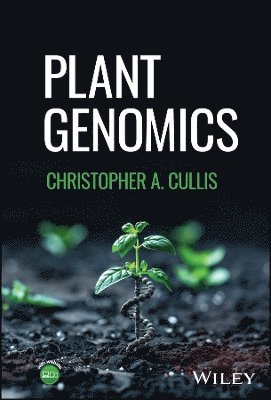
    Plant Genomics

    AvChristopher A. Cullis

    Inbunden, Engelska, 2025

    1 125 kr

    Skickas . Fri frakt över 249 kr.

    Fler format och utgåvor

    E-bok

    1 281 kr

    E-bok

    1 278 kr

    Beskrivning

    Introduction to the range of molecular techniques to investigate unique facets of plant growth, development, and responses to the environment Plant Genomics introduces the complex relationship between the genome, microbiome, genes, and epigenetics of plants, as well as the range of molecular techniques applicable to investigating the unique facets of plant growth, development, and response to the environment. State-of-the-art science in the field is discussed, as well as future outlooks on what the next decade is likely to bring. This book includes new techniques for modifying the plant genome and their impact on modifying plants to combat the impact of biotic and abiotic stresses, including those associated with climate change, new technologies including long and short read sequencing and proximity ligation and the combination of these technologies for assembling sequence data into chromosomes, a new chapter on the sequences of the chloroplast and mitochondrial genomes, and a dedicated chapter to epigenetics and the importance in gene regulation. Written by a highly qualified author with significant published research contributions to the field, Plant Genomics includes information on: Structure and information content of the chloroplast and mitochondrial genomes and their use in phylogenyUse of transcriptomes from various tissues to identify expressed sequences and their identification as genesFunction of small regulatory RNAs and long non-coding RNAs and involvement of small RNAs in the control of gene expressionEpigenetic silencing of transposable elements and their release by stress and cross-generational contribution of epigenetic variation Use of the pan-genome to assemble a comprehensive germplasm for a particular crop speciesPlant Genomics is an ideal textbook for undergraduate courses on plant biology, particularly those focusing on molecular descriptions, and a helpful auxiliary text to plant biology laboratory courses. It will also be of interest to students in plant molecular biology, agricultural and food sciences, and plant, food, and crop bioengineering.

    Produktinformation

    • Utgivningsdatum:2025-04-03
    • Mått:160 x 234 x 20 mm
    • Vikt:567 g
    • Format:Inbunden
    • Språk:Engelska
    • Antal sidor:288
    • Förlag:John Wiley & Sons Inc
    • ISBN:9781394211555

    Utforska kategorier

    • Växtböcker inom Djur och Natur
    • Botanik inom Naturvetenskap och teknik
    • Agronomi och lantbruk inom Naturvetenskap och teknik

    Mer om författaren

    Christopher A. Cullis is the Francis Hobart Herrick Professor of Biology at Case Western Reserve University, an AAAS Fellow, and a Life Fellow of the Ohio Academy of Sciences. In addition to directing an MS in Biotechnology Entrepreneurship program from 2002 to 2023, he was instrumental in setting up the Society for International Bioenterprise Education and Research (SIBER) and incorporating it as a 503C3. He has published on the genomics of more than 20 plant species.

    Innehållsförteckning

    • About the Author xiiiPreface xvAcknowledgments xviiAbout the Companion Website xixIntroduction xxi1 The Structure of Plant Genomes 1Introduction 1DNA Variation— Quantity 1Chromosome Variation 4Chromosome Structures 7Telomeres 7Centromeres 8The Nucleolus Organizer Region 9Heterochromatin 9Origin of DNA Variation 10Organization and Representation of the Various Classes of Sequences 10Low- Copy Sequences 11Dispersed Repetitive Sequences 12Tandemly Repeated Sequences 15Summary of the Organization of the Maize Genome 17Processes that Affect Genome Size 17Consequences of Multiple Genomes 20Pangenome Concept 23Extrachromosomal Circular DNA 25Intraspecific Genome Size Variation 25Summary 26References 272 Basic Toolbox 31The Fundamental Basis of Most Genomic Technologies 31Genome Fractionation 32Sequencing Genomes 33Next- Generation Sequencing (NGS) Technologies 34Third- Generation Sequencing (Long- Read Sequencing) - Single- Molecule Sequencing 36Two of the Third- Generation Sequencing Technologies 36Simultaneous Identification of Sequence and Methylation— Epigenetics 38Alternative Methylation Profiling 38Oxford Nanopore Technologies 39Assembling Telomere- to- Telomere Genome Assemblies 39Proximity- Based Ligation 39Optical Mapping 40Summary of Genomic Sequencing 40The Transcriptome 40RNA Library Preparation 42Single- Cell Sequencing 43Whole Transcriptome Sequencing (Total RNA- seq) 43Poly(A) Selection RNA- seq 43Ribosome Profiling (Ribo- seq) 43Strand- Specific RNA- seq 44Small RNA- seq 44Spatial Transcriptomics 44Pseudouridine (Ψ) Sequencing 44Quantitative PCR 44Digital Droplet PCR (ddPCR) 45Microarrays 45Proteomics 46Extraction of the Proteome 47Protein Separation 48References 513 Sequencing and Assembly Strategies for Large Complex Genomes 53Assembling Genomes in the Cloning and Sanger Sequencing Era 54Steps for Genome Assembly from High- Throughput DNA Sequence Data 54Integration of Short Reads from Shotgun Sequencing 56Third- Generation Sequencing Technologies 56Hybrid Assemblies 56Stitching Scaffolds Together 56Advanced Bioinformatics Tools 57A Genome Assembly for a Polyploid Plant of Genome Size ~1 Gb as a Tetraploid with a Total Chromosome Count of 44 Using PacBio HiFi Reads 58DNA Isolation 58Data Assembly and Analysis 58Estimation of Genome Size and Heterozygosity 59De Novo Genome Assembly and Evaluation 59Comparison of the Genome Assemblies with a Close Relative 59Telomere- to- Telomere Assembly 67RNA Assembly 67Summary 73References 734 The Organelle Genomes 75Chloroplasts 75Chloroplast Genome Size and Structure 76Sequencing the Chloroplast Genome 76Chloroplast Genes 76Variation in the Chloroplast Genomes Within and Between Species 76Use in Phylogenetics 84Mitochondrial Genome Size and Structure 84Variation in the Mitogenome 86Transfer of DNA Between the Nucleus Chloroplast and Mitochondrion 88Heteroplasmy 90Anterograde and Retrograde Signaling 92Retrograde Signaling and RNA Metabolism in Plants 94References 965 Gene Discovery Paradigms 99Introduction 99Genome Annotation 101Identification of Genes by Mutagenesis 107Insertional Mutagenesis with T- DNA 109Targeting- Induced Local Lesions in Genomes (Tilling) 110Gene Editing 111Summary 112References 1126 Control of Gene Expression 115Introduction 115Specific Promoter Sequences Are Required for Regulated Gene Expression 117The Effect of Enhancer Elements on Gene Expression 119Posttranscriptional Effects of mRNA Signals 120Role of 5′ Sequences in Gene Expression 122Role of 3′ Sequences in Gene Expression 122Role of Introns in Gene Expression 122Conserved Sequences in Eukaryotic Promoters 124Trans- Acting Factors Control Gene Expression 125mRNA Stability 125Chemically/Physically Regulated Gene Expression in Plants 127Effects of Chromatin Structure 128Translational Control 133Summary 137References 140Contents ix7 Epigenetics 145Introduction 145DNA Methylation 147Histone Modifications 148Epigenetic Silencing of Transposable Elements 149Unstable Inheritance of Epialleles 150Summary 151References 1538 Functional Genomics 155Introduction 155Transcriptome Profile 157Protein– Protein Interactions 157Yeast Two- Hybrid Systems 158Protein Tags and Transgenics 158Metabolomics 161Single- Cell – Omics 163Conclusions 164References 1649 The Microbiome 167Introduction 167The Rhizosphere 168Bacterial Communities 169What Influences the Composition of the Bacterial Microbiome in the Rhizosphere? 170Phyllosphere 170Endosphere 174Plant Growth- Promoting Rhizobacteria 175Rhizobia and Mycorrhizae 176Importance and Use of the Microbiome 179References 18210 Interactions with the External Environment 185Introduction 185Abiotic Stresses 186Biotic Interactions 190Disease Resistance 191Pest Resistance 198Biotechnological Opportunities 198References 19911 Complex Character Manipulation— Plant Breeding 201Introduction 201Conventional Breeding Methods 202Marker- Assisted Selection 204Quantitative Trait Loci 208Genomic Selection 214High- Throughput Phenotyping 215Speed Breeding 215Pangenomics as a Source of Useful Alleles 215Concluding Integration 218References 22012 Genetic Manipulation of the Plant Genome 223Introduction 223Agrobacterium-Mediated Plant Transformation: Biology and Applications 225Bypassing the Bottleneck of Tissue Culture 228Transformation Through Direct Delivery of DNA 228Biolistic Transformation 228Electroporation 229Nanotechnology Strategies 229Carbon Nanotubes 229Magnetofection 229DNA Origami 232Gene Editing 233Summary and Outlook 235References 237Contents xi13 Bioethical Concerns and the Future of Plant Genomics 239Development of Biotechnologically Modified Plants 240The Global Landscape for Regulation of GM Plants 241The Regulatory Environment in the United States 247European Union (EU) Responses to Genetically Modified (GM) Plants 248Case Studies 250BT Brinjal 250Golden Rice 251References 253Index 255