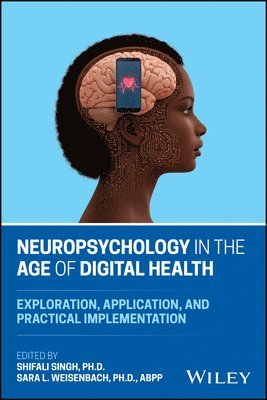
Neuropsychology in the Age of Digital Health
Exploration, Application, and Practical Implementation
AvShifali Singh,Sara L. Weisenbach
780 kr
Beställningsvara. Skickas inom 5-8 vardagar. Fri frakt över 249 kr.
Beskrivning
Produktinformation
- Utgivningsdatum:2025-11-24
- Mått:152 x 226 x 25 mm
- Vikt:476 g
- Format:Häftad
- Språk:Engelska
- Antal sidor:368
- Förlag:John Wiley & Sons Inc
- ISBN:9781394295401
Utforska kategorier
Mer om författaren
Dr. SHIFALI SINGH, Ph.D., is an Assistant Professor, Clinical Neuropsychologist, and the Director of Digital Neuropsychology and Brain Health at McLean Hospital and Harvard Medical School. Her research aims to modernize neuropsychological evaluations using novel digital technologies. Dr. Singh additionally owns a private practice, Cambridge Neuropsychology, and works as an associate at a venture capital fund, where she invests in digital health companies. She currently teaches courses at Harvard College related to technology and mental health. Dr. Singh holds leadership positions in APA and SCN, serving as Past-President of Division 12 Section 10, Board Member of the CPT Advisory Board, and the founder of the ANST Neuro-technology Initiative. Dr. SARA L. WEISENBACH, Ph.D., ABPP is an Associate Professor of Psychology in the Department of Psychiatry at Harvard Medical School, the chief of Neuropsychology at McLean Hospital, a board-certified clinical neuropsychologist, and a clinical translational researcher. Throughout her career she has sought to improve quality of life for individuals with cognitive and psychiatric concerns through delivery of top-notch patient care, cutting-edge research, education, and mentorship, and service to the fields of neuropsychology and geriatric psychiatry. She is a nationally recognized expert in cognitive and emotional health in older adults and a past president of the Society for Clinical Neuropsychology of the American Psychological Association.
Innehållsförteckning
- List of Contributors xvAbout the Authors xixPart I Transformation of Neuropsychology in the Digital Age 11 The Digital Evolution in Neuropsychology 3Section 1: Digital Transformation in Neuropsychological Assessment 3Shifali SinghIntroduction 3Past and Present: Paper-and-Pencil Tests 4The Rise of Computerized Neuropsychological Testing 5A Digital Revolution in Neuropsychology 7Mobile and Cloud-Based Assessments 7Passive Digital Biomarkers 8AI and ml 8Neurotechnology Integration 8The Imperative for Continued Technological Evolution 8Section 2: Neuropsychologists and Digital Tools for Cognitive Health Management 10Sara WeisenbachPopulation Cognitive Health Management 10Stepped Care for Neuropsychology 10Challenged to Utilization of Digital Tools in Clinical Settings 11Part II Current Applications of Technology in Neuropsychology 172 Advancing Cognitive Health: Digital Screening Tools 19Kathryn Marton, Adaeze Njoku, Brianna Clark, and Michelle H. ChenIntroduction 19Overview of Digital Cognitive Screening Tools 21Cambridge Neuropsychological Test Automated Battery 21The Brain Health Assessment 61Montreal Cognitive Assessment Digital Version 62Cognivue 63NIH Toolbox-Cognition Battery 64Neurotrack 66BrainCheck 66Integrated Cognitive Assessment 67Immediate Post-Concussion and Cognitive Testing 68The Cogstate Brief Battery 70NeuroTrax 71Central Nervous System Vital Signs 72The Quantified Behavioral Test 74The MicroCog 76mci Screen 77Comparison of Tools by Use Cases 78Early Detection of mci 78Concussion Assessments 79Processing Speed Tests 80Attention Tests 80Tests Validated in Pediatric Population 81Conclusions and Future Directions 813 Digital Tools for Assessing Cognitive Health in the Aging Brain 111Kelly Atkins and Elena TsoyIntroduction 111Advantages of Digital Cognitive Assessment 112Challenges Related to the Use of Digital Cognitive Assessment 114Overview of Current Digital Cognitive Assessments in Aging Research 115Special Considerations for the Use of Digital Cognitive Assessments in Low-resource Settings and Diverse Populations 117Recommendations for Implementation of Digital Cognitive Assessments in Aging Research and Clinical Care 119Conclusion 1204 Incorporating and Validating Digital Tools in Clinical Assessment 125Shifali SinghIntroduction 125Psychometric Properties and Validation Considerations 126Reliability 126Validity 127Construct Validity 128Criterion Validity 128Ecological Validity 128Benefits of Integrating Digital Neuropsychological Assessment 129Enhanced Data Collection and Analysis 130Improved Diagnostic Precision Through Multimodal Assessment 130Efficiency and Accessibility Through Remote Administration 130Detailed Process Analysis 131Integration with Wearable Devices for Continuous Monitoring 131Scalability and Standardization for Large-scale Applications 132Data Collection and Interpretation Challenges and Opportunities 132Environmental and Technology Variability 132Generalizability Across Devices 133Access to Novel Tools and Upkeep 133Sensitivity and Specificity 133Cultural and Demographic Considerations 133Standardization and Interoperability 134Task-based Integration of Clinical Utility 134Applications in Clinical Practice 134Future Directions 1365 Exploratory Digital Tools for Measuring Cognitive Health 141Section 1: Capturing Behavior in the Real-world with Digital Tools 141Maureen Schmitter-EdgecombeIntroduction 141Enhancing Real-world Assessment with Digital Tools 143Enhancing Real-world Interventions with Digital Tools 145Clinical Integration of Digital Tools 147Section 2: Digital Neuropsychology and the Assessment of Cognitive Change 148Nelson Arley Roque and Laura Thi GermineIntroduction 148Designing Digital Cognitive Assessments for Broad Accessibility 149Key Accessibility Barriers and Approaches to Addressing Them 150Addressing Language Barriers 150Cultural Barriers to Usability 151Perceptual–Motor Barriers 151Digital Literacy 151Return of Individual Research Results 152Quantifying Cognitive Changes on Short and Long Timescales 152Typical Approaches to Measuring Cognitive Change 152High-frequency Assessment using Digital Technology 153Dynamic Cognitive Features 153Selecting Cognitive Tests for Capturing Dynamic Cognitive Features 154Conclusion 155Section 3: AI in Clinical Practice 155Liz Angoff and Gerald AngoffIntroduction 155Integrating AI into Clinical Practice 156Limitations and Cautions 159Conclusions 160Part III Leveraging Technology for Integration in the Broader Medical System 1756 Utilizing Digital Tools in Psychiatric Practice 177Ana F. Trueba-Yepez and Ipsit V. VahiaIntroduction 177Integration of Technology into Clinical Workflow 178Lessons Learned from Implementing EMRs 178Anticipating and Mitigating Roadblocks in Medical Technology Integration 180Setting-up Office Spaces for the Use of Technological Devices 180Determining Digital Literacy 181Digital Literacy and Need for Support in Medical Technology Integration 181Privacy and Confidentiality 182Insurance Coverage 182Digitizing Interventions 183VR in Psychotherapy 183Enhancing Mindfulness Through VR 183Barriers to Pragmatic VR Interventions 183Accessibility and Cost Considerations 184Developing a Clinical Workforce Adept at Working with Technologies 184Digital Phenotypes to Digital Biomarkers 184New Approaches to Generating and Incorporating Evidence 185A New Generation of Practice Guidelines 185New Training Curricula and a New Language of Psychiatry 186Ethical and Regulatory Concerns and the Potential for New Forms of Liability 187Conclusion and Summary 187Sources of Support 188Disclosures of Potential Conflicts of Interest 188Other Sources of Funding 1887 Digital Health Tools in Stepped Care Models 191Sara WeisenbachIntroduction 191Stepped Care Models 193Stepped Care for ADHD Evaluation 194Stepped Care for Mild and Major Neurocognitive Disorder 195Integration of Neurotechnology in Neuropsychology Stepped Care Models 196Conclusion 198Disclosure Statement 199Funding Sources 1998 Population Health Management 203Section 1: The Role of Neurotechnology in Population Health Management 203Margaret LancaIntroduction 203Factors that Promote Health of a Population 204Healthcare Spending 204Social Determinants of Health 205Healthcare Delivery Imperatives 206The Critical Need for Technology in Population Healthcare Management 206Security Considerations 208Neuropsychology Population Health 208The Role of Neurotechnology in Neuropsychology 210Data Structures in Neuropsychology 210Expanding Neurotechnology Innovations 210Conclusion 212Section 2: Leveraging Technology to Tackle Inequalities in Research and Clinical Settings 212Meredith C. Rowe, Christopher Gonzalez, Averi Giudicessi, Daniel Saldana, and Yakeel T. QuirozCurrent Digital Technologies in Research and Clinical Settings 214Top of Form 215Remote and Unsupervised Assessments for Detection of Cognitive Impairment 215Challenges and Solutions 218Conclusion and Future Directions 219Part IV Implementation, Future Directions, and Ethical Challenges 2339 Training in Technology and Innovation for Clinical Neuropsychology 235Robert M. BilderThe “New” Competency in Technology and Innovation: Where Did It Come from? 235The Minnesota Update Conference 237Functional Competency in Technology and Innovation: What Is It? 237Demonstrate Awareness of and the Ability to Incorporate Innovative Methods and Technologies 238Critically Evaluate Relevant Technologies and Show Awareness and Appreciation for Advantages and Potential Limitations 249Consider Ethical Issues 250Training Technology and Innovation Competencies at Different Levels 255Concluding Remarks 26810 Neurotechnology in Clinical Practice 273Stephen Gillaspy and Scott SperlingSection 1: Financial Considerations When Billing Using Digital Tools 273Introduction 273Interprofessional Consultation Services 274Online Digital Assessment and Management Services 276Remote Therapeutic Monitoring Services 277Digital Mental Health Treatment Services 27911 Neurotechnology and Trainees 285Ross Divers, Rini Kaplan, Jessica Lanctot, Travis Marchman, Katelin Curtis, Shifali Singh and Sara WeisenbachIntroduction 285Trainees’ Perspectives on the State of Education on Neurotechnology 287A Guide for Addressing Training Gaps 289Envisioning the Future of Neurotechnology in Neuropsychology 290Appendix A: Survey Questions 293Appendix B: Survey Results 29412 Ethical Challenges for Artificial Intelligence in Clinical Practice and Research: A Case Study on People with Dementia 297Bettina S. Husebo, Justin Haugland-Pruitt, and Monica PatrascuIntroduction 297AI-driven Tools: a Double-edged Sword 299Bias in Design 299Bias in Assumptions 299Bias in Data 300Bias in Use 300Trustworthy AI 301Legal Framework for Responsible Research and Innovation 302AI and People with Dementia 304Consent 304Data Privacy 304Algorithmic Bias 305Case Study 305Phase I. Pre-funding Assessment 306Phase II. Post-funding Ethical Approval 311Discussion 312Recommendations 313Index 321
Du kanske också är intresserad av
Mental Health and Technology. A Study on the Knowledge of People of all Ages
Shifali Singh, Neha Mishra
80 kr
- Signerad!
- -43%
Det fallna imperiet : Ryssland och väst under Vladimir Putin
Martin Kragh
Inbunden, 2023
139 kr245 kr
- -15%
Historiens återkomst : Europa och världsordningens sammanbrott
Martin Kragh
Inbunden, 2025
219 kr259 kr
- 4 för 3
- 4 för 3
- -30%
- -23%
Yesteryear (svensk utgåva)
Caro Claire Burke
Inbunden, 2026
199 kr259 kr