• Fri frakt över 249 kr
  • •
  • Snabba leveranser
  • •
  • Billiga böcker
Kundservice

Du är på sajten för privatpersoner.

Företag, bibliotek eller offentlig verksamhet?

Du handlar på classic.bokus.com, där alla dina funktioner finns intakta.
Till classic.bokus.com
Bokus logotyp. Gå till startsidan.
  • Erbjudanden
  • Student
  • Topplistor
  • Barn & ungdom
  • Bokus Play
  • E-böcker
  • Ljudböcker
  • Pocketböcker
  • Spel & pussel

Upp till 25% på utvalda nyheter →

Sidfot

Mina sidor

    Hjälp

    • Kundservice
    • Vanliga frågor och svar
    • Frakt och leverans
    • Retur vid ångerrätt
    • Reklamera vara
    • Betalning
    • Köpvillkor
    • Allmänna villkor
    • Information om webbplatsens tillgänglighet

    Om Bokus

    • Om oss
    • Pressrum
    • För studenter
    • För företag
    • För bibliotek och offentlig verksamhet
    • För leverantörer
    • Hållbarhet

    Populärt

    • Aktuella erbjudanden
    • Presentkort
    • Studentlitteratur
    • Nya böcker
    • Topplistor
    • Signerade böcker
    • Engelska böcker

    Inspiration

    • Boktips
    • BookTok
    • Populära bokserier
    • Barnbokskaraktärer
    • Populära författare
    Logotyp för Bokus
    Följ oss på Facebook (extern länk)Följ oss på Instagram (extern länk)Följ oss på YouTube (extern länk)Följ oss på TikTok (extern länk)
    bokus @ CookiesAnpassa cookiesIntegritetspolicyKöpvillkor
    Till Citymail hemsida (extern länk)Till Budbee hemsida (extern länk)Till Postnord hemsida (extern länk)Till Schenker hemsida (extern länk)Till Early Bird hemsida (extern länk)Till Walleys hemsida (extern länk)
    1. Samhälle och politik
    2. Sociologi och antropologi
    3. Sociologi

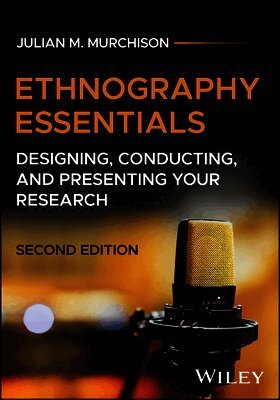
    Ethnography Essentials

    Designing, Conducting, and Presenting Your Research

    AvJulian M. Murchison

    Häftad, Engelska, 2026

    672 kr

    Beställningsvara. Skickas inom 5-8 vardagar. Fri frakt över 249 kr.

    Fler format och utgåvor

    E-bok

    741 kr

    E-bok

    741 kr

    E-bok

    898 kr

    E-bok

    922 kr

    Häftad

    Tillf. slut

    Beskrivning

    A step-by-step, hands-on guide to the theory and practice of ethnography research In the newly revised second edition of Ethnography Essentials: Designing, Conducting, and Presenting Your Research, author Julian M. Murchison delivers a comprehensive, hands-on guide to ethnographic research. The book walks you through the process from start to finish, from choosing a topic to selecting a research design, conducting data collection, analysis, and paper writing. Murchison explains the principles and methods of the discipline, focusing on written ethnography while also including other methods of presentation, like ethnographic film. He describes the history and purpose of ethnography and the nuts and bolts of conducting a valuable ethnographic study. Inside the book: Specific, step-by-step advice on compiling your data, incorporating relevant literature, figures, and photos, and responding to critiquesTechniques for collecting, sorting, and managing large amounts of dataInterviewing strategies for ethnographic researchers that explain how to balance participation and observationPerfect for practicing ethnographers, Ethnography Essentials is also a must read for students in the field and anyone new to ethnography research.

    Produktinformation

    • Utgivningsdatum:2026-02-26
    • Mått:175 x 252 x 18 mm
    • Vikt:522 g
    • Format:Häftad
    • Språk:Engelska
    • Antal sidor:256
    • Upplaga:2
    • Förlag:John Wiley & Sons Inc
    • ISBN:9781394298600

    Utforska kategorier

    • Sociologi inom Samhälle och politik
    • Antropologi inom Samhälle och politik

    Mer om författaren

    JULIAN M. MURCHISON is Associate Professor of Anthropology and Head of the Department of Sociology, Anthropology, and Criminology at Eastern Michigan University in Ypsilanti, Michigan. His research is focused on religion and health in southern Tanzania, where he has conducted studies for more than twenty-five years.

    Innehållsförteckning

    • Preface xiThe Author xiiiPart 1 The Why and what of ethnography 11 What Is Ethnography? 3Ethnography: The Engaged, Firsthand Study of Society and Culture in Action 4A Brief History 4How Ethnography Has Changed: Doing Contemporary Ethnography 8Ethnography as Firsthand Research 11Ethnographer as Research Instrument 13Collaboration as Research Model: Ethnographer as Student 152 Choosing an Ethnographic Topic 19Where to Look for Possible Topics 22Ethnographic Topics: Studying Places, People, or Events 23The Benefits of a Relatively Specific Focus 23Thinking About the Nonobvious as Discoverable 27Cultural Knowledge and Behavior in Action as Research Objects 29Practical Concerns 30Considering Ethics from the Start: Your Obligations to Potential Informants 33Topics You Might Want to Avoid 343 Research Design 37Turning an idea or Topic into a Research Question 38Linking Questions to Methods 40Key Methods to Consider for the Ethnographic Project 41What Is Practical or Feasible? Time, Availability, and Ethics 464 Writing a Proposal 50Identifying and Reviewing Appropriate Literature 51Statement of the Problem 54A Clear Research Plan 55Identifying Your Project’s Larger Relevance 57Human Subjects Review and Approval 585 Collaborative Ethnography 62Working in Ethnographic Teams 63Implementing a Research Team 65Strategies for Collaborating with Research Participants 69Part 2 Ethnography in The Field: Collecting Data 756 A Guide to Collecting Data and Taking Notes 77The Fleeting Nature of Ethnographic Data 79“Should I Write It Down Immediately?” 80The Importance of Detail in the Ethnographic Record 81Writing Notes Versus Using Recorders 82The Prospects of Transcription 83What Is Important and What Is Superfluous: “What Do I Need to Write Down?” 85The Ethics of Collecting Information 877 Participant- Observation 90The Apparent Paradox: Participation and Observation 92Balancing Participation and Observation 93The Importance of Time 95Depending on Informants as Teachers and Guides 96Getting Started 98Regular Versus Extraordinary Behavior and Conversations 1008 Interviews 105Starting with Informal Interviews and Conversations 106Informal Conversation as an Avenue to “Real” Culture 109A Good Interviewer Is a Good Listener 111Contents ixHow to Record Interview Data 111Using an Interview Schedule 112How to Start an Interview 113Good Versus Bad Interview Questions 115When to Conduct Formal Interviews 1189 Analyzing Along the Way 121Identifying Key Themes and Questions: Paying Attention to Your Data 122How to Organize Your Notes 123What Have You Learned? 124What Do You Still Need to Do? 125Has the Research Question Changed? 126Tweaking the Research Design 126Getting Feedback from Your Informants 127Writing at the Midway Point 12910 Ethnographic Maps 132Space and Movement as Key Components of Culture 133The Importance of Space, Shape, and Distance 138Large- and Small- Scale Geographic Maps 139Mapping Interior Spaces 141Cognitive or Conceptual Maps 143Representing Movement and Behavior on a Map 14511 Tables and Charts 147Ethnographic Tables 148Interpersonal Relationships as a Manifestation of Culture 148Kinship as an Organizing Principle 150Other Organizational Charts 15312 Archives and Secondary Data 158Cultural Artifacts as Sources of Information 159Making Ethnographic Use of Archives 162Contemporary Cultural Artifacts 164Evaluating and Analyzing Cultural Artifacts 166Analytical Sources Versus Popular or Primary Sources 167Part 3 Analyzing and Writing 17113 Sorting and Coding Data 173Writing from Your Research Data 174Identifying Key Themes and Questions 175Identifying Important Research Moments and Experiences 176Coding and Sorting the Ethnographic Record 178Dealing with Apparent Contradictions: The Messiness of Ethnographic Data 18014 Answering Questions and Building Models 183Fitting the Pieces Together 184Moving from Data to Theory: The Inductive Process 189Remembering the Big Picture and the Big Questions 190Infusing Theory in Ethnography 19115 Choosing the Appropriate Presentation Style 194Common Ethnographic Conventions 195The Importance of Ethnographic Detail 201Matching Style to Audience, Subject, and Analysis 202A Formal to Informal Continuum of Style 20516 Putting the Whole Ethnography Together 208The Hourglass Shape as a Model 209Alternative Models for Organizing an Ethnography 210Incorporating Relevant Literature 211Incorporating Maps, Charts, and Photographs 212Demonstrating the Project’s Relevance 213Evaluating and Revising Ethnography 214Sharing the Ethnography 215Incorporating Responses and Critiques 217Glossary 220References 226Index 229