• Fri frakt över 249 kr
  • •
  • Snabba leveranser
  • •
  • Billiga böcker
Kundservice

Du är på sajten för privatpersoner.

Företag, bibliotek eller offentlig verksamhet?

Du handlar på classic.bokus.com, där alla dina funktioner finns intakta.
Till classic.bokus.com
Bokus logotyp. Gå till startsidan.
  • Erbjudanden
  • Nyheter
  • Student
  • Topplistor
  • Barn & ungdom
  • Bokus Play
  • E-böcker
  • Pocketböcker
  • Spel & pussel

10% rabatt på allt med kod: NYSTART10 →

Sidfot

Mina sidor

    Hjälp

    • Kundservice
    • Vanliga frågor och svar
    • Frakt och leverans
    • Retur vid ångerrätt
    • Reklamera vara
    • Betalning
    • Köpvillkor
    • Allmänna villkor
    • Information om webbplatsens tillgänglighet

    Om Bokus

    • Om oss
    • Pressrum
    • För studenter
    • För företag
    • För bibliotek och offentlig verksamhet
    • För leverantörer
    • Hållbarhet

    Populärt

    • Aktuella erbjudanden
    • Presentkort
    • Studentlitteratur
    • Nya böcker
    • Topplistor
    • Signerade böcker
    • Engelska böcker

    Inspiration

    • Boktips
    • BookTok
    • Populära bokserier
    • Barnbokskaraktärer
    • Populära författare
    Logotyp för Bokus
    Följ oss på Facebook (extern länk)Följ oss på Instagram (extern länk)Följ oss på YouTube (extern länk)Följ oss på TikTok (extern länk)
    bokus @ CookiesAnpassa cookiesIntegritetspolicyKöpvillkor
    Till Citymail hemsida (extern länk)Till Budbee hemsida (extern länk)Till Postnord hemsida (extern länk)Till Schenker hemsida (extern länk)Till Early Bird hemsida (extern länk)Till Walleys hemsida (extern länk)
    1. Data och IT
    2. Systemvetenskap och AI
    3. Artificiell intelligens

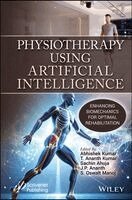
    Physiotherapy Using Artificial Intelligence

    Enhancing Biomechanics for Optimal Rehabilitation

    AvAbhishek Kumar,T. Ananth Kumar

    Inbunden, Engelska, 2026

    2 557 kr

    Beställningsvara. Skickas inom 5-8 vardagar. Fri frakt över 249 kr.

    Beskrivning

    Physiotherapy Using Artificial Intelligence: Enhancing Biomechanics for Optimal RehabilitationEmpower your practice with this definitive resource that bridges the gap between artificial intelligence and biomechanics, providing the essential tools and knowledge to optimize assessments, personalize treatment plans, and predict recovery outcomes in the rapidly evolving landscape of modern physiotherapy.The integration of artificial intelligence (AI) with biomechanics in physiotherapy represents a transformative shift in the healthcare landscape, driven by rapid technological advancement and an increasing emphasis on personalized, data-driven care. Over the past decade, AI has progressed from theoretical exploration to practical clinical application, enabling enhanced decision-making and improved patient outcomes. This book examines the intersection of artificial intelligence and physiotherapy with a focused emphasis on biomechanics, exploring how AI can optimize biomechanical assessments, support individualized treatment planning, and predict patient progress in clinical settings. As demand grows for AI-driven innovation in rehabilitation, this volume serves as an essential resource for physiotherapists, clinicians, and researchers seeking to understand and adopt these emerging technologies to advance practice and improve rehabilitation outcomes.

    Produktinformation

    • Utgivningsdatum:2026-03-30
    • Format:Inbunden
    • Språk:Engelska
    • Antal sidor:512
    • Upplaga:26001
    • Förlag:John Wiley & Sons Inc
    • ISBN:9781394391530

    Utforska kategorier

    • Artificiell intelligens inom Data och IT

    Mer om författaren

    Abhishek Kumar, PhD is an Assistant Director and Professor in the Computer Science and Engineering Department at Chandigarh University, Punjab, India. With over 13 years of teaching experience, he has published more than 170 peer-reviewed papers and successfully supervised four Ph.D. scholars, with four more currently under his guidance, along with more than 30 M. Tech projects. He holds a Ph.D. from the University of Madras and completed postdoctoral research at Universidad de Castilla-La Mancha, Spain. His research interests span artificial intelligence, renewable energy systems, image processing, and data mining. An award-winning researcher, Dr. Kumar has received several accolades, including the Sir C.V. Raman National Award (2018), and holds a patent. An accomplished author and editor, he has authored seven books and edited 51 volumes with reputed publishers.T. Ananth Kumar, PhD is an Associate Professor and Head of Computer Science and Engineering at IFET College of Engineering, India. He has edited six books, published numerous book chapters and patents, and presented research at national and international conferences. His research interests include networks on chips, computer architecture, and application-specific integrated circuit design. He has edited and authored 12 books and has written many book chapters.Sachin Ahuja, PhD is a Professor and Executive Director of UIE at Chandigarh University. He has led multiple funded research projects in artificial intelligence, machine learning, and data mining and has contributed to numerous academic books. He has also served as a guest editor for special issues in reputed international journals.J.P. Ananth, PhD is a Professor and Director of the Internal Quality Assurance Cell, Dayananda Sagar University, Bangalore. His research has been published widely in peer-reviewed journals, and he serves as a reviewer for several international journals and conferences. His research interests include computer vision, pattern recognition, artificial intelligence, and data analytics.S. Oswalt Manoj, PhD is a committed academician and researcher, currently serving as a Professor in the Department of Computer Science and Engineering at Alliance University, Bengaluru. With rich experience in teaching, research, mentoring, and academic leadership, he has guided several Ph.D. scholars and contributed extensively to doctoral committees under Anna University, Chennai. He holds a Ph.D. in Information and Communication Engineering from Anna University, Chennai, with his research focused on Deep Learning-based Rainfall Prediction for Agricultural Applications. He also holds undergraduate and postgraduate degrees in Computer Science and Engineering from Anna University and its affiliated institutions. His areas of academic interest include Machine Learning, Deep Learning, Big Data Analytics, Cloud Computing, and Quantum Computing.

    Innehållsförteckning

    • Preface xxix1 Advancements in Physiotherapy: A Holistic Approach to Rehabilitation and Pain Management 1Radhika Chintamani, G Varadharajulu and G Himashree1.1 Introduction 21.2 Classification of Forces 181.3 Conclusion 262 Physiotherapy and Its Role in Neurodegenerative Disease Management: A Focus on Alzheimer's Disease 31Shraddha Mohite and Salim Chavan2.1 Introduction 322.2 Alzheimer's Disease: Pathophysiology and Clinical Profile 362.3 Role of Physiotherapy in Alzheimer's Disease Management 402.4 Physiotherapy Interventions in Alzheimer's Disease 412.5 Evidence-Based Benefits of Physiotherapy in Alzheimer's Disease 432.6 Challenges in Implementing Physiotherapy for AD 462.7 Innovations and Future Directions 472.8 Conclusion 503 Integrating Herbal Treatments in Physiotherapy for Enhanced Rehabilitation 55S Anandh and Sachin Purushottam Untawale3.1 Introduction 563.2 Historical Context and Rationale 593.3 Pharmacological Actions of Medicinal Herbs in Rehabilitation 623.4 Clinical Applications and Evidence Base 633.5 Methods of Integration in Physiotherapy Practice 643.6 Safety, Standardization, and Contraindications 673.7 Case Studies and Best Practices 683.8 Ethical Considerations and Patient Education 683.9 Future Directions and Research Gaps 693.10 Conclusion 694 Physiotherapy and Herbal Compositions: A Holistic Approach to Scalp Health and Rehabilitation 73Mandar Malawade, Shrushti P Jachak and Sanjay L Badjate4.1 Introduction 744.2 Anatomy and Physiology of the Scalp 784.3 Role of Physiotherapy in Scalp Rehabilitation 814.4 Herbal Compositions in Scalp Treatment 864.5 Integrative Protocols for Scalp Health 874.6 Clinical Evidence and Case Studies 884.7 Safety, Limitations, and Future Directions 884.8 Conclusion 895 Advancements in Physiotherapy: Enhancing Mobility and Quality of Life 95G Himashree, G Varadharajulu and Radhika Chintamani5.1 Introduction 965.2 The Foundation of Artificial Intelligence 995.3 Algorithm Aversion 1045.4 Conclusion 1066 The Role of Physiotherapy in Fall Prevention and Rehabilitation among Older Adults 109Namrata Kadam and Piyush Ashokrao Dalke6.1 Introduction 1106.2 Epidemiology and Risk Factors of Falls among Older Adults 1116.3 Physiotherapy Assessment Tools for Fall Risk 1146.4 Physiotherapy in Fall Rehabilitation 1186.5 Technology in Fall Prevention and Rehabilitation 1206.6 Special Considerations 1206.7 Multidisciplinary Collaboration 1216.8 Case Studies 1226.9 Evidence and Guidelines 1236.10 Challenges and Barriers 1236.11 Recommendations 1246.12 Conclusion 1247 The Role of Precision and Controlled Methods in Physiotherapy 129Chandrakant Patil, Dhirajkumar Mane and Kalpana Malpe7.1 Introduction 1307.2 Theoretical Foundations of Precision and Control in Physiotherapy 1337.3 Clinical Assessment: The First Step Toward Precision 1367.4 Controlled Delivery of Therapeutic Interventions 1377.5 Case Applications of Precision and Control in Physiotherapy 1387.6 Benefits 1407.7 Facilitation of Research and Quality Improvement 1407.8 Emerging Trends and Innovations 1407.9 Ethical and Regulatory Considerations 1417.10 Future Directions 1427.11 Conclusion 1438 Optimizing Adjustable Armchairs for Physiotherapy: A Case Study on Desklet Modifications 149Poonam Patil, Neeraja Aswale and Dhirajkumar Mane8.1 Introduction 1508.2 Literature Review 1538.3 Methodology 1568.4 Results 1608.5 Discussion 1618.6 Recommendations 1628.7 Conclusion 1649 Physiotherapy in Modern Healthcare: Innovations, Applications, and Future Prospects 169G Varadharajulu, Radhika Chintamani and G Himashree9.1 Introduction 1709.2 Layers of AI That Represent Development of a Prototype 1719.3 AI in a Brief 1779.4 Current Scenario of Artificial Intelligence in Healthcare 1949.5 Current Scenario of Artificial Intelligence in Physical Therapy 1999.6 Future Outcomes 2039.7 Conclusion 20410 Assessing Discomfort Metrics and Seating Design in Physiotherapy 211Suraj Kanase and Rasika Manapure10.1 Introduction 21210.2 Literature Review 21510.3 Discomfort Metrics: Methods and Applications 21810.4 Seating Design Considerations in Physiotherapy 22110.5 Clinical Implications of Seating Discomfort 22310.6 Special Populations and Seating Requirements 22310.7 Innovations in Seating Technology 22410.8 Research and Case Studies 22510.9 Conclusion 22511 Synergizing Postural Support, Pain Assessment, and Skin Health in Physiotherapy 231Trupti Yadav and Vibha Vyas11.1 Introduction 23211.2 Literature Review 23411.3 Methodology 23611.4 Skin Health: A Critical But Overlooked Component 24011.5 The Rationale for a Synergistic Approach 24111.6 Clinical Implementation Strategies 24211.7 Case Studies 24311.8 Challenges and Limitations 24311.9 Future Directions 24511.10 Conclusion 24812 Innovative Sanitization Strategies for Enhanced Safety in Physiotherapy 253Pragati Salunkhe and Prashant S Jadhav12.1 Introduction 25412.2 Traditional Sanitization Methods and Their Limitations 25612.3 Ultraviolet-C (UV-C) Disinfection 26012.4 Antimicrobial and Self-Disinfecting Surfaces 26412.5 Electrostatic Spraying and Fogging Systems 26412.6 AI and IoT in Sanitization Monitoring 26512.7 Ozone and Hydrogen Peroxide Vapor (HPV) Systems 26512.8 Sustainable and Green Sanitization Solutions 26612.9 Training and Behavior Modification 26612.10 Policy Guidelines and Regulatory Framework 26712.11 Case Studies 26712.12 Economic Analysis of Innovative Strategies 26812.13 Future Directions 26812.14 Conclusion 26913 The Role of Physiotherapy in Rehabilitation: Advances, Applications, and Future Directions 273Radhika Chintamani, G Himashree and G Varadharajulu13.1 The Skeleton 27413.2 Composition and Structure of Natural Bone 27713.3 Hardness and Strength of Bones 27913.4 Load-Deformation Curve of Bone 28213.5 Trabecular Bone Pattern 28513.6 Forces of Compression 28713.7 Shear Forces 29013.8 Post Fracture Biomechanics of Bone 29013.9 Bone Biomechanics in Implantology 29113.10 Conclusion 29414 Exploring Sustained-Release Topical Applications in Physiotherapy: A Study on Terminalia Bellirica 299Mayiri Burungale and Shamla Mantri14.1 Introduction 30014.2 Background 30214.3 Discussion 30614.4 Limitations 30714.5 Future Directions 30914.6 Conclusion 31015 AI and Motion Analysis: Revolutionizing Physiotherapy with Biomechanical Insights 315Omkar Somade, Nitin K Chaudhary and Mahendra Alate15.1 Introduction 31615.2 Understanding Motion Analysis in Physiotherapy 31915.3 AI in Motion Analysis: Core Technologies 32115.4 Applications in Physiotherapy 32415.5 Key Benefits of AI-Powered Motion Analysis 32515.6 Case Studies and Clinical Trials 32815.7 Ethical and Technical Challenges 32815.8 Future Directions 32915.9 Conclusion 33016 The Future of Physiotherapy: AI-Driven Biomechanical Rehabilitation Techniques 335S Anandh and Vivek Parhate16.1 Introduction 33616.2 AI in Biomechanical Assessment 33816.3 Personalized Rehabilitation with AI 34116.4 Remote Monitoring and Tele-Rehabilitation 34316.5 Robotic-Assisted Rehabilitation 34516.6 Gamification and Patient Engagement 34616.7 Challenges and Ethical Considerations 34616.8 Future Directions 34616.9 Conclusion 34617 Advancements and Efficacy of Physiotherapy in Rehabilitation and Pain Management 353G Varadharajulu, G Himashree and Radhika Chintamani17.1 Introduction 35417.2 Muscles Proteins 35417.3 Striated Muscle 35617.4 Cross-Bridge Cycle 35717.5 Types of Muscle Fibers 36117.6 Types of Contraction 36217.7 Passive and Active Elastic Component 37017.8 Length-Tension Relationship 37217.9 Force Velocity Relationship 37317.10 Conclusion 37518 AI-Enhanced Biomechanics: Personalizing Physiotherapy for Optimal Recovery 379Namrata Kadam and Vivek Deshpande18.1 Introduction 38018.2 Background 38218.3 Biomechanical Data Acquisition for AI Analysis 38418.4 AI Techniques for Biomechanical Data Interpretation 38618.5 Clinical Applications of AI-Enhanced Biomechanics in Physiotherapy 38718.6 Case Studies and Recent Advances 39018.7 Challenges and Limitations 39118.8 Future Directions 39318.9 Conclusion 39419 Smart Rehabilitation: AI-Driven Biomechanical Solutions for Physiotherapy 399S Anandh and Manoj Vairalkar19.1 Introduction 40019.2 The Role of Biomechanics in Physiotherapy 40319.3 Artificial Intelligence in Biomechanical Analysis 40619.4 Smart Rehabilitation Systems 40919.5 Clinical Applications 41219.6 Remote Physiotherapy and Telerehabilitation 41219.7 Case Studies and Evidence-Based Research 41319.8 Challenges and Limitations 41319.9 Future Directions 41419.10 Conclusion 41420 Biomechanics Meets AI: Transforming Physiotherapy through Smart Technology 421Ankita Durgawale and Vivek Deshpande20.1 Introduction 42220.2 Foundations of Biomechanics in Physiotherapy 42520.3 AI Technologies Transforming Physiotherapy 42620.4 Applications of AI and Biomechanics in Physiotherapy 42820.5 Discussion 43020.6 Future Directions 43220.7 Conclusion 43421 The Role of Physiotherapy in Rehabilitation: Enhancing Mobility, Function, and Quality of Life 439G Himashree, Radhika Chintamani and G Varadharajulu21.1 Introduction 44021.2 Classification 44121.3 Muscle and Fascia Relation 44521.4 Force Transmission 45221.5 Biomechanical Simulations and Data Integration 45221.6 Biotensegrity 45321.7 Fascia and Joint Mobility 45621.8 Conditions Affecting Fascia in Physiotherapy 45921.9 Fascia Diagnostics 46021.10 Limitations of Existing Diagnostic Methods 46221.11 Conclusion 464References 464About the Editors 469Index 471