Inbunden, Engelska, 2027
Microgreens
Av Neela Satheesh, Tanmay Sarkar, Mohamed El-Mogy
1965 kr
Kommande
Beskrivning
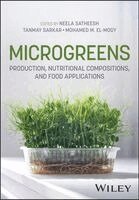
Authoritative reference on microgreen production, nutrition, and food applications Researchers and food scientists seeking rigorous, consolidated coverage of microgreen science now have a dedicated resource. Microgreens: Production, Nutritional Compositions, and Food Applications, edited by a team of experienced food science and agricultural researchers, systematically addresses cultivation technologies, nutritional composition, bioavailability, health-promoting properties, and commercial food applications of microgreens within a single, structured volume. Coverage spans seed biology, photosynthesis, and growth mechanisms alongside modern cultivation methods including hydroponics, vertical farming, and controlled environment agriculture. Plant family-specific chapters detail nutritional profiles and bioactive compounds of Amaranthaceae, Brassicaceae, and Fabaceae microgreens. Additional sections address post-harvest handling, preservation techniques, flavor optimization, global safety standards, and regulatory frameworks for commercial production. The book also covers: Antioxidant activity, inflammation control, glycemic regulation, and cardiovascular support properties documented across multiple microgreen species and familiesBiotechnological advances and economic potential analyses for scaling microgreen production from small-scale farming to commercial operationsProcessing methods, preservation techniques, and flavor optimization strategies for incorporating microgreens into commercial food productsInnovative applications in space agriculture and regenerative farming systems that extend microgreen utility beyond conventional food productionActionable cultivation strategies for optimizing yield, safety, and nutritional composition in both controlled environment and traditional growing settingsDesigned for food scientists, product development managers, R&D specialists, nutritionists, agricultural researchers, and policymakers, this volume connects microgreen production science with commercial food applications and sustainability goals, providing the evidence base needed to advance both research programs and industry practice.
Produktinformation
- Utgivningsdatum: 2027-02-23
- Format: Inbunden
- Språk: Engelska
- Antal sidor: 640
- Förlag: John Wiley & Sons Inc
- ISBN: 9781394395163
Utforska kategorier
Betyg & recensioner
0 recensioner
Inga recensioner tillgängliga.