• Fri frakt över 249 kr
  • •
  • Snabba leveranser
  • •
  • Billiga böcker
Kundservice

Du är på sajten för privatpersoner.

Företag, bibliotek eller offentlig verksamhet?

Du handlar på classic.bokus.com, där alla dina funktioner finns intakta.
Till classic.bokus.com
Bokus logotyp. Gå till startsidan.
  • Erbjudanden
  • Nyheter
  • Student
  • Topplistor
  • Barn & ungdom
  • Bokus Play
  • E-böcker
  • Pocketböcker
  • Spel & pussel

10% rabatt på allt med kod: NYSTART10 →

Sidfot

Mina sidor

    Hjälp

    • Kundservice
    • Vanliga frågor och svar
    • Frakt och leverans
    • Retur vid ångerrätt
    • Reklamera vara
    • Betalning
    • Köpvillkor
    • Allmänna villkor
    • Information om webbplatsens tillgänglighet

    Om Bokus

    • Om oss
    • Pressrum
    • För studenter
    • För företag
    • För bibliotek och offentlig verksamhet
    • För leverantörer
    • Hållbarhet

    Populärt

    • Aktuella erbjudanden
    • Presentkort
    • Studentlitteratur
    • Nya böcker
    • Topplistor
    • Signerade böcker
    • Engelska böcker

    Inspiration

    • Boktips
    • BookTok
    • Populära bokserier
    • Barnbokskaraktärer
    • Populära författare
    Logotyp för Bokus
    Följ oss på Facebook (extern länk)Följ oss på Instagram (extern länk)Följ oss på YouTube (extern länk)Följ oss på TikTok (extern länk)
    bokus @ CookiesAnpassa cookiesIntegritetspolicyKöpvillkor
    Till Citymail hemsida (extern länk)Till Budbee hemsida (extern länk)Till Postnord hemsida (extern länk)Till Schenker hemsida (extern länk)Till Early Bird hemsida (extern länk)Till Walleys hemsida (extern länk)
    1. Naturvetenskap och teknik
    2. Matematik och naturvetenskap
    3. Biologi

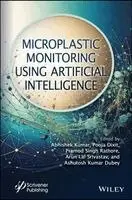
    Microplastic Monitoring Using Artificial Intelligence

    AvAbhishek Kumar,Pooja Dixit

    Inbunden, Engelska, 2026

    2 264 kr

    Beställningsvara. Skickas inom 5-8 vardagar. Fri frakt över 249 kr.

    Beskrivning

    Revolutionize your approach to environmental protection with this groundbreaking resource, which details how to replace labor-intensive manual analysis with deep learning and explainable AI (XAI) to achieve precise, real-time identification and scalable monitoring of microplastic pollution. AI-driven microplastic monitoring sits at the intersection of environmental science, artificial intelligence, and data analytics, representing a rapidly developing frontier in both research and industry. Microplastic pollution, which has become a critical environmental and public health concern, is challenging to monitor using traditional techniques due to the vast scale, complexity, and minute size of microplastics. Conventional methods, such as manual filtration, microscopic examination, and chemical analysis, are often labor-intensive, time-consuming, and limited in their ability to provide real-time, large-scale data. This book is a groundbreaking exploration of how artificial intelligence, particularly deep learning and explainable AI (XAI), is revolutionizing microplastic research. It highlights innovative applications of deep learning for precise identification and classification of microplastics, while emphasizing the role of XAI in providing transparency and interpretability to AI-driven methods. By integrating these approaches with advanced sensing technologies and predictive models, the book addresses key limitations of traditional methods, offering robust solutions for scalable and accurate monitoring. Additionally, the book considers the ethical, regulatory, and policy implications of deploying AI in environmental science, providing a balanced perspective on the potential benefits and challenges. With contributions from leading researchers and practitioners, this book is an essential resource for environmental scientists, data scientists, policymakers, and technologists committed to sustainable solutions for combating microplastic pollution.

    Produktinformation

    • Utgivningsdatum:2026-04-14
    • Format:Inbunden
    • Språk:Engelska
    • Antal sidor:384
    • Förlag:John Wiley & Sons Inc
    • ISBN:9781394450084

    Utforska kategorier

    • Biologi inom Naturvetenskap och teknik

    Mer om författaren

    Abhishek Kumar, PhD is an Assistant Director and Professor in the Computer Science and Engineering Department at Chandigarh University with more than 13 years of teaching experience. He has authored seven books, edited 51 books, and published more than 170 peer-reviewed articles. His research spans AI, renewable energy, image processing, and data mining.Pooja Dixit is an Assistant Professor in the Department of Computer Science at Shri Ratanlal Kanwarlal Patni Girls' College, Kishangarh, India. With more than seven years of academic teaching and two years of research experience, she has published more than 25 research papers in reputed journals, books, and conferences. Her research interests include artificial intelligence, machine learning, and data mining.Pramod Singh Rathore, PhD, is in the Department of Computer and Communication Engineering at Manipal University Jaipur, India with more than 13 years of academic experience. He has published more than 85 papers in reputable, peer-reviewed national and international journals, books, and conferences. His research interests include NS2, computer networks, machine learning, and database management systems.Arun Lal Srivastav, PhD is an Associate Professor in the School of Engineering and Technology at Chitkara University. He has published more than 100 research papers in various prestigious journals, conferences, and book chapters and edited many internationally published books. His research interests include water quality surveillance, climate change, water treatment, river ecosystems, soil health maintenance, engineering education, phytoremediation, and waste management.Ashutosh Kumar Dubey, PhD is an Associate Professor in the Department of Computer Science at in the School of Engineering and Technology at Chitkara University with more than 16 years of experience. He has authored and edited 20 books and published more than 80 articles in peer-reviewed international journals and conference proceedings. His research interests encompass machine learning, renewable energy, health informatics, nature-inspired algorithms, cloud computing, and big data.

    Innehållsförteckning

    • Preface xv1 Introduction to Microplastic and the Role of AI 1Pooja Dixit, Shaloo Dadheech, Priya Batta and Neeraj Bhargava1.1 Introduction 21.2 Microplastic Distribution and Pathways 51.3 Current Methods of Microplastic Detection 81.4 Role of Artificial Intelligence (AI) in Microplastic Research 121.5 Case Studies and Applications 161.6 Challenges and Limitations 181.7 Future Directions 201.8 Conclusion 212 A CNN-ViT Hybrid Deep Learning Architecture for Accurate Microplastic Detection 23B. Dhanalaxmi, B. Saritha, P. Punitha, G. Jagan Naik and B. Anupama2.1 Introduction 242.2 Literature Review 262.3 Proposed Mythology 292.4 Result and Discussion 312.5 Concluding Remarks and Future Scope 333 XAI for Decision Support in Microplastic Pollution Management 37Srinibas Pattanaik, Sachin Ahuja, Sartajvir Singh Dhillon, Jasneet Chawla, Deeksha Sonal and Alessandro Vinciarelli3.1 Introduction 383.2 Causes and Consequences and Effects of Microplastic Pollution 403.3 The Application of AI in Management of the Environment 423.4 XAI Frameworks are Flexible and for the Micro Plastic Environmental Management and the Summary to Explainable Artificial Intelligence 433.5 Application and Case Studies of XAI Microplastic Pollution Management 453.6 The Utilization of Machine Learning with Explainable AI (XAI) Regarding Decision Support Systems 483.7 Futures Directions and Challenges of Explainable AI with Microplastic Pollution 493.8 Conclusion 514 AI-Driven Technologies in Mitigation of Microplastic Pollution 55Lata Rani, Hurmat, Deepa Singh, Babu Bharman, Arun Lal Srivastav, Jyotsna Kaushal, Komal Thapa and Neha Kanojia4.1 Introduction 564.2 AI Assisted Detection Techniques for the Microplastic 604.3 Application of AI in Microplastic Pollution Control 714.4 Conclusion 745 AI Driven Optical Imaging and Spectroscopic Techniques 83Muchukota Sushma, Mekkanti Manasa Rekha, Ramya C. V. and Zaid KhanList of Abbreviations 845.1 Introduction 845.2 Fundamentals of Optical Imaging and Spectroscopic Techniques 905.3 AI Innovations in Microplastic Detection 925.4 Applications in Real-Time Monitoring 945.5 Case Studies in AI-Driven Microplastic Detection 955.6 Challenges in AI-Driven Microplastic Monitoring 975.7 Future Directions 995.8 Conclusion 1016 Integrating AI with Advanced Sensor Technologies for Real-Time Monitoring 109Avnish Chauhan, Shivam Attri, Aanchal Saklani, Prabhat K. Chauhan, Man Vir Singh, Vishal Rajput, Muneesh Sethi and Samuele Barrili6.1 Introduction 1106.2 Bibliographic Study 1116.3 AI-Enabled Sensor Technologies for Microplastic Detection 1136.4 Challenges and Future Prospects 1206.5 Conclusion 1227 Machine Learning for Microplastic Source and Pathway Prediction 127Vanshika and Neetu Rani7.1 Introduction 1287.2 Microplastic Sources and Pathways: An Overview 1307.3 Data Acquisition and Preprocessing 1327.4 Machine Learning Approaches for Microplastic Modeling 1347.5 Model Development and Validation 1377.6 Case Studies and Real-World Implementations 1387.7 Visualization and Decision Support 1387.8 Challenges and Ethical Considerations 1427.9 Conclusion and Future Scope 1438 Big Data Analytics in Mapping the Global Microplastic Distribution 147Prasann Kumar8.1 Introduction 1488.2 Data Sources for Microplastic Mapping 1528.3 Big Data Techniques in Microplastic Analytics 1558.4 Challenges in Big Data for Microplastic Studies 1598.5 Case Studies 1638.6 Applications and Implications 1668.7 Future Directions 1708.8 Conclusion 1738.9 Acknowledgement 1749 Automation in Sampling and Processing, Robotics, and AI Synergy 179Prasann Kumar9.1 Introduction 1809.2 Robotics in Sampling and Processing 1859.3 AI-Driven Processing Workflows 1899.4 Challenges and Limitations 1939.5 Case Studies and Applications 1959.6 Innovations and Emerging Trends 1989.7 Future Directions 2029.8 Conclusion 20510 Cross-Disciplinary Case Studies: AI in Action for Microplastic Research 209B. Dhanalaxmi, V. Prema Tulasi, Mittapalli Anusha, G. Sreeram and Komati Sathish10.1 Introduction 21010.2 Literature Review 21210.3 Proposed Methodology 21610.4 Result and Discussion 21810.5 Concluding Remarks and Future Scope 22211 Ethical and Social Implications of AI in Environmental Science: Balancing Innovation and Responsibility 225Priyanka12 Regulatory and Policy Challenges for AI-Enhanced Microplastic Monitoring 239Gurjeet Kour, Mansi Rana, Pratibha Singh and Ajay Sharma12.1 Introduction 24012.2 Microplastic Monitoring through AI 24312.3 The Current State of Microplastic Monitoring Regulations 24512.4 Regulatory Obstacles in AI-Powered Microplastic Identification 25012.5 Privacy and Ethical Issues with AI-Powered Environmental Monitoring 25212.6 Policy Ideas for Including AI in Microplastic Monitoring 25312.7 Multidisciplinary Cooperation's Function in Policy Development 25712.8 Conclusion 25913 Future Trends: AI Driven Innovation in Environmental Science 267Priyanka Sharma, Ankita Sharma and Prashant Ahluwalia13.1 Introduction to AI in Environmental Science 26813.2 AI and Climate Change Mitigation 27013.3 AI in Water Resource Management 27213.4 AI in Biodiversity Conservation 27413.5 AI for Sustainable Agriculture and Forestry 27613.6 AI in Air Pollution Control 27913.7 AI and Renewable Energy Optimization 28013.8 AI for Smart Disaster Resilience 28113.9 Environmental Sustainability 28313.10 Future Scope 28514 XAI for Decision Support in Microplastic Pollution Management 293Yeligeti Raju, N. Venkatesh, S. Adilakshmi, Namita Parati and A. Kalaivani14.1 Introduction 29414.2 Literature Review 29714.3 Proposed Methodology 29914.4 Result and Discussion 30114.5 Concluding Remarks and Future Scope 30515 The Road Ahead: AI's Role in Tackling Global Microplastic Pollution 309Yeligeti Raju, K. Damodhar Rao, M. Lavanya, Mursubai Sandhya Rani and Sendhil Kumar B.B.15.1 Introduction 31015.2 Literature Review 31215.3 Proposed Methodology 31715.4 Result and Discussion 31915.5 Concluding Remarks and Future Scope 322References 32316 Intelligent Environmental Surveillance: Integrating AI Systems for Comprehensive Microplastic Monitoring and Analysis 325Mamta16.1 Introduction 32616.2 Understanding Microplastic Pollution 32816.3 AI-Based Monitoring Systems 33116.4 Implementation and Case Studies 33316.5 Future Scope 33616.6 Conclusion 340Bibliography 342Index 347