• Fri frakt över 249 kr
  • •
  • Snabba leveranser
  • •
  • Billiga böcker
Kundservice

Du är på sajten för privatpersoner.

Företag, bibliotek eller offentlig verksamhet?

Du handlar på classic.bokus.com, där alla dina funktioner finns intakta.
Till classic.bokus.com
Bokus logotyp. Gå till startsidan.
  • Erbjudanden
  • Nyheter
  • Student
  • Topplistor
  • Barn & ungdom
  • Bokus Play
  • E-böcker
  • Pocketböcker
  • Spel & pussel

10% rabatt på allt med kod: NYSTART10 →

Sidfot

Mina sidor

    Hjälp

    • Kundservice
    • Vanliga frågor och svar
    • Frakt och leverans
    • Retur vid ångerrätt
    • Reklamera vara
    • Betalning
    • Köpvillkor
    • Allmänna villkor
    • Information om webbplatsens tillgänglighet

    Om Bokus

    • Om oss
    • Pressrum
    • För studenter
    • För företag
    • För bibliotek och offentlig verksamhet
    • För leverantörer
    • Hållbarhet

    Populärt

    • Aktuella erbjudanden
    • Presentkort
    • Studentlitteratur
    • Nya böcker
    • Topplistor
    • Signerade böcker
    • Engelska böcker

    Inspiration

    • Boktips
    • BookTok
    • Populära bokserier
    • Barnbokskaraktärer
    • Populära författare
    Logotyp för Bokus
    Följ oss på Facebook (extern länk)Följ oss på Instagram (extern länk)Följ oss på YouTube (extern länk)Följ oss på TikTok (extern länk)
    bokus @ CookiesAnpassa cookiesIntegritetspolicyKöpvillkor
    Till Citymail hemsida (extern länk)Till Budbee hemsida (extern länk)Till Postnord hemsida (extern länk)Till Schenker hemsida (extern länk)Till Early Bird hemsida (extern länk)Till Walleys hemsida (extern länk)
    1. Samhälle och politik
    2. Samhälle och kultur
    3. Sociala grupper och identitet
    4. Etnicitet

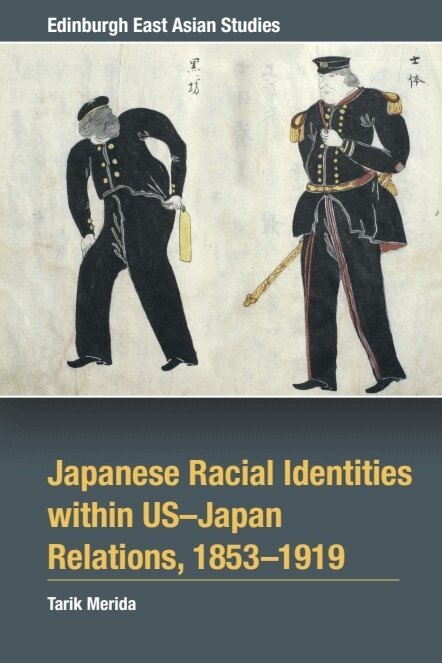
    Japanese Racial Identities within U.S.-Japan Relations, 1853-1919

    AvTarik Merida

    Häftad, Engelska, 2024

    Del i serien Edinburgh East Asian Studies

    276 kr

    Beställningsvara. Skickas inom 7-10 vardagar. Fri frakt över 249 kr.

    Fler format och utgåvor

    Inbunden

    1 095 kr

    Beskrivning

    This book retraces the process through which, at the turn of the twentieth century, the Japanese went from a racial anomaly to honorary members of the White race. It explores the interpretation of the Japanese race by Western powers, particularly the United States, during Japan’s ascension as a great power between 1853 and 1919. Forced to cope with this new element in the Far East, Western nations such as the U.S. had to device a negotiation zone in which they could accommodate the Japanese and negotiate their racial identity. In this book, Tarik Merida, presents a new tool to study this process of negotiation: the Racial Middle Ground.

    Produktinformation

    • Utgivningsdatum:2024-11-30
    • Mått:156 x 234 x 15 mm
    • Vikt:307 g
    • Format:Häftad
    • Språk:Engelska
    • Serie:Edinburgh East Asian Studies
    • Antal sidor:196
    • Förlag:Edinburgh University Press
    • ISBN:9781399506908

    Utforska kategorier

    • Etnicitet inom Samhälle och politik
    • Internationella relationer inom Samhälle och politik

    Mer om författaren

    Tarik Merida is Assistant Professor of Japanese Studies at Freie Universität Berlin. Tarik completed his PhD in 2019 and has published articles in journals including The Asia-Pacific Journal and Japan Review.

    Recensioner i media

    Tarik Merida brilliantly illustrates how modern Japan encountered the world of White supremacy and negotiated within it to create a "racial middle ground." With a sophisticated theoretical framework and detailed historical research, this provocative study overturns our common understanding of racial dichotomy to provide a new interpretation of how exceptionally complex Japanese racial identity was constructed.

    Innehållsförteckning

    • Introduction: The Japanese Racial AnomalyOn the (Ir)Relevance of Studying RaceSubject and ScopeTheoretical Framework – The Racial Middle GroundFocus and SourcesStructure of the BookPart I: Race in the Japanese Context: Early Modern Patterns of Differentiation and the Introduction of Race in Modern Japan Chapter 1: Patterns of Differentiation in Early Modern JapanOn the Existence of Race in Early Modern JapanConfucianism and the ‘Middle Kingdom’Gender and Equality in Early Modern JapanHairy Barbarians: Ainu, Foreigners, and Japanese CivilisationChapter 2: The Translation of Race in the Meiji PeriodIntroducing Modernity: The Translation of Race in the Early Meiji PeriodAdapting the Concept of RacePart II: A Racial Middle Ground: Negotiating the Japanese Racial Identity in the Context of White Supremacy Chapter 3: Between Two Races – The Birth of the Racial Middle Ground between Japan and the WestJapan and the Standard of Civilisation: The Problem of Race against CivilisationJapan, the West, and the Racial Middle GroundRacial pessimism and the Survival of the FittestChapter 4: Two Wars and First Successes: From the Port Arthur Massacre to the Treaty of PortsmouthEarly Benefits of the Racial Middle Ground: The Port Arthur Massacre‘Yellow’ Fears of ‘Yellow Peril’: Race and the Russo-Japanese War Agents of the Racial Middle Ground Chapter 5: Further Successes and the Limits of the Racial Middle Ground – The California Crisis Becoming Visible: Japanese Immigration to the United States Theodore Roosevelt and the Japanese Racial identityChapter 6: African Americans and the Racial Middle GroundThe Race at the Bottom (I): The Black Press and the California Crisis The Race at the Bottom (II): The Meaning of African Americans for JapanEarly Japanese views of African Americans The ‘Black Problem’ or How to Sell Japanese Immigrants The Human Aspect of the Racial Middle Ground Chapter 7: The End of the Racial Middle Ground The Crisis Goes on: The Alien Land Law of 1913 Losing Appeal: The West, Japan, and Alternative Visions of World Orders Embracing Yellowness: The Appeal of Pan-Asianism The collapse of the Racial Middle Ground: The Paris Peace Conference Conclusion: The Elusive Japanese Race