• Fri frakt över 249 kr
  • •
  • Snabba leveranser
  • •
  • Billiga böcker
Kundservice

Du är på sajten för privatpersoner.

Företag, bibliotek eller offentlig verksamhet?

Du handlar på classic.bokus.com, där alla dina funktioner finns intakta.
Till classic.bokus.com
Bokus logotyp. Gå till startsidan.
  • Erbjudanden
  • Nyheter
  • Student
  • Topplistor
  • Barn & ungdom
  • Bokus Play
  • E-böcker
  • Pocketböcker
  • Spel & pussel

Må bättre, för mindre! Upp till 50% rabatt på hälsoböcker

Sidfot

Mina sidor

    Hjälp

    • Kundservice
    • Vanliga frågor och svar
    • Frakt och leverans
    • Retur vid ångerrätt
    • Reklamera vara
    • Betalning
    • Köpvillkor
    • Allmänna villkor
    • Information om webbplatsens tillgänglighet

    Om Bokus

    • Om oss
    • Pressrum
    • För studenter
    • För företag
    • För bibliotek och offentlig verksamhet
    • För leverantörer
    • Hållbarhet

    Populärt

    • Aktuella erbjudanden
    • Presentkort
    • Studentlitteratur
    • Nya böcker
    • Topplistor
    • Signerade böcker
    • Engelska böcker

    Inspiration

    • Boktips
    • BookTok
    • Populära bokserier
    • Barnbokskaraktärer
    • Populära författare
    Logotyp för Bokus
    Följ oss på Facebook (extern länk)Följ oss på Instagram (extern länk)Följ oss på YouTube (extern länk)Följ oss på TikTok (extern länk)
    bokus @ CookiesAnpassa cookiesIntegritetspolicyKöpvillkor
    Till Citymail hemsida (extern länk)Till Budbee hemsida (extern länk)Till Postnord hemsida (extern länk)Till Schenker hemsida (extern länk)Till Early Bird hemsida (extern länk)Till Walleys hemsida (extern länk)
    1. Naturvetenskap och teknik
    2. Geovetenskap
    3. Miljövetenskap och miljöpolitik

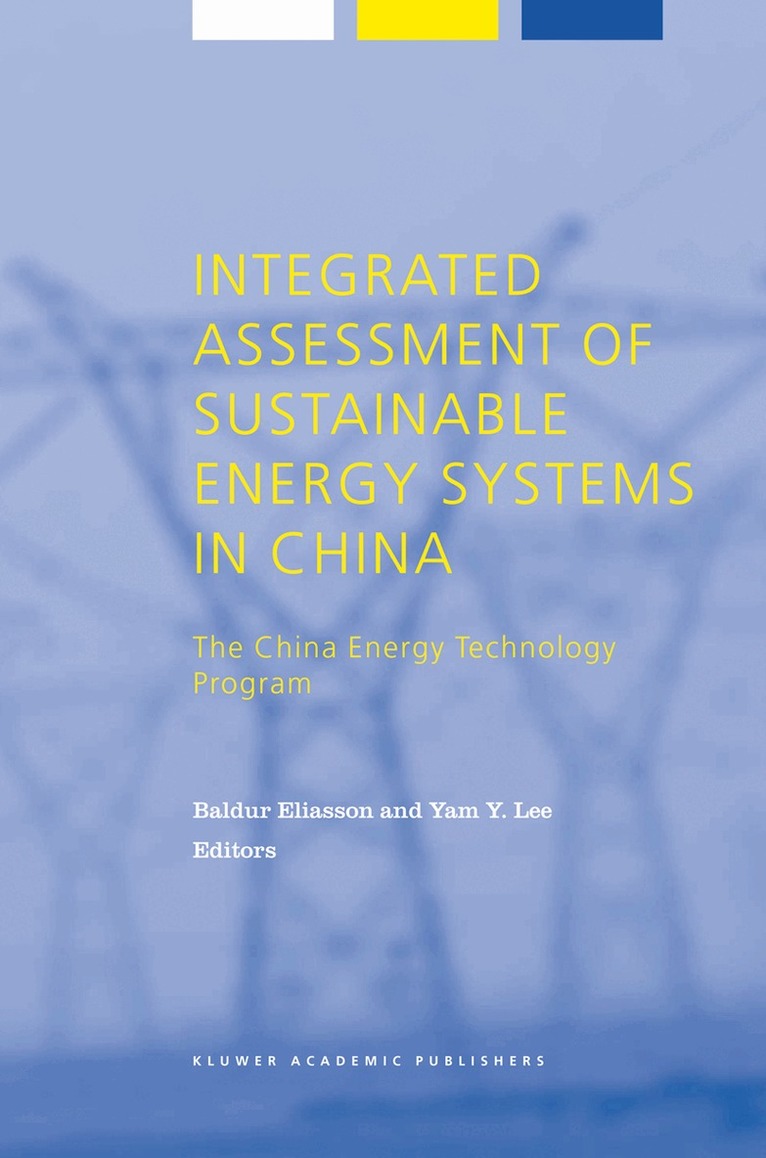
    Integrated Assessment of Sustainable Energy Systems in China, The China Energy Technology Program

    A Framework for Decision Support in the Electric Sector of Shandong Province

    AvB. Eliasson,Y. Lee

    Häftad, Engelska, 2003

    Del i serien Alliance for Global Sustainability Bookseries

    3 234 kr

    Beställningsvara. Skickas inom 10-15 vardagar. Fri frakt över 249 kr.

    Beskrivning

    The purpose of the China Energy Technology Program (CETP) has been to take a holistic view of electricity generation in China with special emphasis on the economic and environmental impact of technology. The program is a collaborative effort involving industry, as leader and manager of the program; researchers from academia and national research institutes; and the stakeholders--users or planners of the electricity market. A power plant, no matter of what kind, is not a solitary unit, which may be considered independently from its environment. Modem society has been built on easy access to power; it is now asking for environmentally clean power. Clean power is the pathway that will lead to sustainability, an extension of the concept of an environmentally clean future. Progress toward a sustainable technical solution must include an evaluation of the environmental, economic, and societal impact of electrical power generation. To achieve the goals of the CETP program, we wanted to go beyond what had been done in similar programs in the past. Its organizers wanted the program not only to evaluate the overall impact of electricity generation, but also do it in such a way that program results could be applied and adapted to different circumstances, including countries other than China. For this purpose we have developed a methodology and presented it on a DVD disc, which the reader will find inside the back cover of this book. The methodology is conceived to allow insights into the function of the program on various levels.

    Produktinformation

    • Utgivningsdatum:2003-04-30
    • Mått:160 x 240 x 48 mm
    • Vikt:1 397 g
    • Format:Häftad
    • Språk:Engelska
    • Serie:Alliance for Global Sustainability Bookseries
    • Antal sidor:824
    • Upplaga:2003
    • Förlag:Kluwer Academic Publishers
    • ISBN:9781402011993

    Utforska kategorier

    • Miljövetenskap och miljöpolitik inom Naturvetenskap och teknik
    • Energiindustri inom Ekonomi och Ledarskap
    • Miljöteknik inom Naturvetenskap och teknik

    Innehållsförteckning

    • 1 Introduction.- The Ags/abb Collaboration.- The Cetp Story.- The Cetp Idea.- A Living Program.- The Structure of the Program.- An Idea for the Future.- References.- Notes.- 2 General Description/ Approach and Methodology.- 1. General Description.- 2. Shandong Province.- 3. Operation of Cetp.- 4. Components of the Program.- 5. Conclusion.- References.- 3 Data Collection and Database Development.- 1. the Data Collection Task.- 2. Database Development.- Notes.- 4 Demand Forecasting.- 1. Geographic, Social, and Economic Characteristics.- 2. Shandong’S Energy Profile.- 3. Goals and Methodology.- 4. Scenario Construction.- 5. Important Assumptions in Energy Demand Forecasting.- 6. The Primary Sector.- 7. The Industrial Sector.- 8. Construction.- 9. Transportation.- 10. Services.- 11. Households.- 12. Evolution of Electricity Consumption.- 13. Assumptions Included in Forecasting Electricity Demand in the Additional Scenarios.- 14. Rorecasting Results and Analysis.- 15. Conclusions.- 5 EnergyEconomy Modeling Scenarios for China and Shandong.- 1. Introduction.- 2. General Background About China and Shandong Province.- 3. Energy and Economy Modeling (EEM) Approach.- 4. Model Results: Markal.- 5. CRETM FOR BOTH CHINA AND SHANDONG PROVINCE.- 6. Integration of Results.- 7. Findings, Conclusions, and Recommendations.- References.- Notes.- 6 Electric Sector Simulation: A Tradeoff Analysis of Shandong Province’s Electric Service Options.- 1. Introduction.- 2. Scenario-Based Multi-Attribute Tradeoff Analysis.- 3. Electric Sector Simulation.- 4. Overview of the Ess Scenarios.- 5. Shandong Uncertainties and Futures.- 6. Shandong Options and Strategies.- 7. The Reference Strategy and the Impact of Growth and Fuel Cost Uncertainties.- 8. Performance of Ess Scenarios.- 9. Extending the Range of Options.- 10. Encompassing Greater Uncertainties.- 11. Conclusions.- References.- 7 Energy Transportation Modeling.- 1. Introduction.- 2. Model Description.- 3. Scenario Analysis with ETM.- 4. Concluding Remarks.- References.- 8 Life Cycle Assessment.- 1. Introduction.- 2. The Coal Chain.- 3. The Natural Gas Chain.- 4. the Nuclear Chain.- 5. Wind Power.- 6. Comparison of Current and Future Energy Chains.- 7. Sensitivity Analysis for the Energy Chains.- 8. Analysis of Scenarios Selected for the MCDA Task.- 9. Conclusions.- 10. Outlook.- References.- Notes.- 9 Environmental Impact and External Cost Assessment.- 1. Introduction.- 2. Objectives, Scope and Sub-Tasks.- 3. External Cost Assessment.- 4. Acidification in China and Shandong.- 5. Conclusions.- References.- Notes.- 10 Assessment of Severe Accident Risks.- 1. Introduction.- 2. Objectives and Scope.- 3. Information Sources.- 4. Evaluations for Specific Energy Chains.- 5. Energy Chain Comparisons.- 6. Conclusions.- References.- 11 Multicriteria Output Integration Analysis.- 1. THe Contexts of the Multicriteria Decision Aiding Approach in the Cetp Project.- 2. The Stakeholders Advisory Group (SAG).- 3. The “Potential Actions” or “Decision Scenarios”.- 4. The Criteria.- 5. The Aggregation Method.- 6. The Weighting Process.- 7. The Performance Matrix.- 8. Analysis of the Mcda Results.- References.- Notes.- 12 Comparison and Integration of Cetp Tasks.- 1. Introduction.- 2. Comparison of Electric Sector Methodologies.- 3. DVD Tool for Documentation, Exploration and Decision Support.- 4. Program Management for Integration.- 13 Conclusions and Recommendations.- 1. Introduction.- 2. The Analytic Framework.- 3. Energy and Electricity Demand Forecasting.- 4. Environmental Damage, Health and Accident Risk.- 5. Energy Supply and Use.- 6. Sustainability and Stakeholder Perspectives.- 7. Recommendations.- 8. Overall Remarks and Future Outlook.- Appendix A.- Structure of Cetp.- Appendix B.- Steering Committee.- Stakeholder Advisory Group.- Technical Advisory Board.- Appendix C.- List of Cetp Participants.- Appendix D (Chapter 1).- Task Description.- Appendix E (Chapter 1).- Abb in China.- Appendix F (Chapter 4).- Additional Tables of Data.- Appendix G (Chapter 7).- Mathematical Description of the Model.- Acronyms and Abbreviations.- Units.