• Fri frakt över 249 kr
  • •
  • Snabba leveranser
  • •
  • Billiga böcker
Kundservice

Du är på sajten för privatpersoner.

Företag, bibliotek eller offentlig verksamhet?

Du handlar på classic.bokus.com, där alla dina funktioner finns intakta.
Till classic.bokus.com
Bokus logotyp. Gå till startsidan.
  • Erbjudanden
  • Nyheter
  • Student
  • Topplistor
  • Barn & ungdom
  • Bokus Play
  • E-böcker
  • Pocketböcker
  • Spel & pussel

10% rabatt på allt med kod: NYSTART10 →

Sidfot

Mina sidor

    Hjälp

    • Kundservice
    • Vanliga frågor och svar
    • Frakt och leverans
    • Retur vid ångerrätt
    • Reklamera vara
    • Betalning
    • Köpvillkor
    • Allmänna villkor
    • Information om webbplatsens tillgänglighet

    Om Bokus

    • Om oss
    • Pressrum
    • För studenter
    • För företag
    • För bibliotek och offentlig verksamhet
    • För leverantörer
    • Hållbarhet

    Populärt

    • Aktuella erbjudanden
    • Presentkort
    • Studentlitteratur
    • Nya böcker
    • Topplistor
    • Signerade böcker
    • Engelska böcker

    Inspiration

    • Boktips
    • BookTok
    • Populära bokserier
    • Barnbokskaraktärer
    • Populära författare
    Logotyp för Bokus
    Följ oss på Facebook (extern länk)Följ oss på Instagram (extern länk)Följ oss på YouTube (extern länk)Följ oss på TikTok (extern länk)
    bokus @ CookiesAnpassa cookiesIntegritetspolicyKöpvillkor
    Till Citymail hemsida (extern länk)Till Budbee hemsida (extern länk)Till Postnord hemsida (extern länk)Till Schenker hemsida (extern länk)Till Early Bird hemsida (extern länk)Till Walleys hemsida (extern länk)
    1. Naturvetenskap och teknik
    2. Matematik och naturvetenskap
    3. Biologi
    4. Zoologi

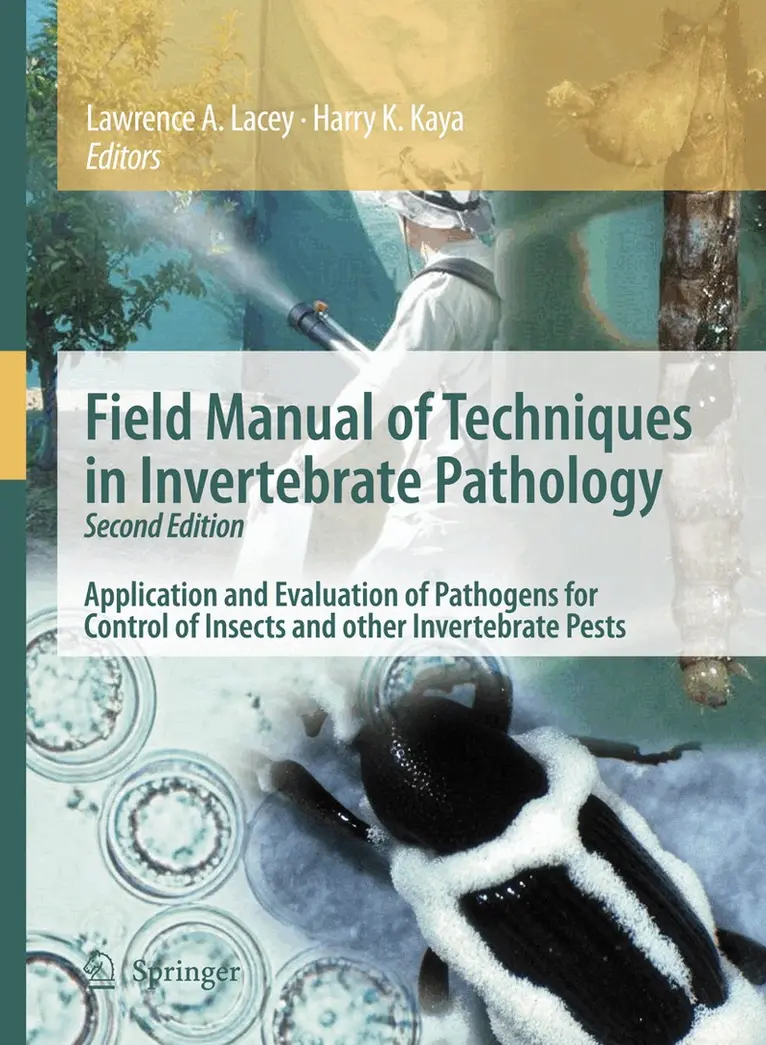
    Field Manual of Techniques in Invertebrate Pathology

    Application and Evaluation of Pathogens for Control of Insects and other Invertebrate Pests

    AvLawrence A. Lacey,Harry K. Kaya

    Häftad, Engelska, 2007

    2 165 kr

    Beställningsvara. Skickas inom 10-15 vardagar. Fri frakt över 249 kr.

    Beskrivning

    "The Field Manual of Techniques in Invertebrate Pathology" is designed to provide background and instruction on a broad spectrum of techniques and their use in the evaluation of entomopathogens in the field. The second edition of the Field Manual provides updated information and includes two additional chapters and 12 new contributors. The intended audience includes researchers, graduate students, practitioners of integrated pest management (IPM), regulators and those conducting environmental impact studies of entomopathogens. Although it can function as a stand alone reference, the Field Manual is complementary to the laboratory oriented "Manual of Techniques in Insect Pathology" and to comprehensive texts in insect pathology. The Editors have structured the 40 chapters of the Field Manual into 10 sections to provide the tools required for planning experiments with entomopathogens and their implementation in the field. The basic tools include chapters on the theory and practice of application of microbial control agents (MCAs) (Section I), statistical considerations in the design of experiments (Section II), and three chapters on application equipment and strategies (Section III).Section IV includes individual chapters on the major pathogen groups (virus, bacteria, microsporidia, fungi, and nematodes) and special considerations for their evaluation under field conditions. This section sets the stage for subsequent chapters on the impact of naturally occurring and introduced exotic pathogens and inundative application of MCAs. Twenty-three chapters on the application and evaluation of MCAs in a wide variety of agricultural, forest, domestic and aquatic habitats comprise Section VII of the Field Manual. In addition to insect pests, the inclusion of mites and slugs broadens the scope of the book. Most of the chapters in this section include step by step instructions on handling of inoculum, design of field experiments and experimental plots and application and assessment of efficacy of dozens of MCAs. Several of these chapters include supplementary techniques and media for conducting follow up laboratory studies for confirmation of infection, determination of persistence, etc.The three final chapters include: special consideration for evaluation of Bt transgenic plants (Section VIII); resistance to insect pathogens and strategies to manage resistance (Section IX); and guidelines for evaluating effects of MCAs on nontarget organisms (Section X). Due to uncertainty regarding the future availability of organophosphate and other conventional chemical insecticides, MCAs will play increasingly important roles in IPM. The Field Manual will provide researchers and IPM practitioners with techniques and practical guidance for the study and optimal use of MCAs in a variety of settings.

    Produktinformation

    • Utgivningsdatum:2007-10-04
    • Mått:193 x 260 x 48 mm
    • Vikt:1 813 g
    • Format:Häftad
    • Språk:Engelska
    • Antal sidor:868
    • Upplaga:2
    • Förlag:Springer-Verlag New York Inc.
    • ISBN:9781402059322

    Utforska kategorier

    • Zoologi inom Naturvetenskap och teknik
    • Djurböcker inom Djur och Natur

    Recensioner i media

    From the reviews of the second edition: "This paperback volume updates and expands the information presented in Lacey and Kaya's first hardcore edition ... . The book is very well-edited ... . The index is very complete and increases the utility of the book. Overall, the Field Manual of Techniques in Invertebrate Pathology is an excellent book and an important reference volume for researchers and practitioners in the field of pest management. ... It will serve as a useful resource for researchers and students of specific pathogen groups ... ." (Mary Barbercheck, Entomologia Experimentalis et Applicata, Vol. 129, 2008) "You will want to examine the second edition of Field Manual of Techniques in Invertebrate Pathology if you evaluate entomopathogens in the field or examine their environmental impact. This landmark invertebrate pathology manual has been considerably enhanced and updated. The manual is written for researchers, graduate students, and Integrated Pest Management (IPM) practitioners. ... all of the chapters have been -updated. The Tables are larger and easier to read. Many of the figures are crisper and updated." (Timothy J. Kurtti, Crop Protection, Vol. 27, 2008)

    Innehållsförteckning

    • to microbial control.- Theory and practice of microbial insecticide application.- Statistical Considerations.- Experimental design: statistical considerations and analysis.- Application Equipment.- Ground-based application equipment.- Conventional application equipment: aerial application.- Dissemination of beneficial microbial agents by insects.- Overview of Pathogen Groups.- Viruses.- Bacteria.- Entomopathogenic microsporidia.- Fungi.- Nematodes.- Naturally Occurring Pathogens.- Documentation of naturally occurring pathogens and their impact in agroecosystems.- Assessing impact of naturally occurring pathogens of forest insects.- Exotic Pathogens.- of exotic pathogens and documentation of their establishment and impact.- Evaluation of Entomopathogens in Specific Systems.- Application and evaluation of entomopathogens in potato.- Application and evaluation of entomopathogens in crucifers and cucurbits.- Microbial control of insect pests of corn.- Evaluation of microbial agents against rice pests.- Microbial control of insect pests of soybean.- Microbial insecticide application and evaluation: Cotton.- Mushroom pests.- Techniques for testing microbials for control of arthropod pests in greenhouses.- Forest defoliators.- Microbial control of wood-boring insects attacking forest and shade trees.- Microbial control of lepidopteran pests of apple orchards.- Microbial control of insect pests of stone fruit and nut crops.- Application and evaluation of entomopathogens for citrus pest control.- Small fruits.- Application and evaluation of entomopathogens for control of pest insects in mint.- Insect and Mite Control on Nursery and Landscape Plants with Entomopathogens.- Grasshoppers and locusts.- Lawn, turf and grassland pests.- Application and evaluation of entomopathogens formanaging insects in stored products.- Microbial control of urban pests – cockroaches, ants and termites.- Application and evaluation of entomopathogens for control of livestock and poultry pests.- Microbial control of mosquitoes and black flies.- Terrestrial mollusc pests.- Transgenic Plants.- Evaluating transgenic plants for suitability in pest and resistance management programs.- Resistance.- Resistance to insect pathogens and strategies to manage resistance: An update.- Non-target Organisms.- Guidelines for evaluating effects of entomopathogens on non-target organisms.