• Fri frakt över 249 kr
  • •
  • Snabba leveranser
  • •
  • Billiga böcker
Kundservice

Du är på sajten för privatpersoner.

Företag, bibliotek eller offentlig verksamhet?

Du handlar på classic.bokus.com, där alla dina funktioner finns intakta.
Till classic.bokus.com
Bokus logotyp. Gå till startsidan.
  • Erbjudanden
  • Student
  • Topplistor
  • Barn & ungdom
  • Bokus Play
  • E-böcker
  • Ljudböcker
  • Pocketböcker
  • Spel & pussel

Upp till 25% på utvalda nyheter →

Sidfot

Mina sidor

    Hjälp

    • Kundservice
    • Vanliga frågor och svar
    • Frakt och leverans
    • Retur vid ångerrätt
    • Reklamera vara
    • Betalning
    • Köpvillkor
    • Allmänna villkor
    • Information om webbplatsens tillgänglighet

    Om Bokus

    • Om oss
    • Pressrum
    • För studenter
    • För företag
    • För bibliotek och offentlig verksamhet
    • För leverantörer
    • Hållbarhet

    Populärt

    • Aktuella erbjudanden
    • Presentkort
    • Studentlitteratur
    • Nya böcker
    • Topplistor
    • Signerade böcker
    • Engelska böcker

    Inspiration

    • Boktips
    • BookTok
    • Populära bokserier
    • Barnbokskaraktärer
    • Populära författare
    Logotyp för Bokus
    Följ oss på Facebook (extern länk)Följ oss på Instagram (extern länk)Följ oss på YouTube (extern länk)Följ oss på TikTok (extern länk)
    bokus @ CookiesAnpassa cookiesIntegritetspolicyKöpvillkor
    Till Citymail hemsida (extern länk)Till Budbee hemsida (extern länk)Till Postnord hemsida (extern länk)Till Schenker hemsida (extern länk)Till Early Bird hemsida (extern länk)Till Walleys hemsida (extern länk)
    1. Filosofi och religion
    2. Filosofi
    3. Filosofiska discipliner

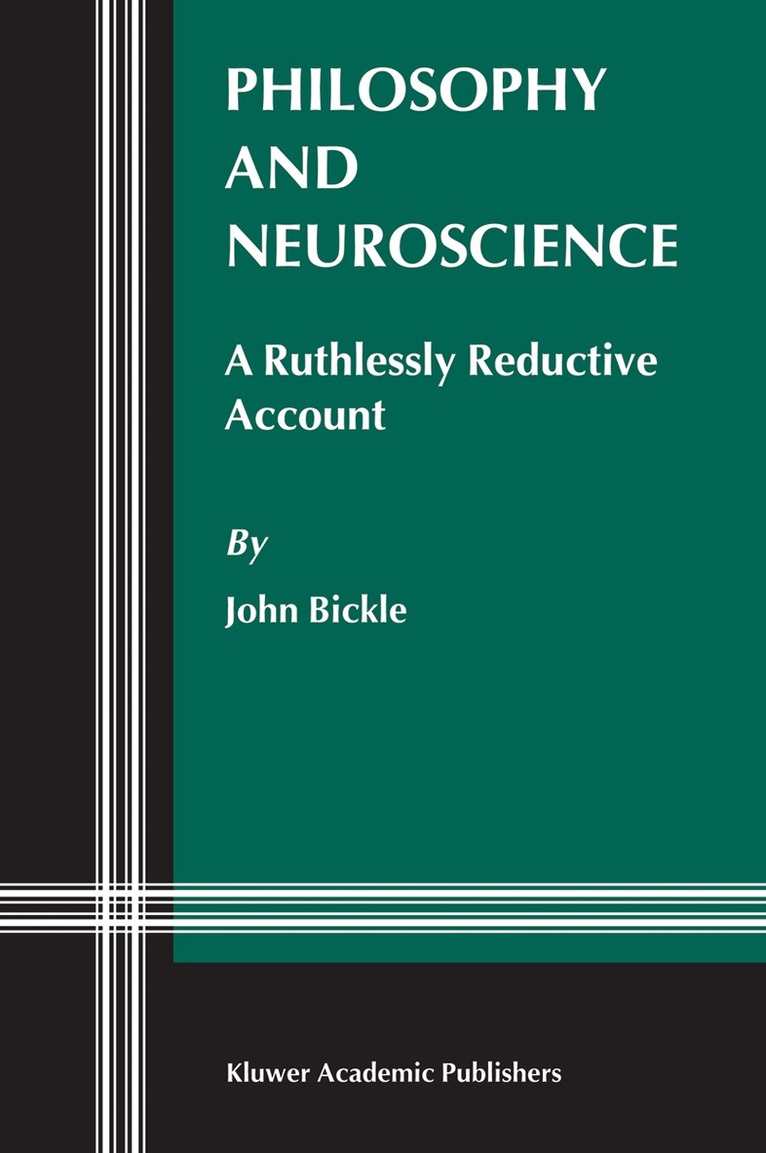
    Systematicity Arguments

    AvKenneth L. Aizawa

    Häftad, Engelska, 2002

    Del i serien Studies in Brain and Mind

    1 082 kr

    Beställningsvara. Skickas inom 10-15 vardagar. Fri frakt över 249 kr.

    Fler format och utgåvor

    Inbunden

    1 082 kr

    E-bok

    1 413 kr

    Beskrivning

    This book addresses a part of a problem. The problem is to determine the architecture of cognition, that is, the basic structures and mechanisms underlying cognitive processing. This is a multidimensional problem insofar as there appear to be many distinct types of mechanisms that interact in diverse ways during cognitive processing. Thus, we have memory, attention, learning, sensation, perception, and who knows what else, interacting to produce behavior. As a case in point, consider a bit of linguistic behavior. To tell a friend that I think Greg won a stunning victory, I must evidently rely on various bits of information stored in my memory, including who my friends are, who Greg is, what he won, and what natural languages I share with my friend. I must sense and perceive that my friend is within hearing distance, how loud I need to speak, how loud I am speaking, and whether my friend is paying attention. I must avail myself of what I know about the language I share with my friend, along with innumerable principles about human "folk psychology. " This book does not address the full range of contemporary theorizing about cognitive architecture, but only a part. It addresses theories of cognitive architecture that hypothesize that there exist cognitive representations, then begins to explore the possible structure of these representations. One of the leading hypotheses concerning the structure of cognitive representations is that it is akin to that found in symbolic logic.

    Produktinformation

    • Utgivningsdatum:2002-10-31
    • Mått:155 x 235 x 16 mm
    • Vikt:423 g
    • Format:Häftad
    • Språk:Engelska
    • Serie:Studies in Brain and Mind
    • Antal sidor:255
    • Förlag:Kluwer Academic Publishers
    • ISBN:9781402072840

    Utforska kategorier

    • Filosofiska discipliner inom Filosofi och religion

    Recensioner i media

    "Aizawa makes an important contribution to the debate over whether a connectionist architecture can explain the systematicity of thought without implementing a classical architecture. His discussion blows away many pockets of unclarity in the literature on this issue." (Brian McLaughlin, Ph.D., Rutgers, The State University of New Jersey)

    Innehållsförteckning

    • 1. The Structure of Cognitive Representations.- 1.1 Some Theories of Cognitive Architecture.- 1.2 An Outline for the Book.- 2. Some History and Philosophy of Science.- 2.1 Copernican and Ptolemaic Astronomy.- 2.2 Darwinian Evolution and Creationism.- 2.3 What these Arguments have in Common.- 2.4 Some Broader Implications of our Explanatory Standards.- 2.5 Taking Stock.- 3. The Productivity of Thought.- 3.1 The Productivity Argument.- 4. The Systematicity of Inference.- 4.1 What is the Systematicity of Inference?.- 4.2 The Case Against the Systematicity of Inference.- 4.3 Explaining the Systematicity of Inference.- 4.4 Taking Stock.- 5. The Systematicity of Cognitive Representations.- 5.1 What is the Systematicity of Cognitive Representations?.- 5.2 Pure Atomistic Accounts of the Systematicity of Cognitive Representations.- 5.3 Classical Accounts of the Systematicity of Cognitive Representations.- 5.4 Taking Stock.- 6. The Compositionality of Representations.- 6.1 What is the Semantic Relatedness of Thought?.- 6.2 Accounts of the Semantic Relatedness of Thought.- 6.3 A Second Argument.- 6.4 Other Co-occurrence Explananda?.- 6.5 What is Fodor and Pylyshyn’s “Real” Argument?.- 6.6 The Tracking Argument and the Arguments from Psychological Processes.- 6.7 Taking Stock.- 7. The Systematicity Arguments Applied to Connectionism.- 7.1 Chalmers’s Active-Passive Transformation Model.- 7.2 Hadley and Hayward’s Model of Strong Semantic Systematicity.- 7.3 Taking Stock.- 8. Functional Combinatorialism.- 8.1 Gödel numerals.- 8.2 Smolensky’s Tensor Product Theory.- 8.3 Taking Stock.- 9 An Alternative Cognitive Architecture.- 10. Taking the Brain Seriously.- 10.1 The Fundamental Neuropsychological Inference.- 10.2 More History of Science.- 10.3 The Inductive Risks ofNeuropsychology.- 10.4 Parallel Distributed Processing.- 10.5 The Risk of Taking the Brain Seriously.- 11. Putting Matters in Perspective.- References.